
In the culture section, we try to produce a blend of reporting on the things people are talking about and the things we think people should be talking about—the polished new restaurant, yes, but also the mom and pop eatery that deserves more shine. Ditto across coverage of books, music, plays, movies, and the like.
Many of the stories we published this year leaned into that blend and were big on color. We wrote about new restaurant openings, art exhibitions, and album releases. We wrote about a plucky adult talent show, an $8,887 Bloody Mary, a true crime podcast with unexpected ties to a legendary local restaurant, and a magician traveling to the “Olympics” of magic competitions.
That’s the fun stuff, but 2025 also saw memorials, closures, and dramatic slashes in funding to the arts—threads we’ll continue to follow into the next year. In looking back and saying goodbye to another year, here are some of the stories and themes that stuck out.
Cheap Eats
Over the years, we’ve wrestled with how to consistently do food coverage that escapes the container of restaurant award cycles, openings and closings, and fancy steak dinners that the average person can’t afford. Those remain topics of interest, but one solution we found was writer Lena Geller’s Lunch Money series, a bi-weekly column in which Lena attempts to dine out for less than $15, tip included. The challenge—harder than you might imagine, with inflation—is an excuse to visit hole-in-the-wall spots around the Triangle, many of them immigrant-owned and/or run by families.
Over the past year, Lena has dined at a wide range of spots, from Big Bob’s in Hillsborough to Global Suq in Durham, Yagg Sii Tenn in Apex, to the Filipino Express in Raleigh. It’s been a very fun project, one that has evinced above-average engagement from readers, many of whom have emailed to share their favorite lunch spots. On that note: We plan to continue finding innovative ways to expand food coverage and plan to continue Lunch Money in 2026. Send us your tips, tricks, and ideas, please.
The Future of Arts Funding
In a tough time for artists and cultural programming, both Durham and Wake County are charting ambitious, multi-year plans for the arts. This fall, Justin Laidlaw and Jane Porter explored what the pain points are for the arts in each county, respectively; what artists and cultural leaders say they need more of, and how these plans may work to address needs. In Wake County, Jane reports, 300 nonprofit arts organizations “generate $103.7 million in revenues annually and $1.5 billion in creative industry earnings and support more than 51,000 creative jobs.”
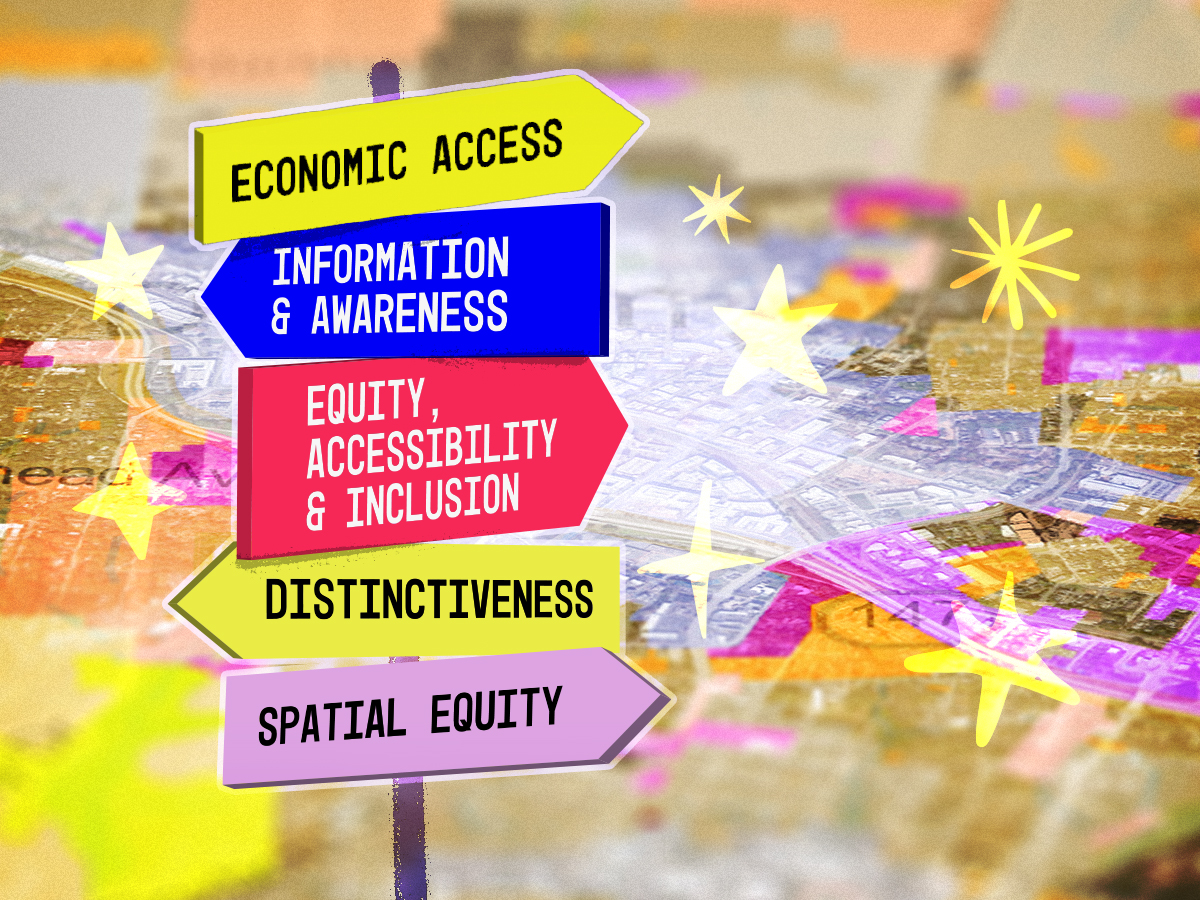
Nevertheless, the collaborative draft plan found that the county’s 41¢ per capita arts funding falls well below its peer counties, and arts leaders are urging elected officials to address this disparity.
In Durham, meanwhile—where a final draft of the master plan is scheduled to be adopted in 2026—Justin writes that local creatives are calling for a new department dedicated to arts and culture, as well as investments in public art and special events. Artists in both cities emphasize that, in addition to increased municipal and county investment in the arts, collaborations with, and greater contributions from, the private sector would greatly benefit the cultural ecosystem.
Open Books
Here at the INDY, staff are dedicated patrons of our local library systems and feel that they are sites of struggles and stories, beyond those found in the books on the shelves. This time last year, we promised special coverage of Triangle libraries in 2025.
The year began with a feature on the Stanford L. Warren library in Hayti, which had just reopened after a three-year closure—a deeply historic space that mirrors the resilience of the community around it. “The great thing about our library system is that it has its own uniqueness,” Larry Daniels, the branch manager at Stanford L. Warren, told the INDY. “North Regional is our rural library, and it has a uniqueness to it as well—you’ll see all the trees, the forestry. With this one, when you walk in, it feels like church.”
In West Raleigh, Jane Porter reported on the tug-of-war around Athens Drive Community Library, currently housed in an area high school and scheduled to be relocated from its unorthodox space as part of the county’s $142 million libraries bond package. Residents want the library to stay in the neighborhood; county staff want to keep options open. In an update from September, the county is currently weighing two proposed sites.
Also in Raleigh, Jasmine Gallup reported on how rising rates in area homelessness have caused libraries to increasingly become sites of shelter. Staff at Richard B. Harrison and Oberlin Regional, the two biggest libraries in downtown Raleigh, spoke honestly and empathetically about how the dimensions of their jobs have changed and steps they’ve taken to support unhoused patrons.
There are a million stories to tell about libraries, but the biggest this year—one that we will continue to follow and report on—is the massive federal cuts to the Institute of Museum and Library Services (IMLS). Gutting the agency is a symbolic blow with national ramifications: On a local level, the cuts are felt through lost funding to special programming and initiatives, particularly in rural areas. Libraries are also facing increased pressure from the Trump administration to fly under the radar and cut down on programming and material that champions diversity. As we go into a new year, we plan to continue to spotlight library stories and to champion them as spaces that should reflect the community around them.
Literary Life
The Triangle is rife with writers of all stripes, a fact that can be easy to miss—literary coverage is thinning, nationally, after all, and often isn’t the top priority at regional publications. This year, we took extra lengths to spotlight local writers and the rich topics they’re exploring, from Bridget Bell’s raw, lyrical poetry about postpartum depression to Nnenna Freelon’s improvisational writing about loss to Adam Sobsey’s work exploring the “elusive boundaries of Jewish identity.” (In this issue, too, don’t miss our interview with writer and musician John Darnielle on page 38.) Other literary features have touched on science fiction, student advocacy, coastal romances, dystopian short stories, and keen writing about the natural wonders of the South.
Analog Is Back (Again)
A fun part about year-in-reviews is stumbling upon story themes we didn’t realize existed. One such theme: An appreciation of physical media that spans generations. Take Skip Elsheimer, the guy behind the A/V Geeks 16mm Films YouTube channel, who told theINDY that people are nostalgic for physical media, a form that is “important, but it’s not always convenient.” (Noteworthy context: Elsheimer has 37,000 rare films stashed between his house and seven storage units.)
Or: See the boost that amateur (“ham”) radio has seen, following natural disasters and other moments requiring off-the-grid communication channels, as writer Lena Geller covered in a piece about a packed introductory session to ham radio at the Durham County Library. And if you want to go really analog, follow along with a Nick McGregor feature on Joseph Giampino, a traditional signer painter in Raleigh who has left his old-fashioned, one-of-a-kind mark all across the Triangle. Who knows, maybe in 2026 we’ll see more flip-phones, CDs, and other welcome markers of the contemporary Luddite.
To comment on this story, email [email protected].
Source link