
Sabrina Taylor didn’t have the opportunity to know her father before his death.
When a 2024 apartment flood abruptly destroyed her saved memories, much of her progress into researching his life was halted. Taylor, a Portland State University student majoring in Black studies, said the loss forced her to start from scratch.
“I was in the process of following the steps to figure out what happened,” Taylor said.
Among her belongings, Taylor lost a hard drive with materials she was using to piece together her father’s story and a box of memorabilia with details from his life that ended when she was a young child. His story was littered with “holes and hiccups,” Taylor said, which made clues about her father’s migration, military history and life path difficult to decipher.
On Saturday, Taylor participated in a free archiving workshop, Portland in Black: Documenting Our Lives in the City of Roses, organized by the Portland City Auditor’s Archives and Don’t Shoot PDX, a Portland-based activism and community-building organization. The free monthly workshops invite people to the Black Memory Lab in downtown Portland to learn archiving skills and uplift community stories, particularly within the underrepresented Black community.
“I would love to get back into archival work,” Taylor said. “It’s just so scary because, do I really want to unpack this ancestral pain with the fear in the back of my mind that I might lose it again?”
Supplied with more knowledge on how to conduct research and an archival starter kit, Taylor said her passion for documenting Black history was reinvigorated. The kit, which included best practices for preserving photos, documents, scrapbooks, art and textiles, was a free resource attendees could take home to reference.
“I’m not the only one here trying to build an archive and make sure that it gets kept into history,” Taylor said. “It feels less alienating and alone.”
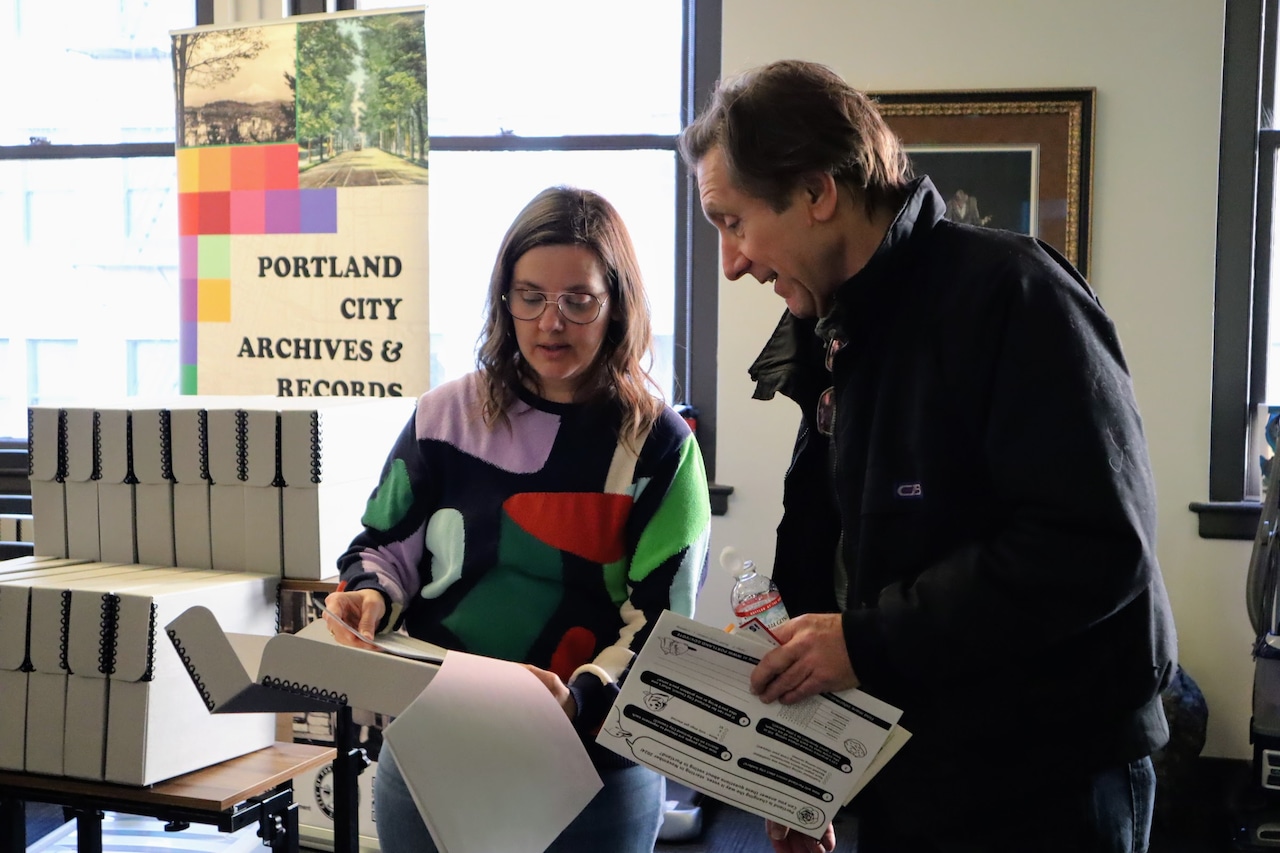
Held in Don’t Shoot PDX’s office space, the event featured records management, scanning and printing stations, along with an oral history booth and listening stations. A reference library also gave visitors the opportunity to explore Black literature, rare and historical materials — including a book signed by The Rev. Martin Luther King Jr.
“In our Memory Lab, we get to document our memories of joy and happiness and family and culture and heritage,” said Teressa Raiford, executive director and founder of Don’t Shoot PDX. “That is meant to inspire our children to be helpful and faithful in their future, and not to be feeling like second class citizens.”
The workshops also doubled as a community building opportunity, allowing visitors to collaborate on projects and discuss their work with one another. Robin Franklin, a leader from Hughes Memorial United Methodist Church, attended the event with hopes to build an archive for the Northeast Portland church.
“Our church has been in the heart of the Black community for a while,” Franklin said. “And we need to preserve our story. We’re in the process of cleaning out some space, and we found some old records. Hopefully the archivists can help us preserve those records because we stand on the shoulders of people that went before and really made big sacrifices.”
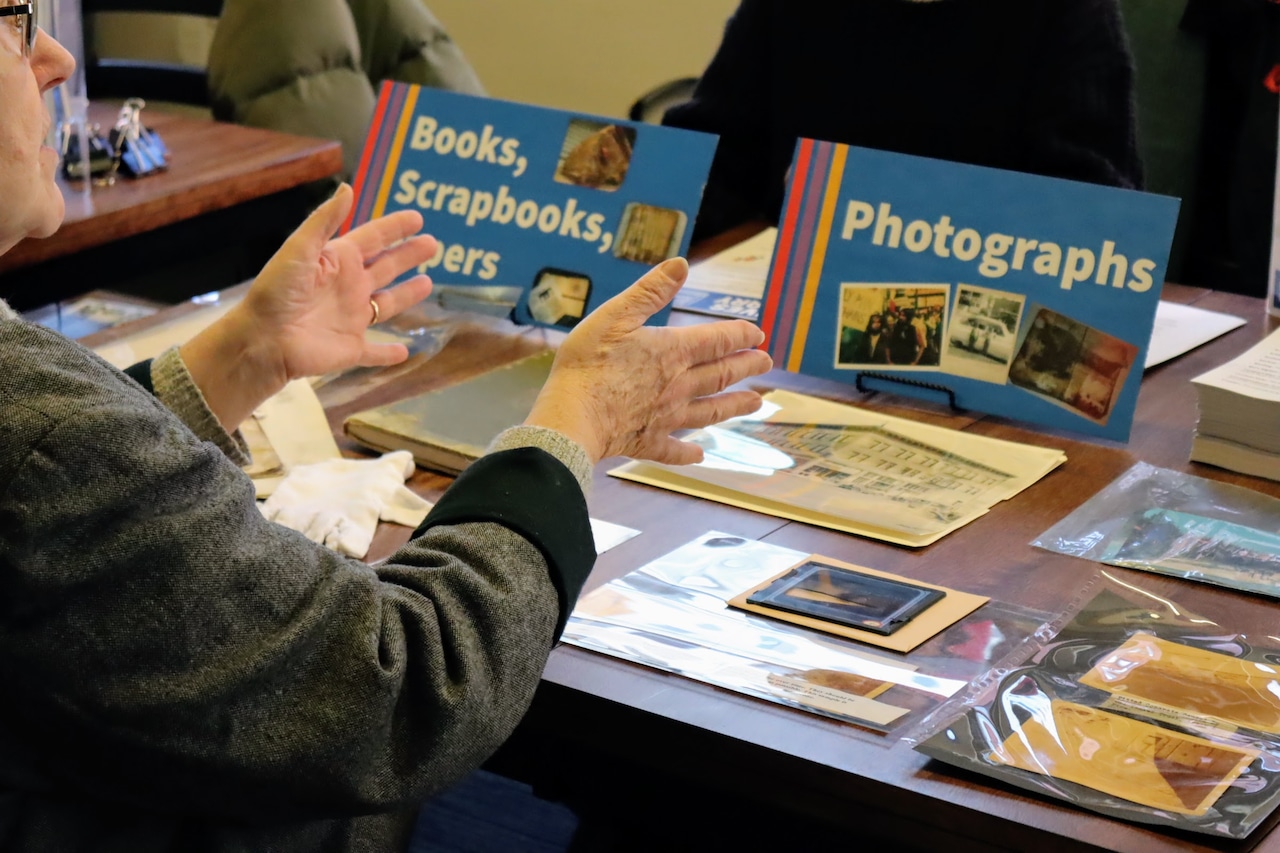
Memory workers, city archivists and leaders from Don’t Shoot PDX attended, assisting with research and archival education or helping attendees use the oral history booth set up in the space, which was the featured theme for the January workshop.
“We’re looking to teach people when there aren’t documents or photographs that speak to a certain part of history or that tell certain stories, a way to create a document of that history is through an oral history recording,” said Madeline Moya, city archivist for the City of Portland.
Other attendees learned how to scan documents for safekeeping. Demetria Hester, a Portland-based activist, recently returned after spending a year and a half in Accra, Ghana.
“I want to archive some of the things and some of the material that I got from Ghana in order to put in my story,” said Hester, who is working on a personal book about her life and travels. “I’m a grandmother, so I want to leave this future of how you can grow by going to different places. You can see different things of life, and different genres of life, and experience going back to Africa, where we’re from.”
Hester brought residency documents, receipts, letters and other important records, with plans to bring more materials in the future and continue documenting her travels.
“It’s up to us to tell the real stories,” Hester said, “because everything is getting erased. It’s important for our future to know what we went through, what we’re going through, what we can get through.”
Subsequent workshops will be held every fourth Saturday through the end of November, with new themes offered for each event.
The next workshop will be Feb. 28 at The Black Memory Lab, 510 S.W. Third Ave., Suite 400; free with registration through eventbrite.com, search “Portland in Black.” portland.gov/auditor/archives/events.
The Oregonian/OregonLive receives support from the M.J. Murdock Charitable Trust to bring readers stories on religion, faith and cultural connections in Oregon. The Oregonian/OregonLive is solely responsible for all content.