
What started as a small curation of illuminated artwork displayed outside of OMSI has gradually blossomed into one of Portland’s most significant cultural happenings.
The Portland Winter Light Festival is returning to city streets for its 11th year from Feb. 6–14, 2026.
For nine evenings, the Portland Winter Light Festival will transform sidewalks, parks, buildings and storefronts into dazzling displays of kaleidoscopic color designed to chase away winter gloominess.
At the heart of this annual transformation is Executive Director Alisha Sullivan, who joined the festival in 2019 and has helped steer it through rapid expansion, a pandemic pivot and an increasingly pivotal role in Portland’s cultural and economic revitalization.
Sullivan is quick to point out that she wasn’t present at the very start. The Portland Winter Light Festival was established in 2015 by Chris Herring, now its creative director, and Jeff Schnabel, a Portland State University architecture professor who serves on the board.
Light festivals were gaining international momentum then, particularly in northern cities where winter darkness shapes everyday life. Portland’s creative and architectural communities were eager to join in on the fun.
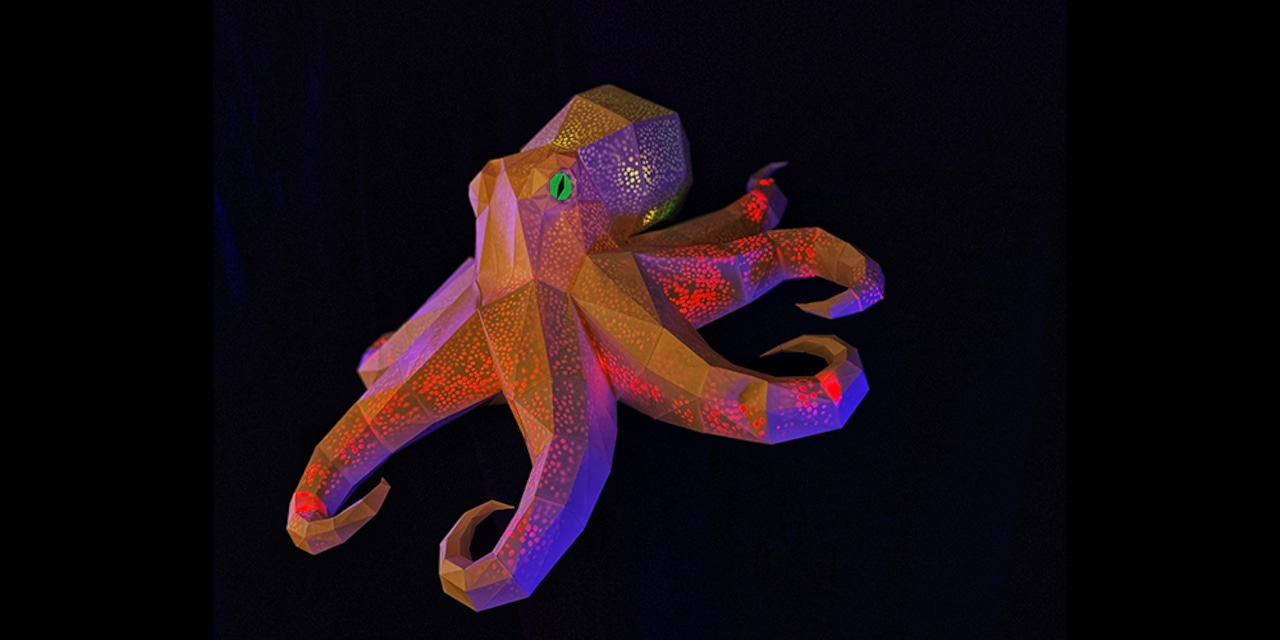
“When it started, nobody really knew where it would lead,” Sullivan said. “It was a bit of an experiment.”
The Willamette Light Brigade, a nonprofit arts group founded in the mid-1980s and known for large-scale illuminated artworks, agreed to act as the festival’s nonprofit host.
By the time Sullivan came aboard, the festival had occurred three times. Its footprint was small but promising, primarily centered near OMSI with a small presence downtown.
Sullivan saw the 2019 festival as a real turning point. Attendance surged, despite winter storms complicating logistics.
“It was a big year for us,” she said. “It was crowded. You could feel the energy.”
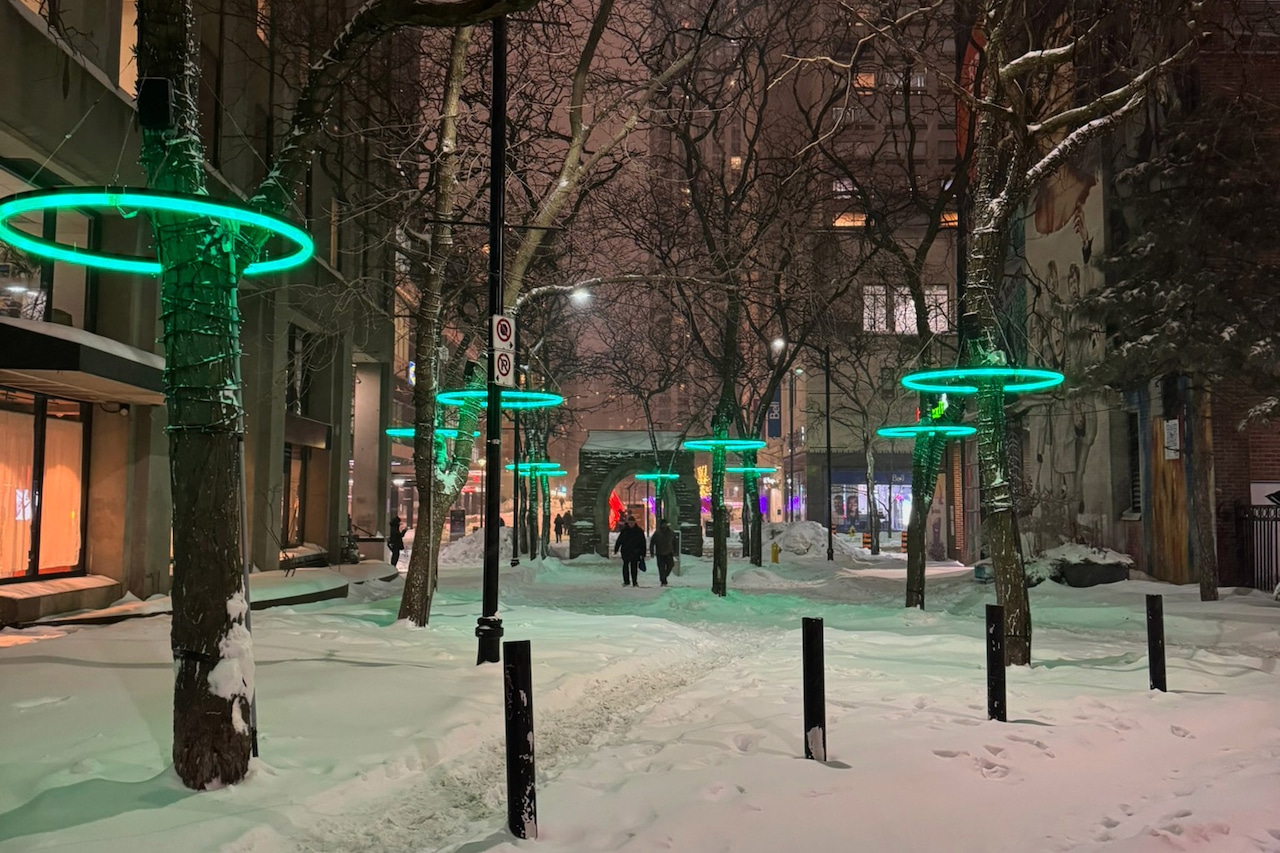
That momentum carried into early 2020. There was major growth at OMSI and the World Trade Center, with extra installations along the Willamette River’s west side waterfront.
The festival wrapped up just weeks before COVID-19 halted public events nationwide.
“At the time, we were hearing about this weird virus overseas,” Sullivan said. “We had no idea what was coming. We had this validating year and then everything stopped.”
Even before COVID-19, the festival had outgrown its original layout. Concentrating tens of thousands in a confined area was becoming unwieldy.
With social distancing a reality, “It became clear that we needed to rethink everything,” Sullivan said.
The solution was simple but ambitious. They needed to spread the festival throughout the city.
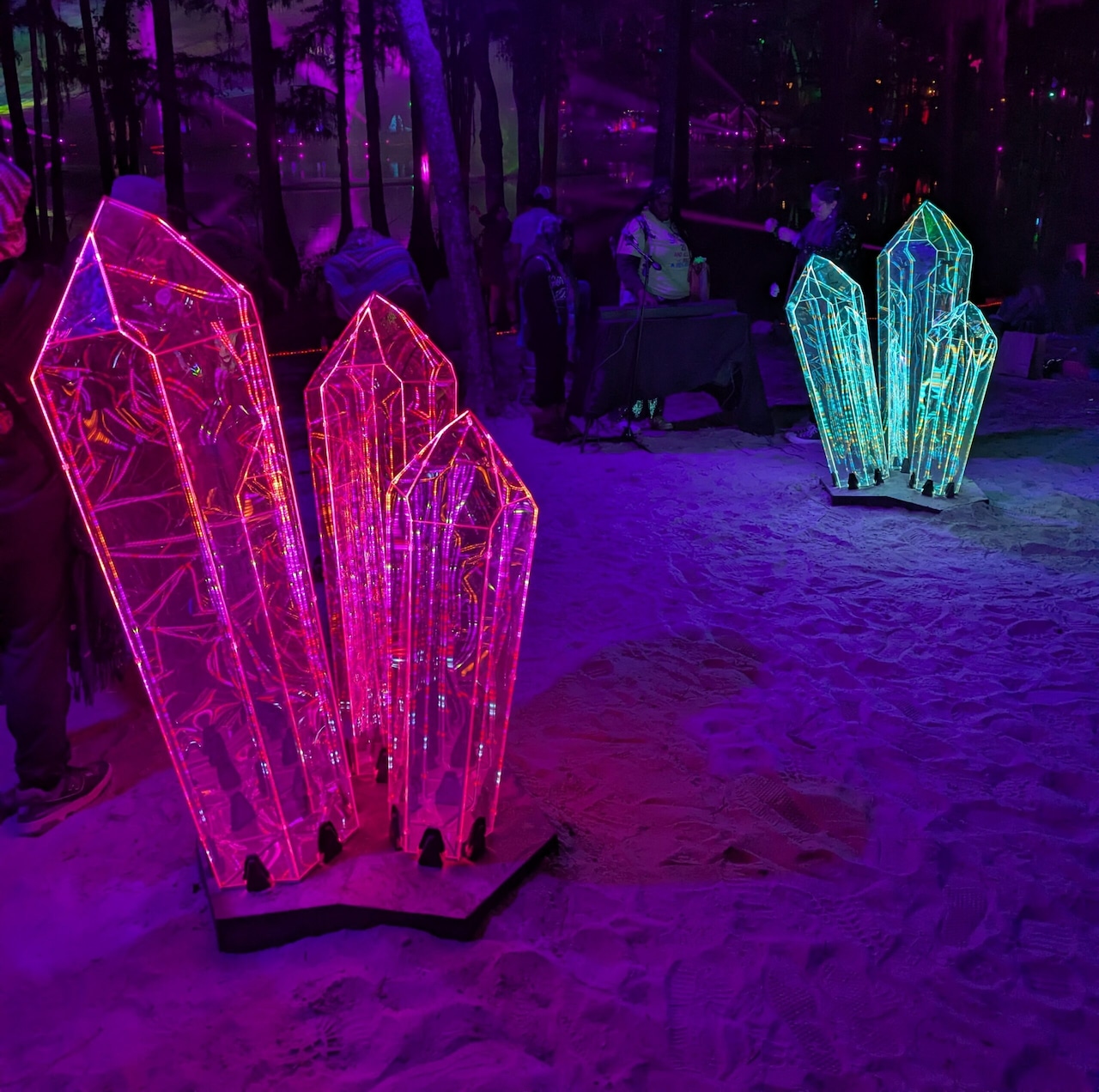
Rather than a single main hub, the Portland Winter Light Festival evolved into a constellation of anchor sites spanning downtown, the waterfront, the Park Blocks, Pioneer Courthouse Square, PSU campuses and beyond.
The shift addressed immediate public health concerns and aligned with long-term objectives.
“We wanted to meet the moment,” Sullivan said. “But we also wanted to connect more deeply with the city.”
Downtown, with its restaurants, hotels, parking and transit options, offered both space and infrastructure. It also needed foot traffic — especially during winter evenings.
“That was the moment when we really arrived,” Sullivan said. “People started discovering us by accident, just walking through downtown.”
She still hears the same story repeatedly.
“‘I stumbled onto the festival and it blew my mind,’” she said. “That’s when we knew it was working.”
Last year, the festival attracted roughly 250,000 visits over nine nights across all locations. While that number includes repeat visitors, the economic impact is considerable.
“Our mission has always been to invigorate Portland during the slowest time of year,” Sullivan said. The figures are extremely impressive during February, one of the slowest months for tourism and dining.
Restaurants near festival sites report full dining rooms. Bars and cafés stay open later. Hotels see increased bookings, particularly over festival weekends.
Sullivan views the festival as part of a wider shift in urban life.
“People want experiences,” she said. “They want to engage with art. They want to take photos, touch things, see themselves reflected in the work.”
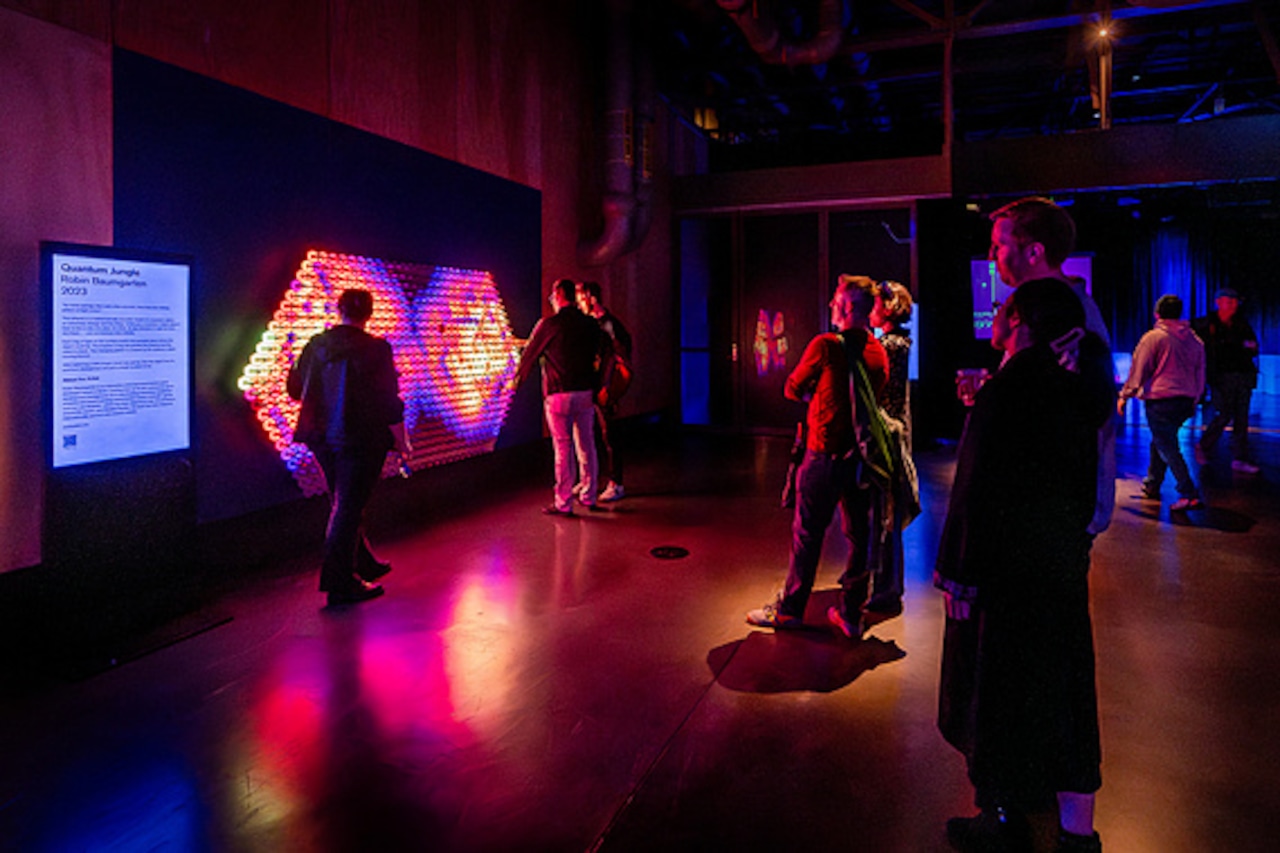
Tech-driven, interactive installations, many featuring motion sensors, sound and programmable lighting, respond to that demand.
When asked for the can’t-miss highlights this year, Sullivan admitted picking favorites is tough, but several exhibits stand out in her mind.
Along the waterfront, three large-scale installations anchor the experience.
“Cosmic Cuddle,” crafted by a local artist collective, takes the form of a radiant cuttlefish. Visitors peer into a kaleidoscopic interior evoking stained glass, blending organic shapes with precise digital illumination.
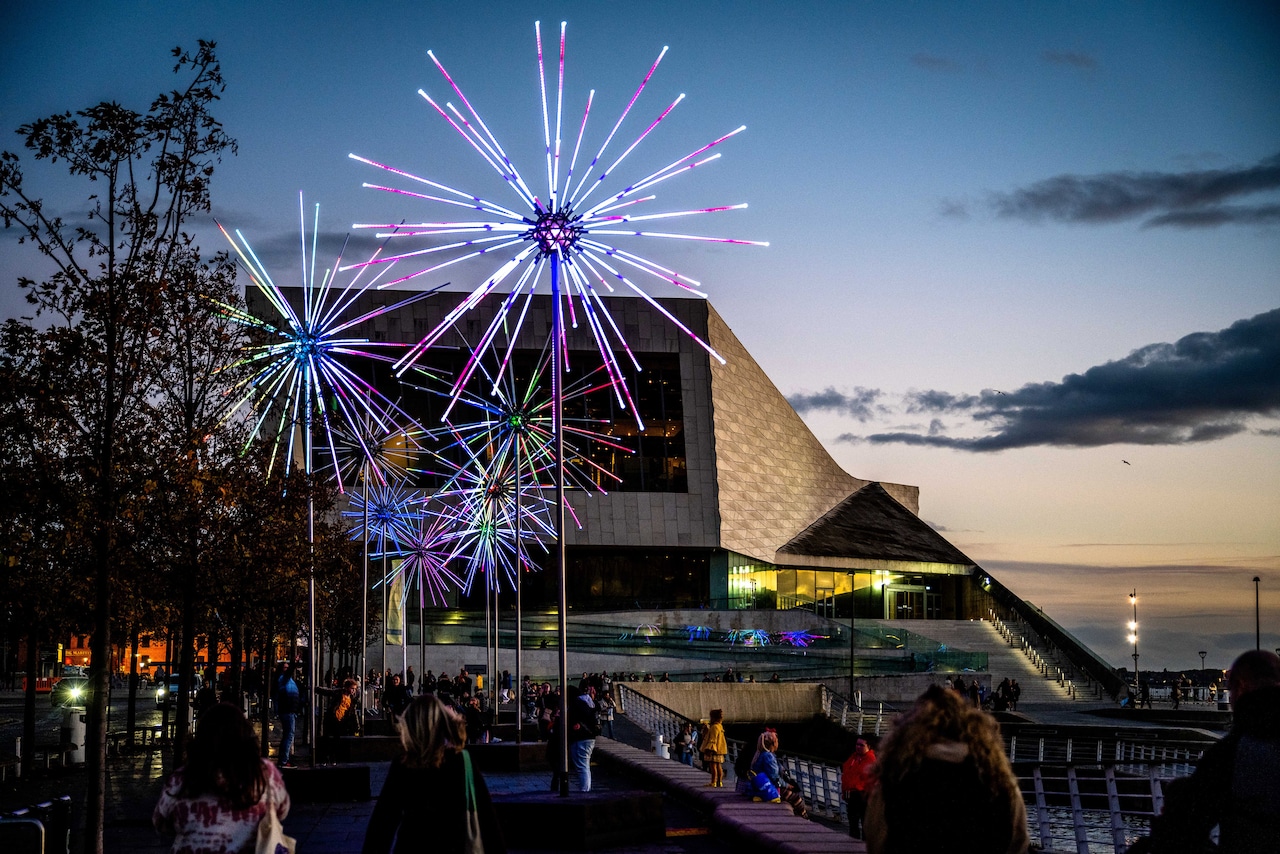
Nearby, “Electric Dandelions,” by a Bay Area artist, features towering glowing sculptures inspired by dandelion seed heads, reimagined at monumental scale.
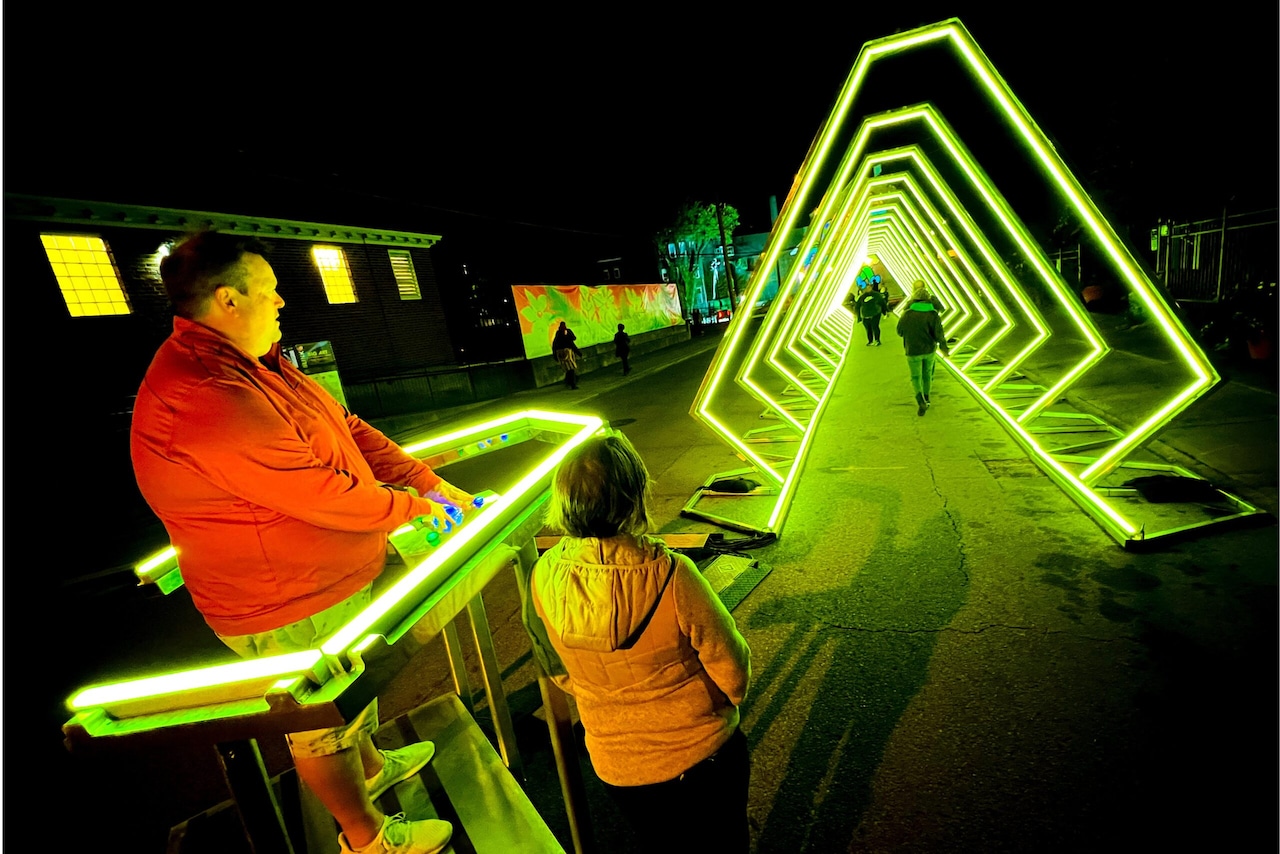
An international artist from Calgary offers a tunnel installation curving into an angular, V-shaped form that frames the river and skyline. Sullivan predicts it will become a favored photo backdrop.
The Glow Bar returns as one of the festival’s most popular social spots. Located at Salmon Street Springs, the pop-up art bar features integrated LED furniture, projections, music, and dancing. Open to all ages until 8 p.m., it welcomes families early before transitioning to a more adult crowd later.
At the World Trade Center, a new partnership with Portland Opera introduces a nightly performance ritual. Each evening at 6 p.m., a singer adorned in lights performs an aria to inaugurate the night’s festivities.
“It’s unexpected,” Sullivan said. “And that’s what makes it magical.”
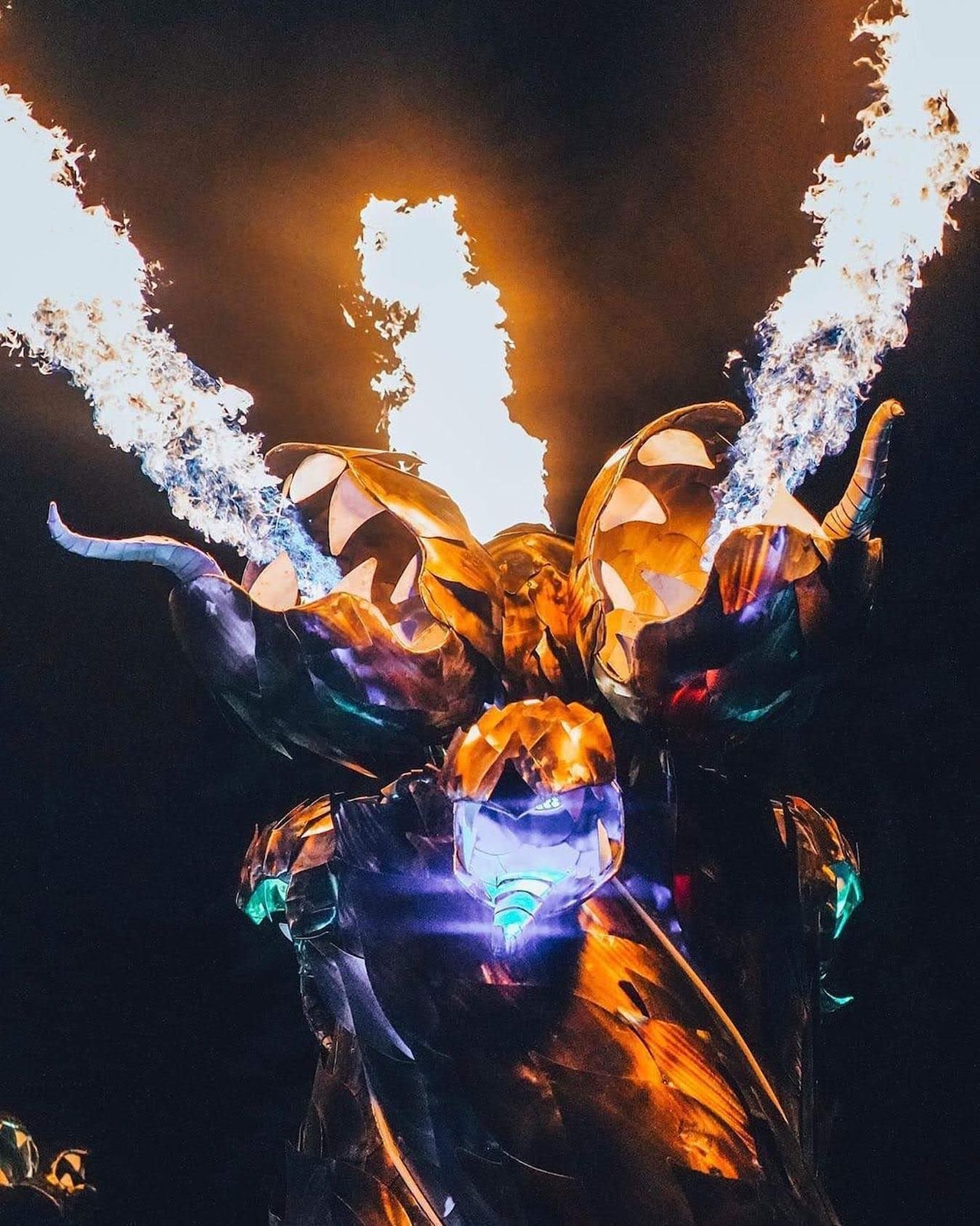
Pioneer Courthouse Square hosts the fire art, including “Tripity Trip,” a kinetic floral sculpture by a Canadian artist opening the festival on Feb. 6. Flames bloom and retract in choreographed patterns, drawing crowds at dusk.
In the South Park Blocks, directly in front of the Portland Art Museum, “Pulse” wraps trees in illuminated rings suspended at precise heights. Programmed to shift rhythmically, the installation transforms the landscape into a living environment.
Empty retail spaces will become temporary galleries, filling storefront windows with light. Director Park, the Big Pink building, PSU campuses, and hotel lobbies will feature installations as well.
“What happens if we just fill all these spaces with creativity?” Sullivan asked. “That’s the question we keep asking.”
Despite its scale, the festival runs on careful coordination and a relatively small team.
“It’s almost misleading to call this a single event,” Sullivan said. “It’s many major events all happening at once.”
Each anchor site has its own production crew. Mile Point Events oversees operations, while separate teams manage artist relations, communications, volunteers and safety.
Sullivan spends much of the festival moving between locations, hosting tours for sponsors, elected officials and community partners. Last year, she logged over 22,000 steps in a single evening.
“It’s a lot of walking,” she said, laughing. “But it’s worth it.”
Though free to attend, the event is far from free to stage.
“Artists are paid. Crews are paid. Equipment is rented. This is a real operation,” Sullivan said.
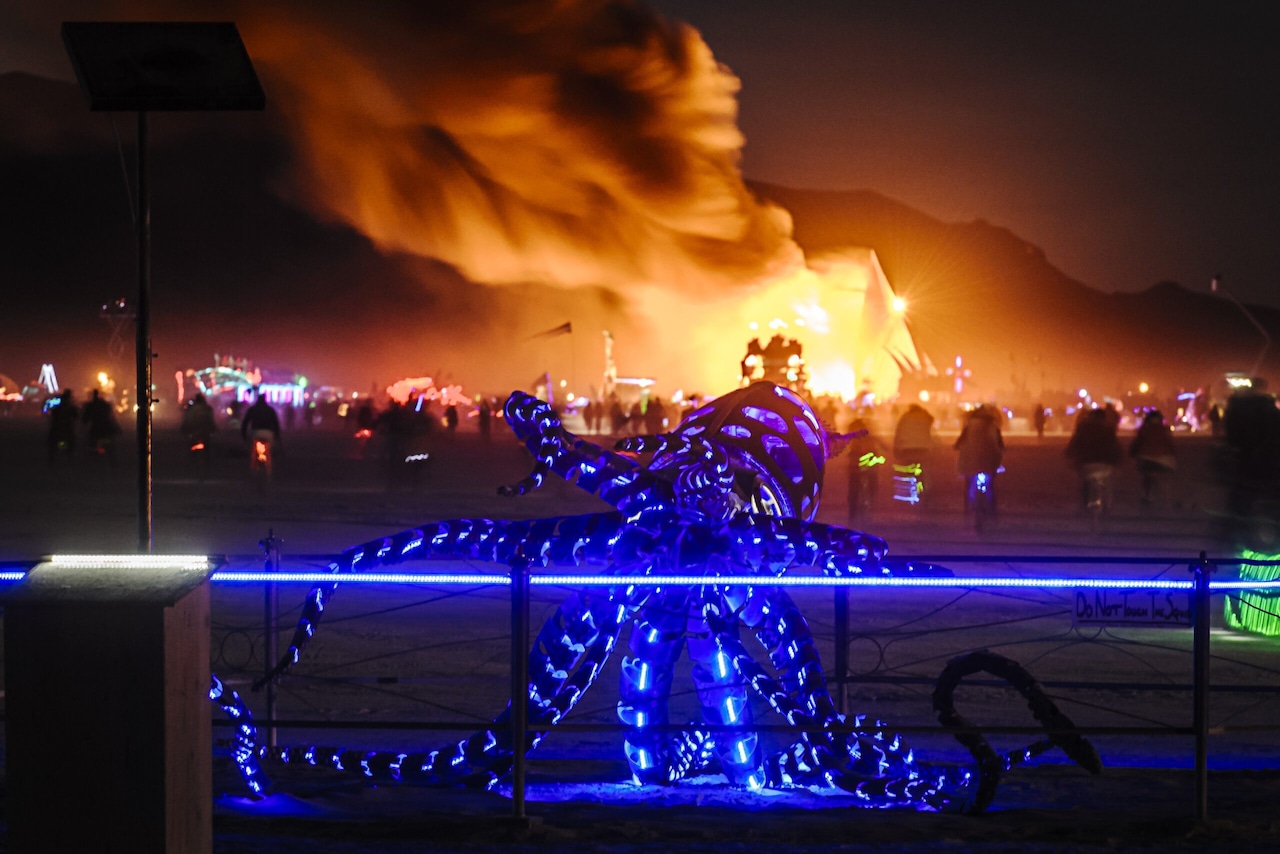
The festival is supported by sponsorships from businesses large and small, along with grants and individual contributions. Portland General Electric has been the presenting sponsor since the festival’s start.
Donations from the public can be made through the festival’s website, where supporters can contribute securely using various payment methods.
“Every donation helps,” Sullivan said.
She emphasized the challenges facing arts organizations, from rising production costs to funding unpredictability. “This is a complicated time for arts and culture,” she said. “Community support matters more than ever.”
The festival coincides with Portland Staycation weekends, inviting visitors to book hotel stays, explore daytime cultural offerings, and experience the city as tourists before heading out at night.
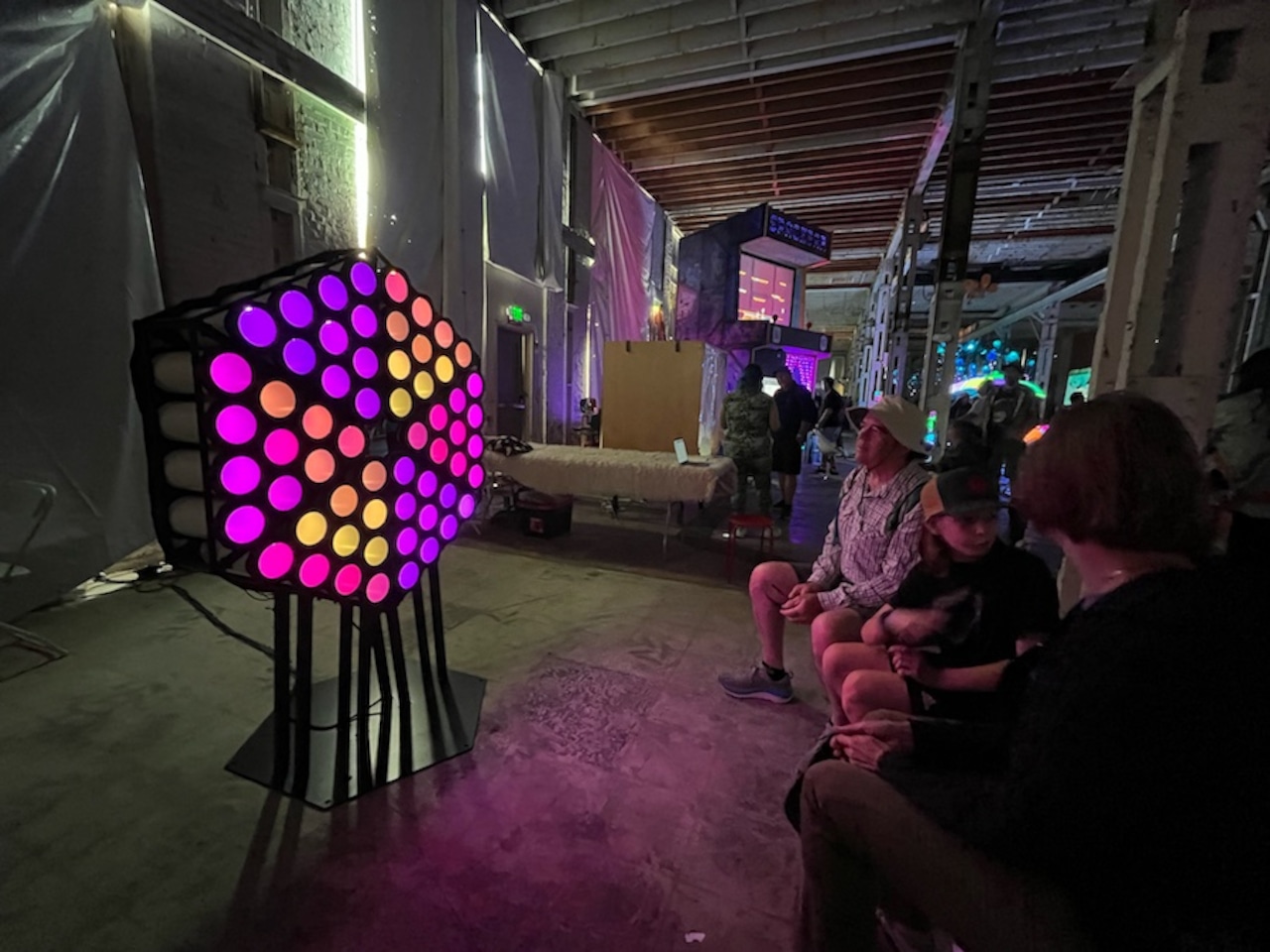
This year’s interactive map and navigation tools are live, allowing visitors to plan visits by date, neighborhood or art type.
With more than 200 artworks spread across multiple neighborhoods, the festival offers countless routes, and no wrong way to enjoy it.
Sullivan encourages flexibility. She advises attendees to pick an anchor site, start walking, and let curiosity be their guide.