As suburban South Burlington residents were heading to work and school on the morning of March 11, a federal deportation officer was watching a small, single-story home at 337 Dorset Street.
Parked outside it was a blue Toyota Camry registered to a man named Deyvi Daniel Corona Sanchez. He’d been deported years ago to Mexico and had allegedly reentered the United States without permission. In January, he was charged in Middlebury for driving under the influence.
When two men got into the car around 7:30 a.m., the U.S. Immigration and Customs Enforcement officer thought one of them was Corona Sanchez. As the Camry headed south on Dorset Street along a stretch between a typically bustling retail area and the city’s high school, the agent fell in behind and turned on his lights and siren.
The driver pulled into an apartment complex’s parking lot but didn’t stop. When other ICE agents tried to box in the Camry, the driver rammed two federal vehicles. Then he drove through woods near the high school, got back on Dorset and hit two more cars. Two people hopped out of the Camry and ran into the small house that they had just left. ICE agents surrounded the place.
Inside were 18-year-old José Estrada Jerez, a U.S. citizen, and his uncle, Christian Humberto Jerez Andrade, along with a second family: Camila and Johana Patin Patin, sisters from Ecuador, and Johana’s 4-year-old daughter.
ICE agents yelled for them to come out. Fearing arrest, they didn’t.
The commotion drew the attention of a neighbor, Andrew Schumer, who peeked over his backyard fence and noticed masked men standing at each corner of the house. He knew right away that they were with ICE.
His partner called an emergency hotline managed by Migrant Justice, a farmworker advocacy organization, which had been preparing for just such an event by setting up a network of people who would be eager to respond. At 8:32 a.m., the group sent out a text message alert urging supporters to go to Dorset Street and to spread the word.
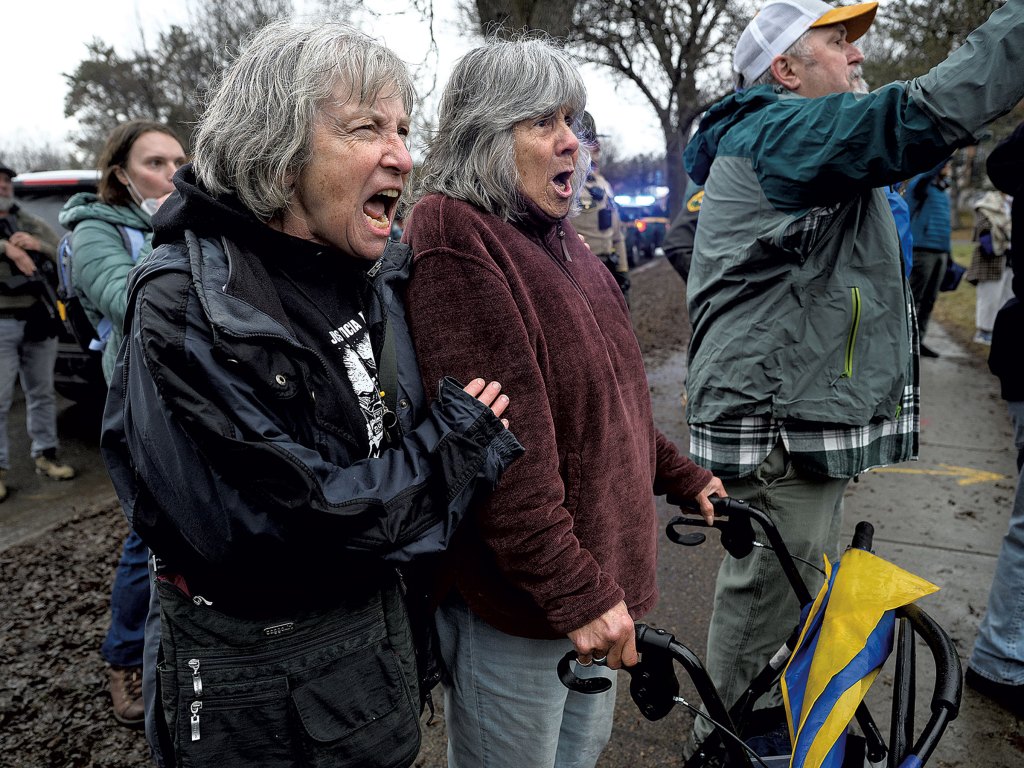
By 9:30 a.m., dozens of people had assembled, some carrying signs or guitars. They sang folk songs of peace and chanted “ICE — ya basta! La migra — ya basta!” meaning “enough is enough” and using a slang term for immigration agents.
South Burlington police officers also arrived.
“We responded here just to ensure everyone remains safe and that everyone’s rights are protected,” South Burlington Deputy Police Chief Sean Briscoe told reporters there. “That is our sole and only involvement in this incident.”
Then he smiled and waved to a woman nearby. He recognized her from the Greater Burlington YMCA.
“We do water aerobics together,” Briscoe said. “It’s a great class. Does wonders for my joint pain.”
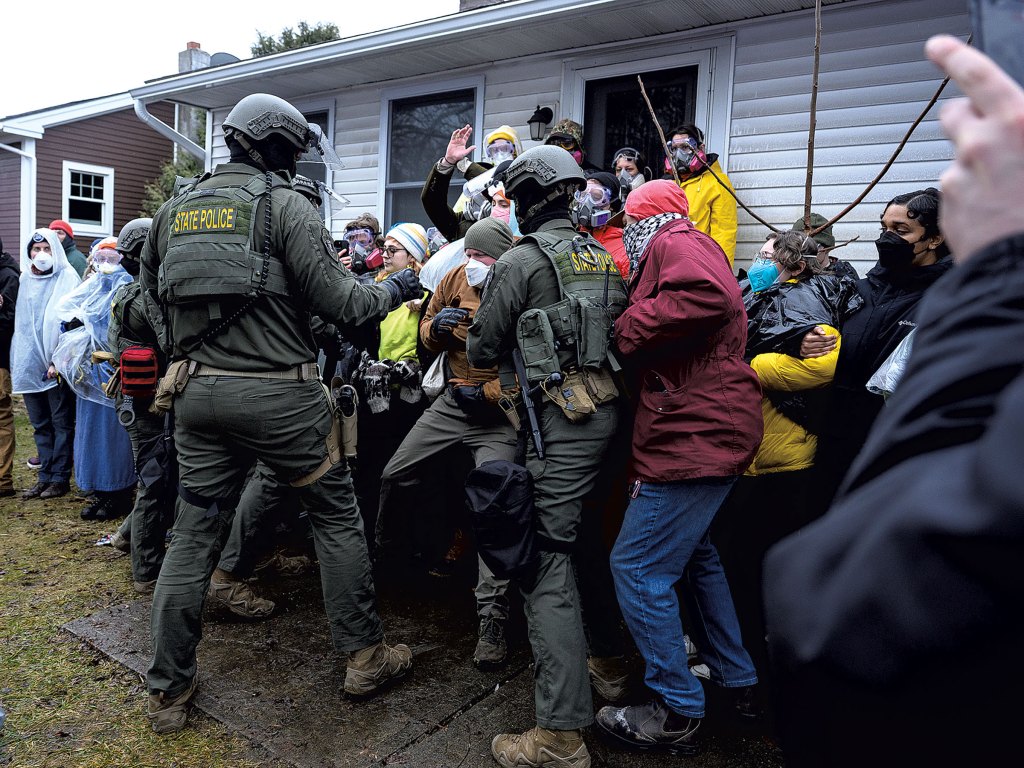
The chummy air curdled over the following 10 hours, culminating in a large, at-times violent confrontation. Three people in the house and several protesters would be arrested, leading to accusations of excessive force, with local police officials charging later that federal agents had recklessly and needlessly escalated the tensions.
ICE agents initially lacked what might have helped them wrap things up quickly: a warrant to enter the home. Getting one signed by a federal judge can take hours. As they tried to make phone calls, protesters approached and blew whistles next to their ears and called them fascists.
“Show the warrant!” the protesters yelled at the agents.
“No están solos” — “You’re not alone” — they chanted in Spanish to the people in the house.
Two SUVs arrived with four Border Patrol agents, who stuck around for 30 minutes before taking off.
As word spread, the crowd swelled. The property’s owner gave protesters permission to stay. A tent popped up, and people brought coffee, pastries, trash bags, face masks and ponchos, piling supplies in the front yard.
Inside, the men barricaded the front door with a living room couch. Estrada Jerez, the 18-year-old citizen, repeatedly called his mother, who lives in New Orleans, while his uncle called his 6-year-old son.
Not far down Dorset Street, Monica Desrochers, an administrator in the South Burlington School District, learned that ICE agents were at a nearby home. She realized that two of the district’s students lived there: a third grader and a girl in pre-K. The younger girl was not at school that morning.
Desrochers rushed to the home and called the girl’s mom, who answered from inside. The girl was crying audibly in the background. “We have to get her out,” Desrochers told her.
At about 10:30, Johana Patin Patin tried to hand her daughter to a teacher outside the door, but the girl cried out in fear and clung to her mother. They aborted the plan.
How we reported this story:
This story lays out what happened on March 11 by using photographs, videos, interviews, observations of Seven Days reporters, eyewitness accounts, statements from police and elected officials, and court documents.
As the morning turned to afternoon, South Burlington Police Chief Bill Breault opened a command post at city hall, where he monitored live feeds from his officers’ body cameras. Joining him were the city manager and attorney, a supervisor from the Vermont State Police and one from ICE, and Deputy Chiefs Jonathan Young and Brian LaBarge from the Burlington Police Department.
Breault repeatedly urged his federal counterparts to reconsider carrying out the warrant.
“I have Washington on the phone,” an ICE supervisory agent told Breault. “They reiterated that we’re moving forward with the plan.”
More South Burlington officers arrived, and, around 1 p.m., they closed busy Dorset Street to traffic. Law enforcement SUVs, with lights flashing, idled on the now-deserted roadway. Soon Vermont State Police troopers arrived.
“Who keeps us safe? We keep us safe,” the protesters sang, clapping hands in unison. “Love for our people will conquer hate.”
A “Sesame Street”-themed toy and a purple bike lay on the ground outside the house. A window was covered by a blanket with the Disney characters Elsa and Anna, sisters from the Frozen movies.
Barbara Prine, an attorney with Vermont Legal Aid, arrived with a folder full of documents and approached an ICE agent who wore a Bass Pro Shops ball cap.
There’s a child inside, she told him. “If there’s going to be a forcible entry, we want to be able to get the kid out,” Prine said.
The agent, who said his name was Johnston, referred Prine to his supervisors in Boston but said he didn’t have the phone number at hand.
Inside the tiny house, Patin Patin grappled with what to do. She worried about handing over her youngest daughter, but as more agents amassed outside, she decided it was the safest thing for the girl.
Soon after, at about 1:40 p.m., demonstrators linked arms and formed a passage from the front door to a waiting car in the driveway. In tears, Patin Patin handed her daughter to Desrochers, who then gave her to Lissa McDonald, principal of Rick Marcotte Central School, a local elementary school. Covered by a blanket to shield her from the tumult, the girl was carried through the crowd, strapped into a car seat and driven away.
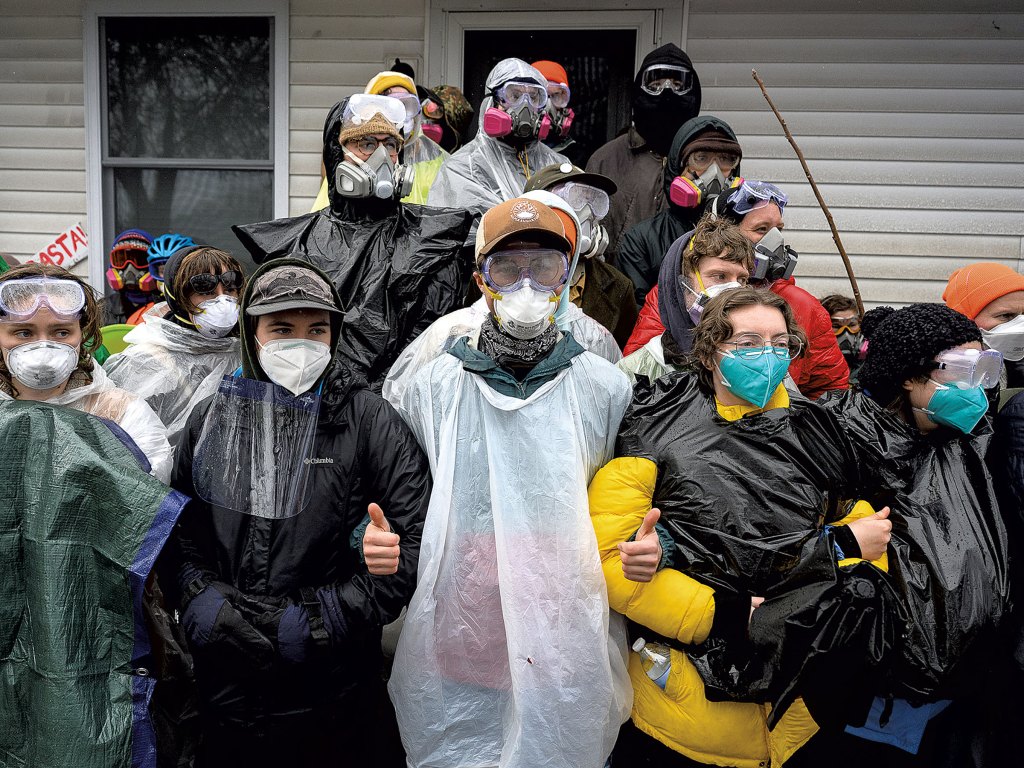
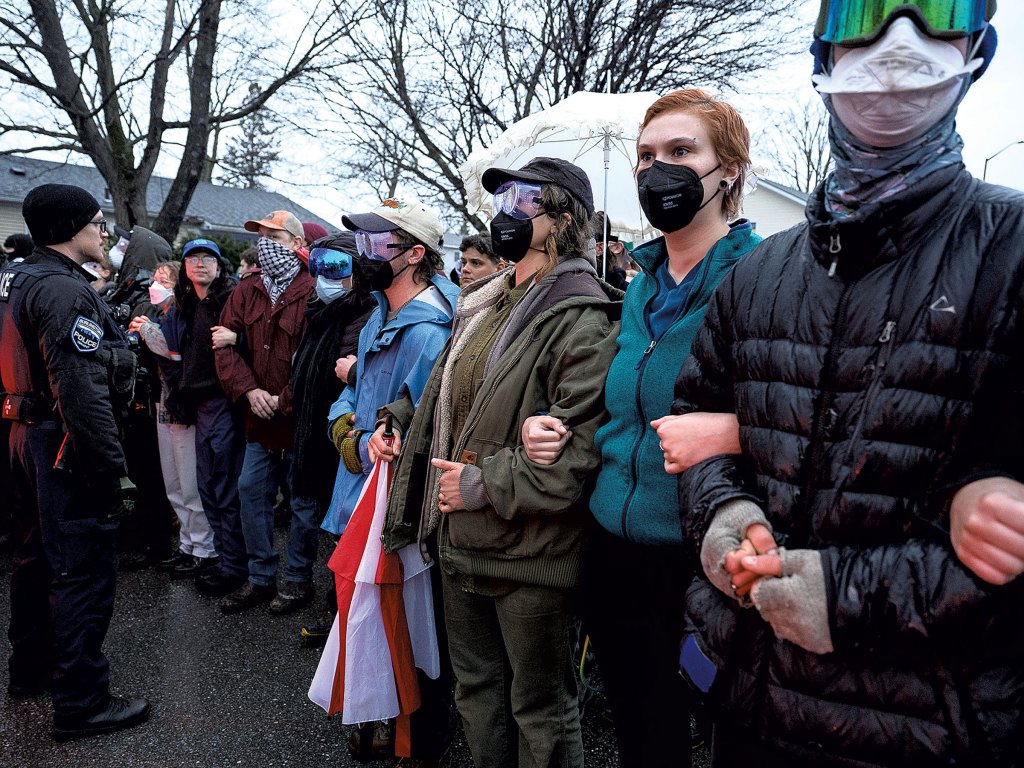
The crowd grew. People brought pizzas and more coffee; someone lit a grill and cooked hot dogs. It began to rain, and the March afternoon turned cold and raw. Protesters donned ponchos and trash bags against the rain and distributed umbrellas. A human chain formed around the house.
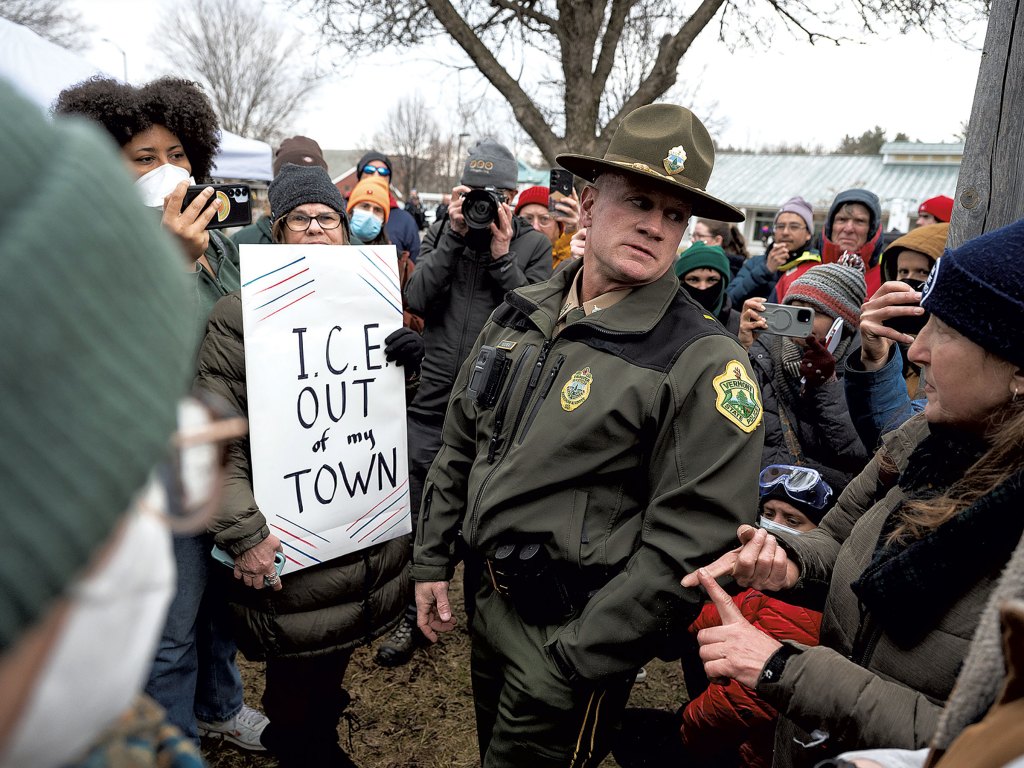
Around 2 p.m., Vermont State Police Lt. Cory Lozier, the Williston Barracks station commander, approached the front of the house, where protesters blocked the path to the door. As a crowd gathered around him, Lozier warned that ICE would soon arrive with the sought-after warrant to enter the home. He urged people to stand aside.
“At a certain point, the laws don’t make sense,” a protester in front of the door responded. “We’re here to protect human rights.”
“I don’t want anybody to get hurt,” Lozier responded.
“Don’t hurt us, then!” someone cried out. “Why won’t you protect Vermonters?” another asked.
“I wanted to come and give you a very big heads-up,” Lozier told them. More federal agents, including a tactical team, were on the way, he told them. “At some point there may be force.”
“We’ll be prepared,” the protester in front of the door replied.
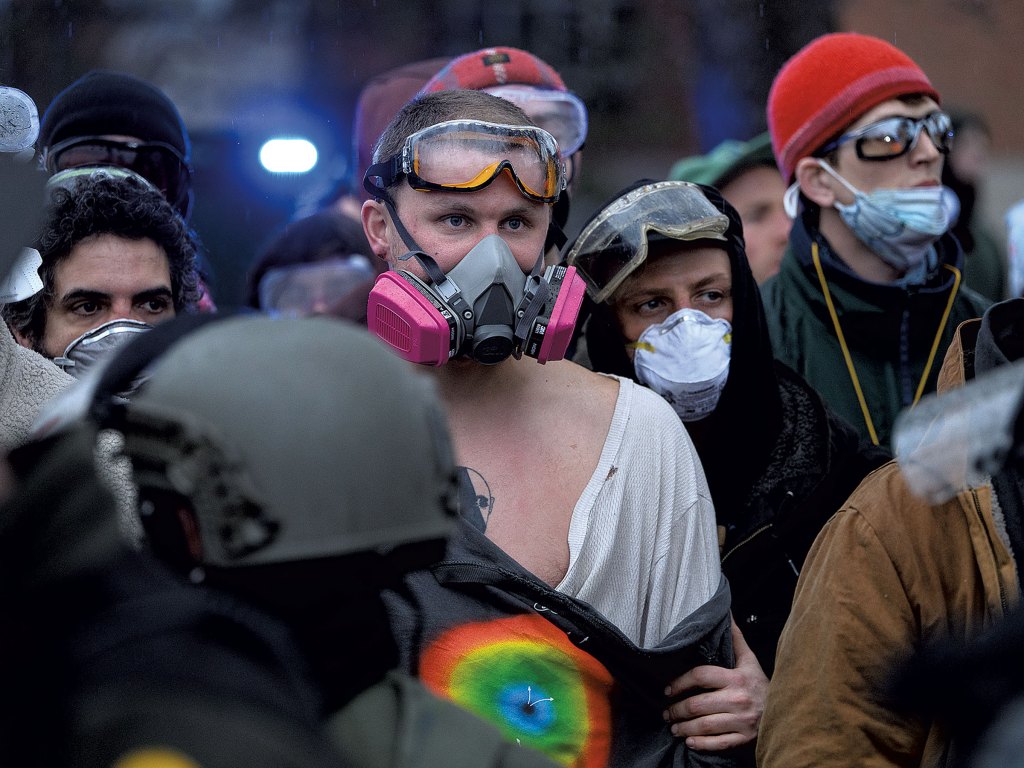
Lozier walked back out to the road, where he watched with a concerned look as protesters linked arms and donned goggles and respirators.
“Troopers, don’t ruin your image for these Nazis!” one man yelled. “Remember the communities you serve. Remember whose tax money you consume! Do not stand with these fascists!”
Lazuli Vacherot, a protester, helped wrap a garden hose around the handrails of the front steps.
“I’m here to protect children and people that have every right to be here,” she said. “I’m ready and willing to put myself in front to protect anyone.”
About 10 ICE agents, most with their faces covered, maintained a cordon around the home. Some protesters danced in front of them as they stood stoic. Around the back of the house, a man strummed a guitar while protesters sang and clapped.
Back at city hall, a local FBI official and an agent from Homeland Security Investigations had joined Chief Breault’s command center. Breault worried that the crowd was growing hostile and that ICE would respond with force. He decided to use a special state police team and Burlington and South Burlington officers to help agents penetrate the crowd and enter the house. After consulting with the U.S. Attorney’s Office, Breault ordered police to arrest protesters only for serious assaults, not merely for pushing and shoving.
At about 5 p.m. an ICE agent showed up holding the search warrant that gave them legal authority to force their way into the home to detain Corona Sanchez, the man sought since morning. An unmarked car drove up to the front of the house, and a man stepped out.
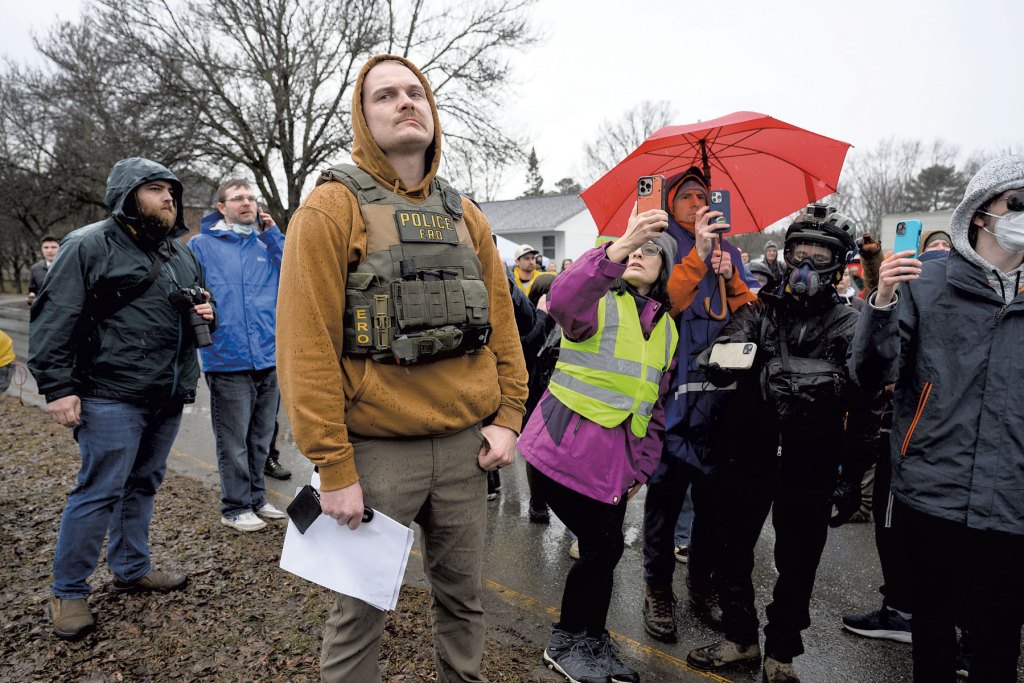
“Law enforcement has acquired a judicial warrant for Mr. Corona Sanchez, signed by a judge here in Vermont, and a search warrant to enter the property,” he told the crowd. “We’re asking you to disperse and allow law enforcement to do their job. Thank you very much.”
The crowd grew increasingly agitated and hurled a barrage of questions. “Who are you? Who do you work for? What’s your name?”
“I work for the Department of Homeland Security,” the man responded, as booing and curses rained down. “Please disperse and let law enforcement do their job.”
“Get the fuck out of here!” a woman yelled.
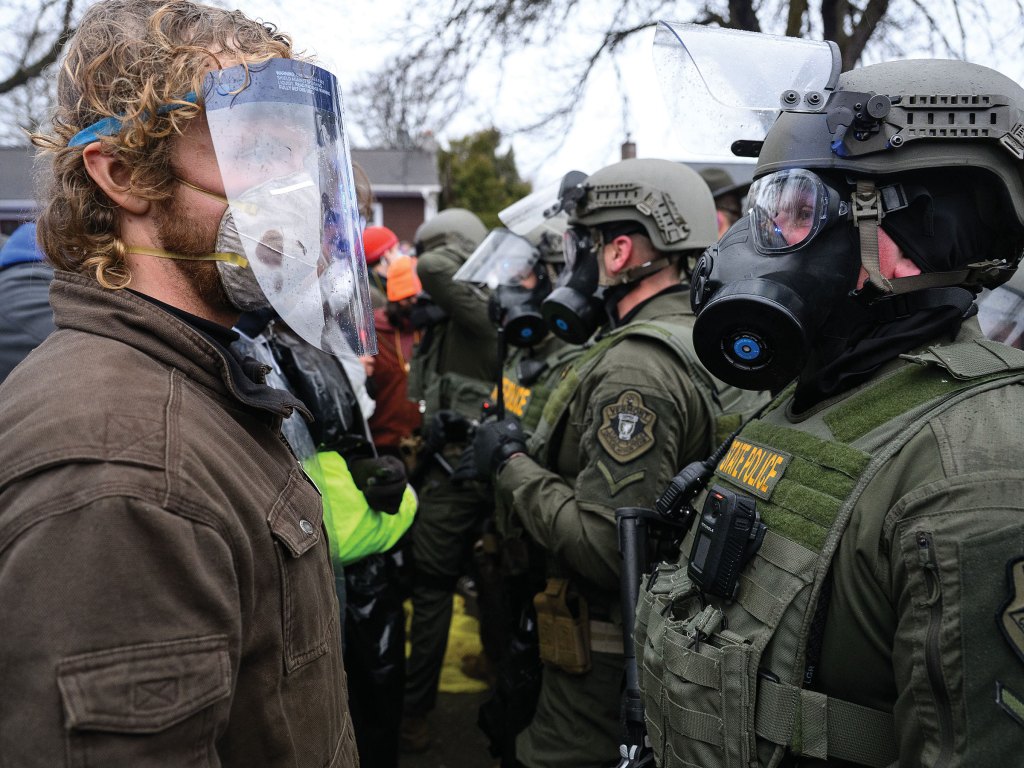
Then a murmur rippled through the crowd, and some people blew whistles. Cars with lights flashing were approaching, and ICE agents and Vermont State Police officers from the Critical Action Team arrived wearing tactical gear: helmets, vests, goggles and visors. Some donned gas masks.
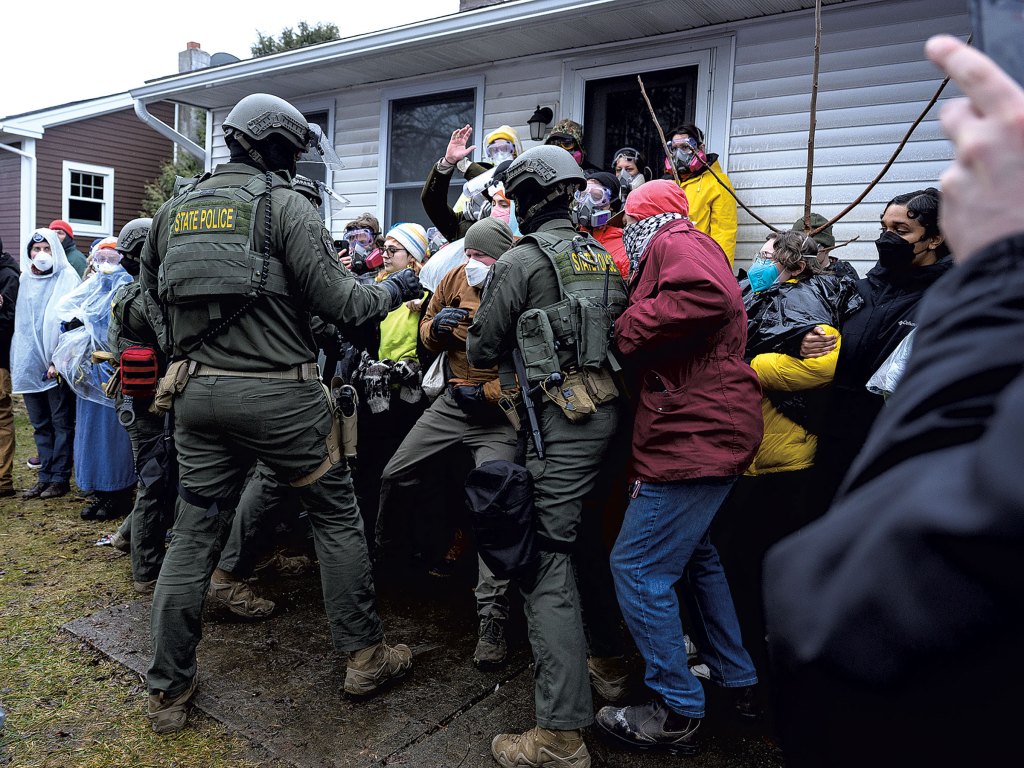
Around 5:30 p.m., state troopers in riot gear began to push their way through the crowd toward the front door. They tossed protesters from the steps in front of the house, clearing a path for a line of about 10 members of an ICE SWAT team. The ICE agents broke in the door with a battering ram and entered. Some carried rifles.
Inside, Estrada Jerez sat on the floor next to his uncle, their hands raised in surrender. The agents picked them up by their arms, threw them on their stomachs, handcuffed them and searched their pockets.
“I’m a U.S. citizen!” Estrada Jerez yelled out.
“I don’t care,” an agent responded.
The agents pulled the two sisters from a bedroom to the living room. All four people were held there while agents searched the house. They demanded to know where Corona Sanchez was hiding.
One agent climbed into the attic. His foot broke through the ceiling, and he set off a stun grenade and chemical irritants. The women started to cry.
About 20 minutes after entering the house, federal agents brought out the two sisters and Jerez Andrade, their hands cuffed behind them. They led them through the screaming crowd to a silver SUV bearing New Hampshire license plates. Some protesters tried to block the car’s door, but ICE agents threw them aside.
The crowd surged and blocked multiple ICE vehicles from leaving, yelling taunts at the police officers who tried to get them to move. Someone had drawn swastikas in the dust coating the back of a black Chevy Tahoe. A line of state police in tactical gear stood face-to-face with a crowd of protesters blocking the road. The troopers put on gas masks.
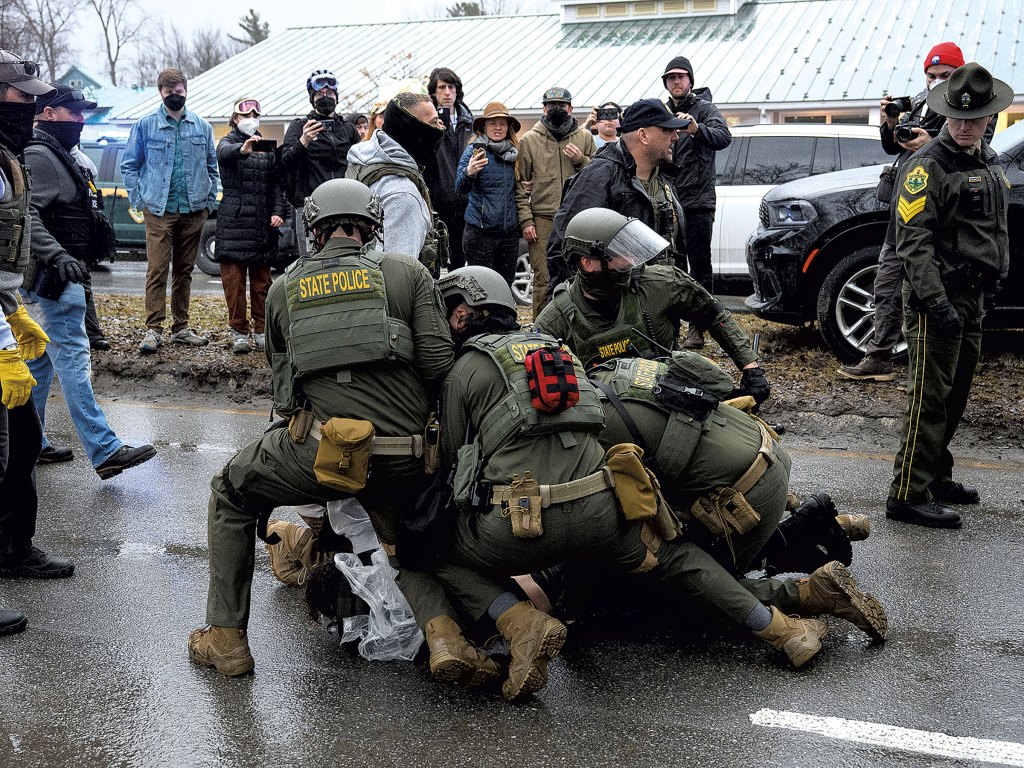
Several protesters were detained in the standoff. As one man was led away in handcuffs, a Winooski woman named Gwendolyn Heaghney reached up to adjust the mask on his face to help him breathe.
“Back up,” a Burlington officer said, while a second grabbed Heaghney’s arm and threw her to the ground, pinning her to a curb.
“You fucking jerkoff!” someone yelled at the officer. “Are you fucking serious?”
The impasse lasted more than an hour. Finally, several SUVs lurched forward, then back, before maneuvering through an opening in the crowd and bouncing over the roadway median to escape amid a shower of tossed bottles and debris.
The tensions peaked as dusk fell. About 10 protesters linked arms and sat in front of a white Jeep used by the federal agents, now with a flat tire and metal pole stuck in the wheel. One of the protesters waved a red-and-white flag that read, “ABOLISH ICE.” Back at the command center, Chief Breault urged ICE to leave the SUV behind and get the driver out.
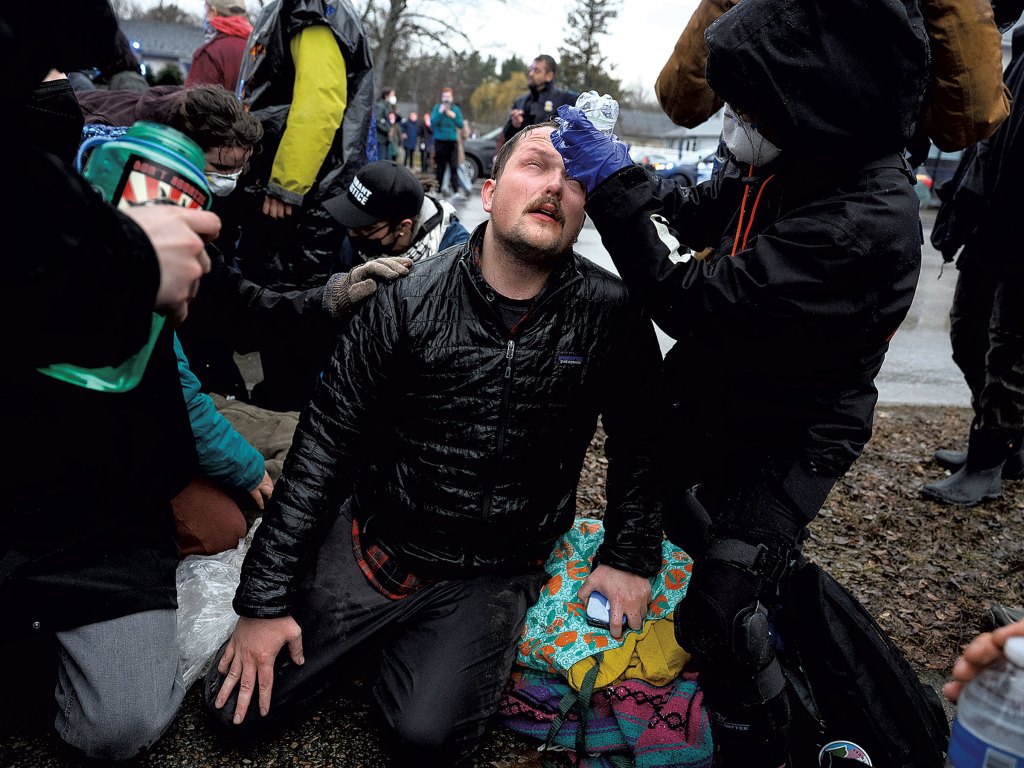
Suddenly, heavily armed agents from the ICE SWAT team swept in, threw flash-bang grenades and fired pepper balls into the crowd. Smoke and chemical irritants filled the air.
“Stop killing us!” one protester yelled.
As the ICE Jeep jerked forward, Lt. Lozier of the state police ran up to the driver’s door: “No, no, no!” he yelled, then punched the tinted window. “Roll down your window — all the way!”
The car, its windshield covered in dirt and banana peels that had been thrown by the crowd, stopped abruptly, and the driver lowered the window a crack. “There’s a fucking person under the wheel!” a protester yelled.
An ICE agent ran up and fired more pepper balls at protesters, who reeled out of the way, coughing and sneezing. Another agent tapped the hood of the SUV, and it inched forward. A fresh flash-bang went off; the car sped away. Cries went up for a medic: Someone in the crowd was hurt and needed help.
“We the people are here to protect ourselves, to keep our community safe and to stand in solidarity with each other,” Rachel Elliott, a member of Migrant Justice, said to the crowd through a bullhorn as people began to disperse. Elliott encouraged them to contact Gov. Phil Scott and Col. Matthew Birmingham, head of the Vermont State Police, to find out why troopers had aided immigration agents by forcefully moving protesters.
The yard outside the little house had been trampled into a muddy mush, and the broken front door hung open. People with clipboards spoke through the opening with two people who remained inside.
By 7:30 p.m., Dorset Street had reopened, the hum of traffic restored. People were headed home.
The Aftermath
Two hours later and a mile away from the scene, state and local law enforcement officials stepped onto the stage of the auditorium in South Burlington City Hall to address the day’s disorder. Federal officials had declined to attend, according to the city’s police chief, Breault, who went on to roundly criticize ICE for what happened.
“When we got involved, this ball was already put in motion by some of their poor decision-making and planning,” Breault said.
The chief said he urged his federal counterparts to reconsider their plan to act on the warrant while hundreds of protesters surrounded the home amid volatile conditions.
“There should have been potentially more thought given to, was taking this person into custody at this moment fully necessary?” he said. “Or could that have been done through other investigative means?”
Some reporters noted that photos and video appeared to show at least one Vermont State Police trooper entering the home. Was that true, and, in doing so, had they violated state policy on coordinating with federal authorities?
No, responded Capt. Debra Munson. The trooper crossed the threshold of the home, she said, in order to hear from agents inside amid the din.
Ten Burlington police officers had responded to the scene after their suburban counterparts asked for backup, interim Police Chief Shawn Burke reported. He was clearly displeased.
“We’ve got a vast number of neighbors that are living in fear because of these federal immigration efforts,” he told reporters. “What these things do when they come to town is they pit local police agencies against the communities that we are entrusted to serve.”
The next day, Vermont’s Congressional delegation, governor, some state lawmakers and other local officials also criticized ICE’s actions. “Based on my conversations with local law enforcement,” wrote Chittenden County State’s Attorney Sarah George, “and as confirmed by witness accounts, videos, and photographs, ICE chose escalation over professionalism at every turn.” She vowed to prosecute any lawbreakers, including those with badges.
Local police agencies found themselves on the defensive, too.
Gwendolyn Heaghney said she had been diagnosed with a concussion after being thrown to the ground by a Burlington officer — a scene captured on videos and circulated widely on social media. Burlington Mayor Emma Mulvaney-Stanak said the city would review its officers’ use of force. She defended deploying the officers, though, suggesting that things could have been worse if ICE had been left to manage the scene itself.
Vermont State Police faced perhaps the sternest questions, auguring a potential political battle over the use of state police in federal immigration operations. In a statement justifying its actions, the department said its role in helping serve a criminal warrant “conforms with the state of Vermont’s fair and impartial policing initiatives,” which prohibit police from helping in civil immigration cases.
Sen. Nader Hashim (D-Windham), a former state trooper who is chair of the Senate Judiciary Committee, told Seven Days that the “tackling and the pepper spraying, preliminarily, based on what I know so far — is problematic.” His committee and House Judiciary have scheduled a joint hearing for Thursday, March 19.
As recriminations flew, federal prosecutors released their own statement: The man they were looking for was not found in the house. Not one of the three people arrested by agents was Corona Sanchez. ➆
Lucy Tompkins covers immigration, the border and new American communities in Vermont for Seven Days. She is a corps member of Report for America, a national service program that places journalists in local newsrooms. Find out more at reportforamerica.org.
Aaron Calvin and Kevin McCallum contributed reporting.
The original print version of this article was headlined “ICE at the Doorstep |A federal immigration raid in South Burlington would lead to a violent, daylong confrontation with protesters and the detention of three immigrants. Here’s what happened.”