
AUGUSTA — State officials were making a final push to finish the ranked-choice runoffs in key primary races Thursday night, with results expected to come a little after 11 p.m.
There wasn’t any one thing that kept delaying staff from delivering results, said Chief Deputy Secretary of State Kate McBrien.
“The most important part of ranked-choice voting tabulation is that all the information is in and it’s correct and that we can verify that, so that when we run the ranked-choice tabulation, we’re running it from the correct information,” McBrien said. “That just takes time.”
At 9:15 p.m., her office issued an advisory that results would be coming in about two hours.
Ranked-choice runoffs typically take days or weeks to complete because the process requires bringing voting data and ballots from around the state to a central location for them to be compiled, reviewed and have the ranked-choice methodology applied. That work is being done at the Maine Department of Public Safety headquarters in Augusta.
The runoffs currently being conducted include both gubernatorial primaries, the Democratic primary for the 2nd Congressional District and two legislative races: House District 58, in the Belgrade area; and Senate District 4, in the Dexter area.
Officials started their work last Friday, and by Thursday afternoon, some candidates were growing impatient.
Bobby Charles, who had the most first-choice votes in the Republican primary on election night, criticized the ranked-choice process, saying it is “simply too slow and too complicated.”
“It is breaking down trust and integrity in our electoral process, and that is unacceptable,” Charles said in a written statement.
The process has not been without hiccups: The city of Biddeford sent a thumb drive with local results instead of state results to Augusta, and the city of Bath failed to include one thumb drive of results. In a third community, Bowdoinham, a thumb drive couldn’t be read, so law enforcement had to travel to the town to pick up the paper ballots containing results.
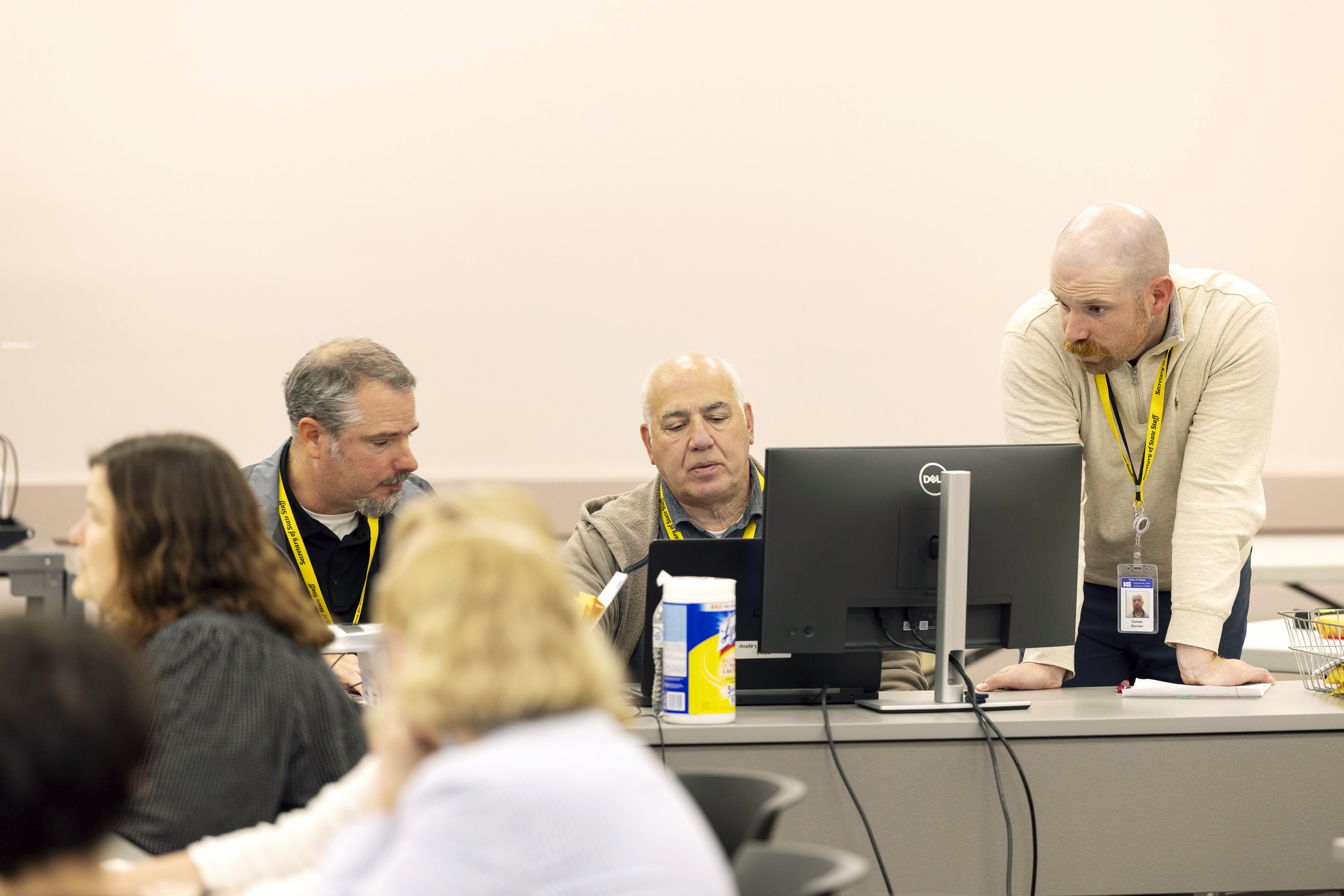
McBrien said such interruptions are typical for the process.
“With 487 municipalities around the state, there’s always an instance where, when we go to pick up the information, somebody forgets one little piece: a flash drive here, or the right report there,” she said. “It’s not unusual to have to go back and get that right information.”
“We want to make sure we’re doing it right and that we give you all the correct information when we run the race,” she added. “So even if it takes a little more time, the integrity of the process is what’s important.”