
Six hours into his June 25 delivery route, Dan Sunderland pulled his 22-foot Monument Farms Dairy truck into a South Burlington Shell station. The Shelburne Road Variety convenience store was the driver’s 16th stop since he’d left Monument’s Weybridge bottling plant around 5:30 a.m.
Slugs from a massive red coffee cup, occasional smoke breaks and a quickly chugged pint of Monument Farms chocolate milk powered the wiry 53-year-old through his list of restaurants, cafés and retail stores. Sunderland had maneuvered his dolly of stacked milk crates around bakers rolling bagels and baristas pulling espresso. He had greeted City Market loading dock workers by name in Burlington and wheeled a large delivery into a refrigerated shipping container at Beta Technologies’ airport headquarters.
At the Shelburne Road gas station, cashier Karen Bell said she’d seen some new customers since the convenience store across the street became a Stewart’s Shop and replaced Monument Farms milk with its in-house brand.
One of those patrons, Bell reported, said his son will only drink milk from the Weybridge dairy. The cashier is a fan, too. Despite living on a tight budget, Bell said, “I’m going to choose Monument even if it’s a little more expensive. It’s fresher, and it’s local.”
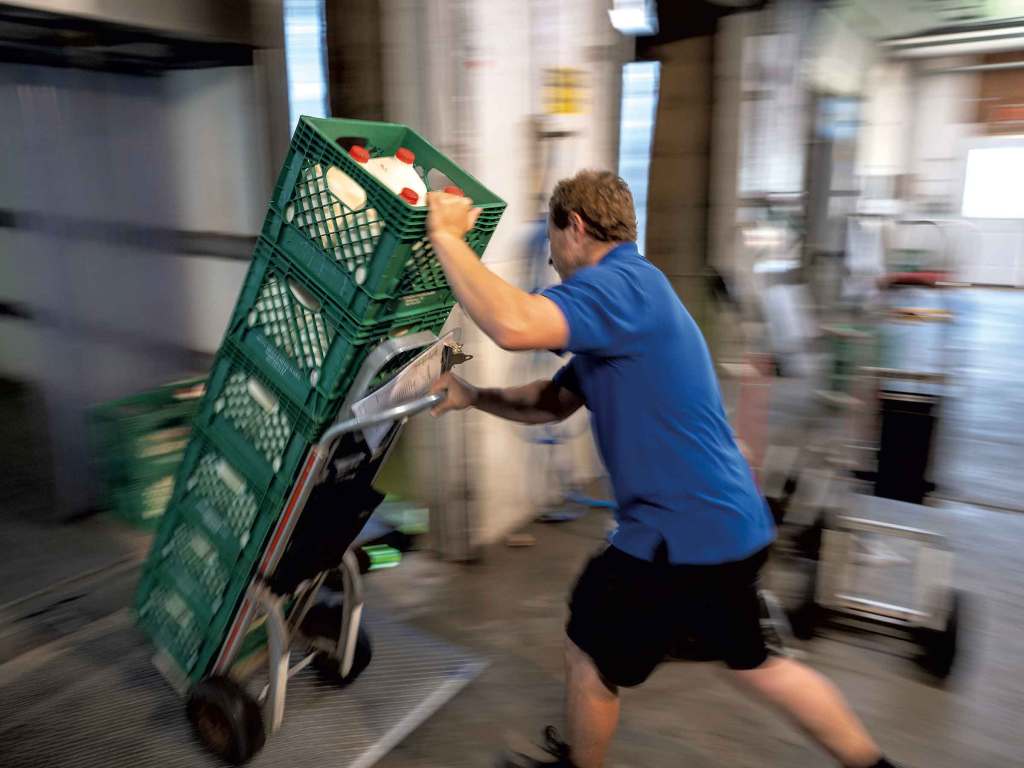
For almost 100 years, Monument Farms has counted on loyal customers such as Bell to choose its milk. That allegiance has helped build the farmstead dairy producer into an $11 million business currently run and owned by six members of its founding family. Amid a steady flow of mostly bad news for Vermont’s shrinking dairy sector, Monument plugs on, seemingly as solid as the marble monument on the Weybridge green after which it was named.
But as the fourth-generation owners prepare to fully take the reins, they face hard decisions about how to steer their complex agricultural operation through headwinds that include an aging labor force, changing consumer tastes and retail consolidation — such as the Stewart’s purchase. The list of challenges is inherently longer for Monument than for similar-size Vermont dairy farms because the owners have a role in every step: from raising most of the feed for their herd to bottling and selling all of its milk.
Monument Farms is sort of a dinosaur — or, more positively, a unicorn — in the dairy industry. The operation is unique in New England for its focus on selling only milk and cream from every drop produced by its 580 conventionally raised Holsteins: no organic or grass-fed certifications, no super-premium ice cream, no $35-a-pound cave-aged cheese.
It’s getting harder for a business of our size to do what we do.
Jon Rooney
Adding to that singular approach, according to Cornell University dairy economist Christopher Wolf, is the fact that Monument bottles all of its milk at its own plant and runs its own trucks to deliver close to 40,000 gallons a week to about 500 accounts, mostly west of the Green Mountains between Enosburgh and Rutland. And unlike many farms that process some of their milk into their own products, Monument does not belong to a farmer co-op that will buy any excess unprocessed milk.
Monument is not only the state’s largest farm-bottler by far; as of the spring closure of Barre’s HP Hood plant, which bottled the milk of many farms under the Booth Bros. label, it is now also the largest bottler of fluid milk in Vermont. Though its annual 2 million gallons make up less than three-quarters of a percent of the state’s total milk production, Monument is the most widely sold Vermont milk brand in terms of both geographic distribution and the diversity of retailers, from chain grocery stores and pharmacies to co-ops and corner markets.
That distinction hits third-generation co-owner Jon Rooney two ways: He’s proud to be the last man standing, so to speak, but also a little worried.
Compared to the mid-1980s, when Jon joined the family biz, “It’s getting harder for a business of our size to do what we do,” he said. “Margins have shrunk.” The advantage of Monument’s vertical integration means “we’re more in control of our price than most dairy farms,” he explained, “but we’ve also got a lot more invested into it.”
Deeply Rooted
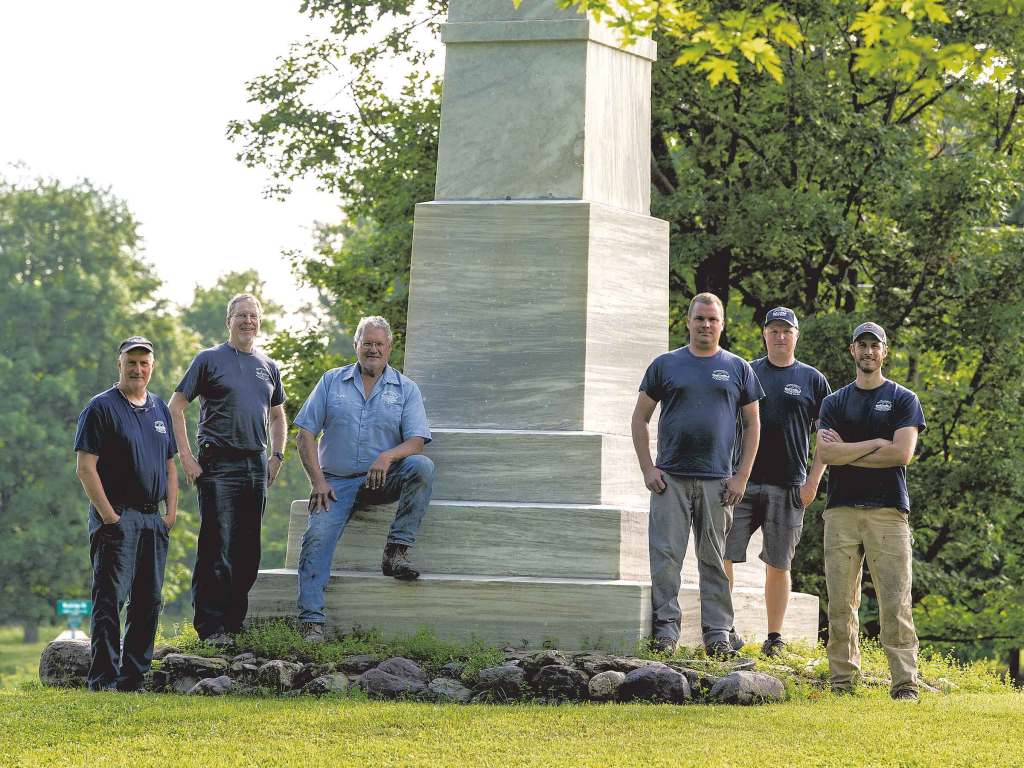
The tiny Addison County town of Weybridge does not have a general store, but it does have Monument Farms Dairy. Two old milk cans and cheery window boxes of flowers flank the front door of the low-slung, barn-red building, which houses offices, the bottling plant and the company store. It sits across from the green that hosts the company’s namesake monument, erected in honor of a 19th-century native son and U.S. senator, Silas Wright.
Jon, 67, is often the first to arrive, around 2 a.m. He climbs deeply grooved wooden stairs to the small break room to put on the first of roughly 30 daily pots of coffee. In addition to the dairy’s 50 employees, his neighbors, fellow farmers and the town road foreman regularly stop by for a morning cup.
“This is the town gathering place,” said Dan James, Jon’s 40-year-old nephew and a fellow owner. “This is where people come to start the day.”
Later, during its afternoon hours, the store will do brisk business in neighborly connections, along with gallons of milk and pints of chocolate milk. In addition to its own products, the Monument Farms store sells eggs from Maple Meadow Farm in Salisbury and Cabot Creamery cheese and sour cream, which it also delivers six days a week by the company’s fleet of a dozen trucks.
The dairy has been a fixture since 1930, when Marjory and Richard James established Monument Farms on about 25 acres on what is known as Weybridge Hill. They milked 15 to 20 cows and bottled milk in the cellar of their house, just north of the company’s current headquarters.
Their daughter Millicent grew up washing milk bottles at a time when every small dairy bottled its own milk, she recalled in a 2006 interview with the Burlington Free Press. Photos hanging in the company store show her in braids circa 1945, standing next to a delivery truck filled with blocks of ice.
During her childhood, the family began buying more farmland and accompanying houses and barns in the Lemon Fair Valley. Over the decades, Monument amassed about 2,700 acres, making it the town of Weybridge’s largest landowner.
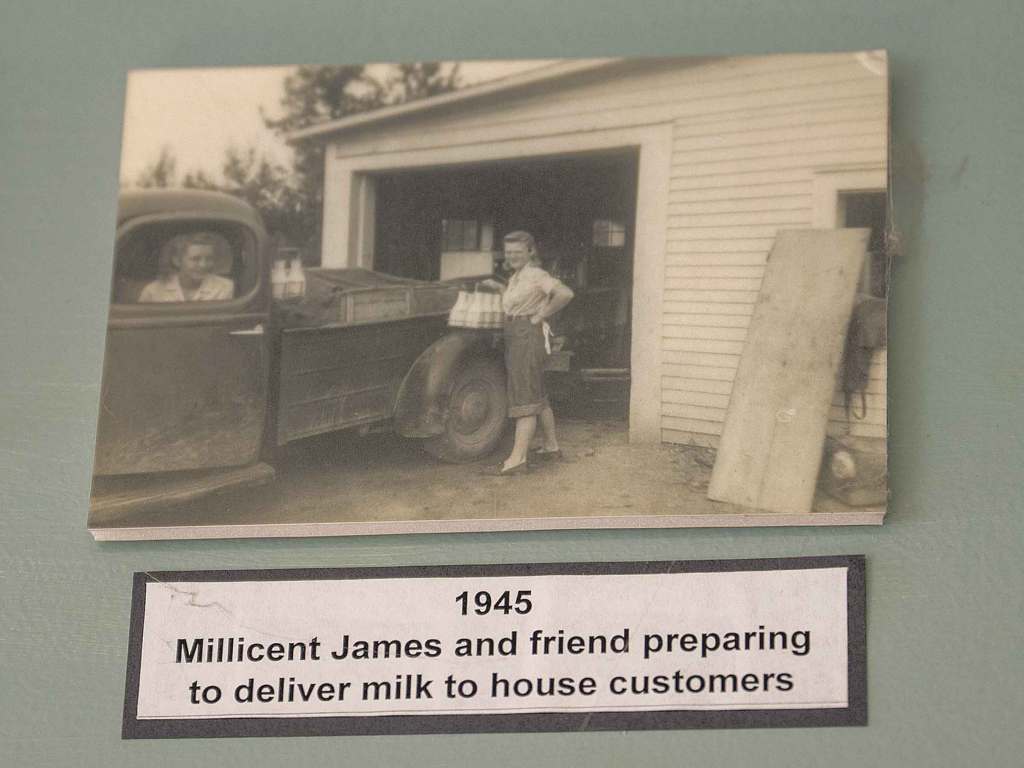
Millicent and her husband, Jim Rooney, joined the farm business in 1959, and she managed the company’s bills until 10 days before she died in 2014 at the age of 86. Her brother, Steve, ran the farm side of the operation until his death in 1999.
Sunderland, the route driver, remembers the matriarch well. Mrs. Rooney, as everyone but close family and friends called her, was kind but firmly professional. “There was no profanity around Mrs. Rooney, ever,” he recalled. If someone let a curse word slip, “She would go up one side of you and down the other.”
Today, the business is owned and run by the third generation — Millicent’s son, Jon Rooney, and Steve’s sons, Peter and Bob James; and by fourth-generation Jameses — Peter’s son, Tyler, and Bob’s sons, Dan and Ben. They all live within a couple miles of the family business.
Jon lives in the big brick house where he grew up, directly across James Road from the Monument building. His mother is buried alongside two centuries of ancestors in the Weybridge cemetery, a two-minute walk from the dairy plant.
Even in death, Jon said, “We don’t go far.”
All in the Family
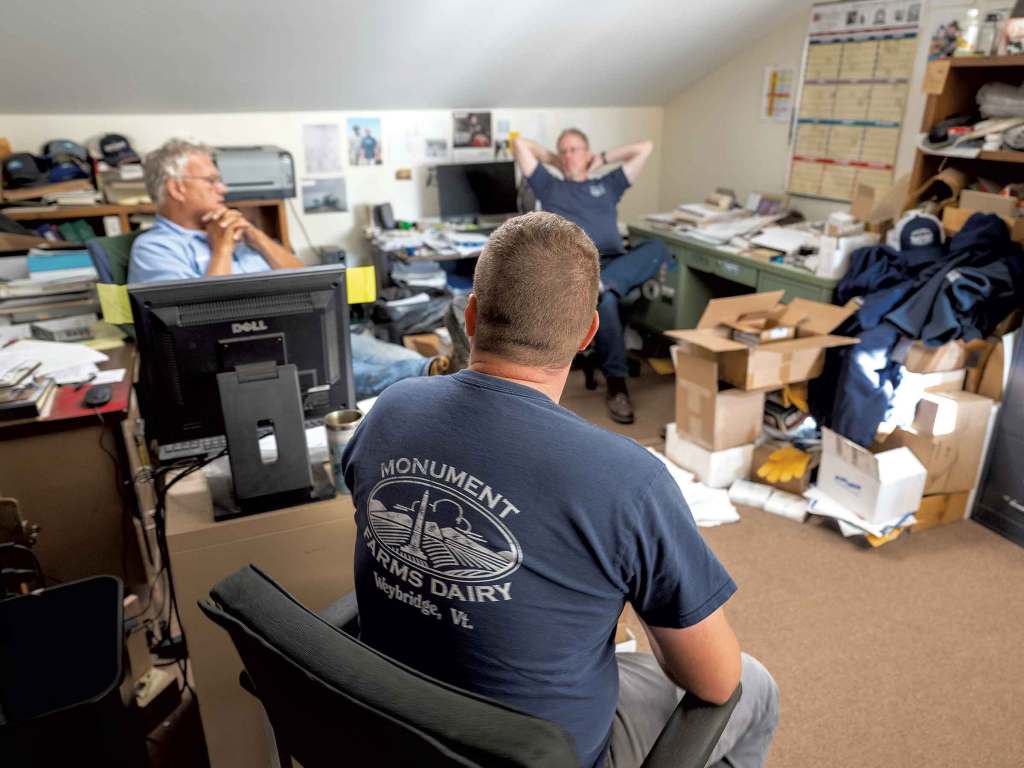
Every Wednesday at 6:30 a.m., the six owners and their business manager, Chris Anderson, meet in the group office a couple steps up from the break room. It contains six desks and many teetering piles of equipment manuals, parts catalogs, stacks of printed reports, and a book or two on fly-fishing, one of Jon’s hobbies.
Anderson’s desk is noticeably the neatest. The 71-year-old former banker came out of retirement to help “for six months” after the company’s longtime accountant died suddenly in 2019 at work — “in this chair,” Anderson said, gesturing to his seat.
Family members have largely taken ownership of distinct parts of the operation. They credit their ongoing success — and the fact that everyone still speaks to each other — to the divide-and-conquer approach, mutual respect, and a sense of humor.
“None of us is overly high-strung,” Jon said, “and we’re always ready to laugh.” Of his first cousins, he continued, “We’ve either played together or worked together our whole lives. They’re the people I feel most at ease with.”
“Our dynamic works well,” agreed Dan, the eldest of the fourth-generation owners. Sure, sometimes they disagree on minor daily decisions about personnel or whether to buy a new or used piece of equipment, but they work through it. “There are definitely days we butt heads, but generally we all get along,” he said.
Jon, who runs the processing plant, is currently taking a turn as company president and serves as its de facto spokesperson. His cousin Peter, 71, supervises the herd manager and oversees field work alongside his 37-year-old son, Tyler. Peter’s 65-year-old brother, Bob, oversaw distribution and the machine shop until his two sons, Dan and Ben, took over those roles. He’s since become a utility player.
“Now it seems like he mostly mows lawns around here,” Dan joked about his dad.
That Wednesday, June 10, Dan had to miss the meeting to cover for a driver who had called out sick. The remaining five and Anderson talked through a loose agenda, hearing each other out with a generous dose of good-natured ribbing.
There are definitely days we butt heads, but generally we all get along.
Dan james
After Peter listed field-work machinery issues, Jon tossed out, “Whiner.” When Jon offered up his home-baked oatmeal-raisin cookies, Bob teased, “You start knitting, too, Jon?”
Each member of the older generation brought different experience and expertise when they joined the business full time.
Jon earned a degree in dairy science from the University of Vermont and later worked in quality control for HP Hood. His ginger beard and mustache are frosted white, and he wears a small army of pens neatly clipped across the breast pocket of his collared Monument shirt. Of everyone in the family, he’s traveled farthest. After a heartbreaking split with a girlfriend, he signed up for a Peace Corps stint in Guatemala and returned, he said, with the tendency “to view things a bit more liberally.”
Peter, who has the tanned, muscled forearms of a man who has spent long hours working outside, said he was always drawn to the outdoors and to animals. He went on to study dairy management and animal science before returning to the farm. He always knew he belonged there, he said. He still recalls his excitement when his grandfather took him and his cousin Pam, one of Jon’s two sisters, to Middlebury’s Lazarus department store to buy green work boots, the kind “everyone else wore.”
His younger brother, Bob, balding with deep-set dimples and a quick laugh, worked in the Middlebury Kraft Swiss cheese plant (now an Agri-Mark/Cabot facility) before starting as a Monument route driver out of high school.
In the June 10 meeting, the five owners present took turns sharing updates on their departments while the others asked questions or offered ideas. After they hashed out the pros and cons of expanding the calf barn versus building a new one, Tyler summarized: “The good option is really expensive. The less good option is less good.” If it rained that afternoon, his dad suggested they crunch some numbers together.
A brief check-in on a couple of milk donation requests seemed to cue adjournment. It was 7:20 a.m. and time to get the day’s real work rolling.
Anderson, the business manager, said he’s constantly impressed by how the six manage “so many moving parts, keep track of them all and work together in a positive direction.” Would it be easier if they gave up one of those moving parts — say, the first step of raising feed, or the last, distribution? Maybe, he said, but it’d mean giving up other things, too.
Unlike most of Vermont’s conventional dairy farms, whose milk is priced through a federal system, “They control the whole chain as much as you can control that,” Anderson said. “Sure, they could just milk cows and sell to a co-op like Agri-Mark, but they take a lot of pride in doing what they do.”
Cultivating a New Generation
On an early June afternoon, the outdoor crew was finishing up the season’s first cut. Monument grows about 1,900 acres of hay and corn for its full herd of about 1,100, buying only the grain ration. Tyler, the fourth-generation field guy, navigated a machine called a merger, lifting the fragrant hay into neat windrows for easier collection.
Sometimes, the lanky, chestnut-bearded farmer said, he brings his 4.5-year-old son along on field work, as his dad, Peter, did with him. It’s too soon to count on a fifth generation, but the three members of the fourth are firmly entrenched at Monument.
Tyler began pitching in on field work when he was a teen but left Vermont to study wildlife ecology in Maine. “I loved the farm, but I needed a little break,” he said. When the woman he later married wanted to move to New York City, Tyler — whose only big-city experience was going to a Boston Red Sox game — tagged along and landed a gardening manager job in Central Park.
After two years, the couple returned to Vermont, and Tyler settled in at Monument for the long haul. “I always knew I’d have something to come back to,” he said. He’s since won grant funding for a no-till drill, which plants seed while preserving soil structure and biodiversity, and he’s working with Audubon Vermont to count endangered songbirds on the farm.
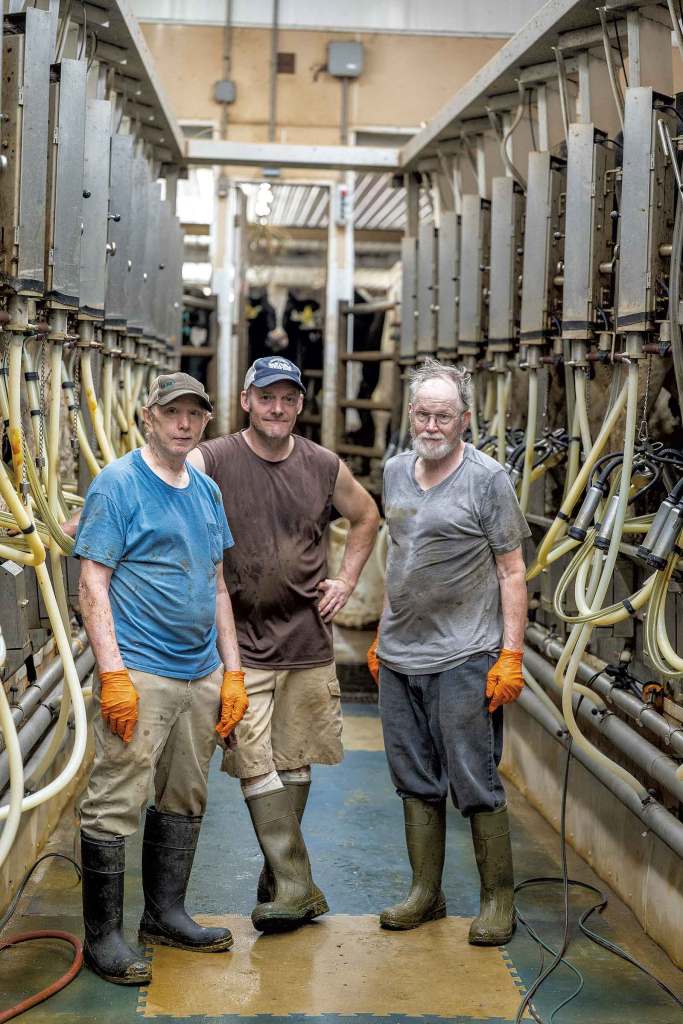
Unlike Tyler and Ben, who studied diesel mechanics on scholarship in Ohio, Dan never left Weybridge. In high school, Dan recalled, a teacher “pulled me aside and yelled at me for not going to college.” The prospect of debt deterred him, he said.
A practical sort, he decided to join the family biz because “there was stuff to be done,” he said. Like his dad, Bob, he started by driving a delivery route before taking over supervision of the distribution system. He was instrumental in moving the company from carbon copies to a computerized order system.
Dan acknowledged that he occasionally yearns for a job “you can go home from and not think about.” Time off is scarce. “In this business, the milk keeps coming, and you have to get rid of it,” he said.
His brother, Ben, took just two days off around the May 29 birth of his new baby before returning to his domain: the machine shop, a few minutes’ drive from company HQ on the old Hamilton farm that Monument bought in the 1950s.
Like all six owners, Ben, 38, said he started helping out as soon as his “feet could hit a pedal on the lawn mower.” On the quiet side, he’s clearly more comfortable with his head under an engine hood than talking about his affinity for repairing things.
Ben, Tyler and their wives have four young kids between them. Dan’s not married, but he’d like to be. He bought Ben’s eldest a T-shirt that reads: “My uncle’s single. Ask Mom for details.”
Theo, Tyler’s preschooler, insists he wants to be a farmer. When they go out together on the tractor, Tyler said, “I let him hold the wheel.”
Milk Money
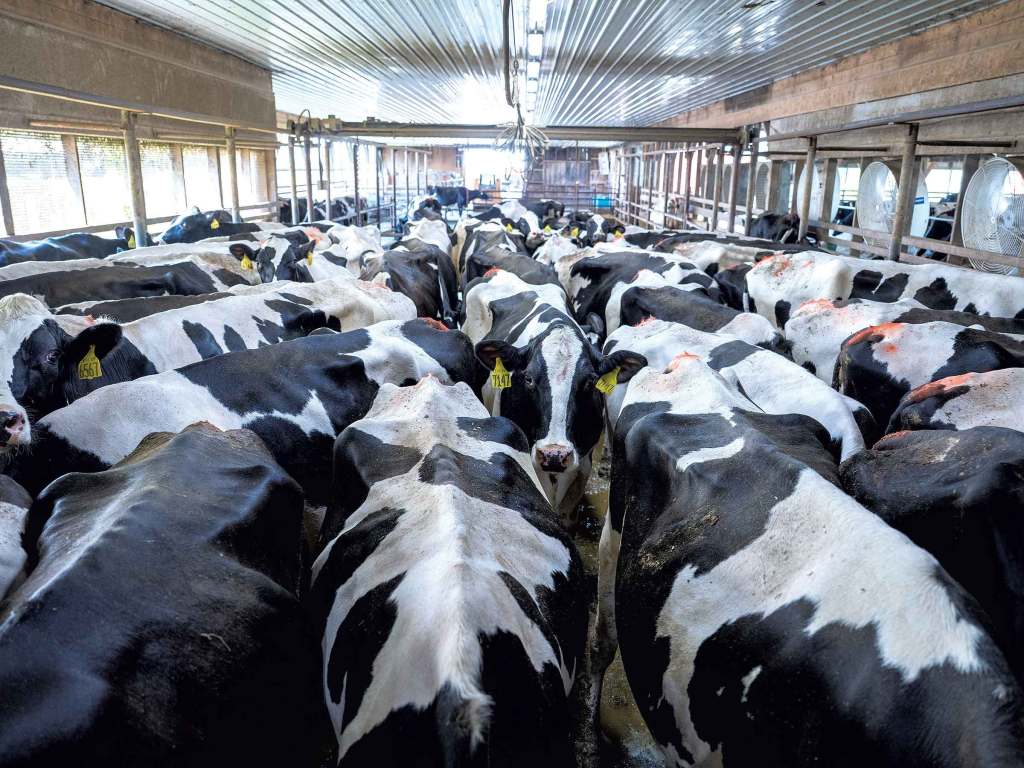
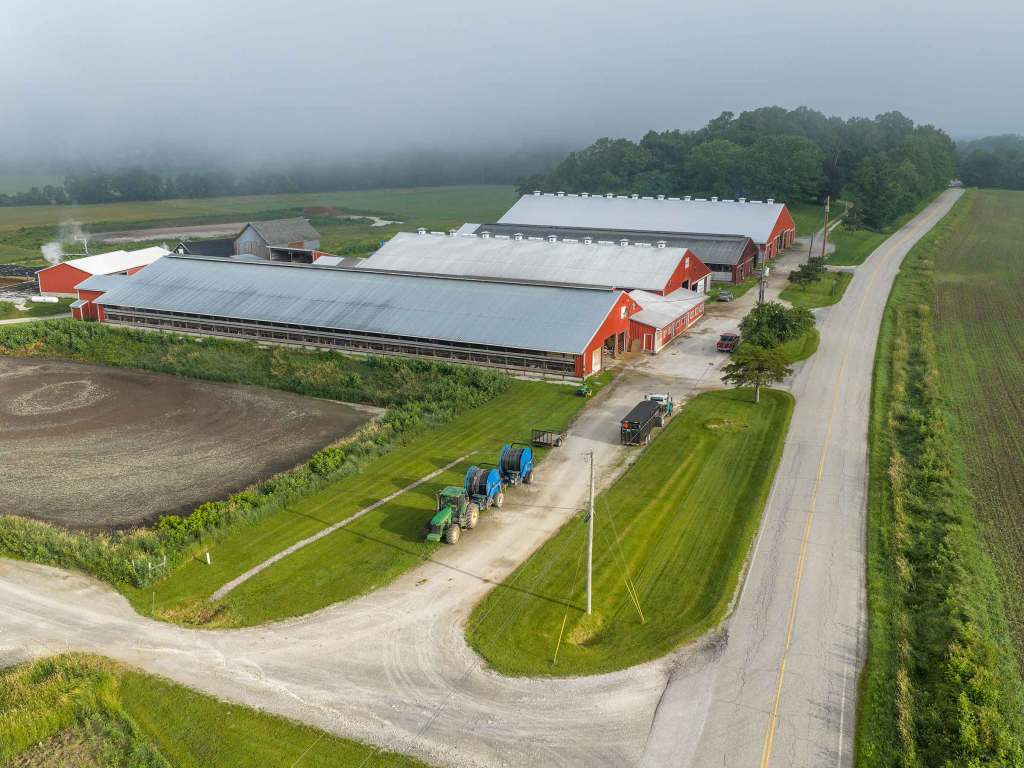
The sweet, faintly pickled scent of haylage mingled with pungent cow manure as massive fans whirred to cool the cows in the newest of Monument’s free-stall barns on a hot June day. The animals roamed through the structure, raising their hooves nonchalantly to step over the automated alley scraper as it made its rounds.
Of all the moving parts of the entire operation, feeding and caring for the herd costs the most per gallon of milk, Jon said. A few years ago, the owners bit a huge financial bullet when they decided to invest $2 million to build an additional barn to grow the milking herd to about 800 cows.
The new barn was an especially big bet, but it’s the kind of decision, similar to the calf barn expansion debated during the Wednesday meeting, that the business faces regularly. It was potentially risky, the family knew, but they felt pretty good about it.
Unfortunately, the wager has yet to pay off.
The additional milkers were intended to meet pent-up demand from a roster of customers eager to stock Monument milk and cream. When New York convenience store company Stewart’s Shops bought Jolley Associates in late 2024, it replaced Monument Farms at 28 Vermont Jolleys with its store brand. The switch blew a 7 percent hole in Monument’s revenue. To fill it, the dairy emptied its customer wait list, eliminating the demand for more milk. Herd expansion plans have slowed for now, though the new barn does house some cows.
Another big-ticket item has required a lot of coddling to earn its keep: Monument’s 11-year-old, $1.3 million anaerobic digester, the most complex mechanical system on the farm, has been “problematic,” Jon said diplomatically. “Almost everything in the whole system has had to be replaced at least twice.”
Despite those headaches — and with a lot of attention from Jon’s cousin Bob — the digester does generate and capture methane from the herd’s manure and puts out almost enough power to meet the electricity needs of the farm and plant. It also produces clean bedding from the undigested plant fiber in the manure, saving the farm almost $50,000 annually on sawdust.
Against operational trials such as these, Monument has one solid advantage over many dairy farms, at least for now: its workforce.
Over the past several decades, the steadily shrinking number of Vermont dairy farms has provided Monument with a supply of experienced employees who grew up on or worked for now-defunct farms. It is the rare Vermont dairy of its size that has never employed migrant workers.
“We joke that Monument is where farmers come to retire,” herd manager Randy Palmer said. Palmer and his assistant herdsman, Nathan Bingham, both came to Monument from their own family farms. Bingham, 44, gestured to neighboring fields, which his family farmed until selling their herd 19 years ago; Palmer, now 60, joined Monument 20 years ago, after running his own 80-cow farm for almost two decades.
Sprinkled across its acreage, Monument owns seven houses and apartment buildings that it rents affordably to employees, a valuable asset at a time when labor and real estate markets are equally tight.
The Monument job came with housing for Palmer and his family, along with a 401k retirement savings account and health insurance. “After paying for my own, I realize how big that is,” he said.
In the parlor, Steve Warner prepped milking machines for the next round of cows. The 69-year-old grew up on a 50-cow dairy in a small town northwest of Albany. “It’s tough to make a living on 50 cows nowadays,” he said.
Warner has worked at Monument for seven years alongside his younger brother. He likes the job, and the bosses are fair, he said. The perks are pretty good, too: Warner and his brother live in company-owned housing, he said, “and my grandkids are always after me to bring them chocolate milk.”
But, like Palmer and the Warner brothers, many Monument employees are close to or beyond retirement age. With the average employee age 50, Jon often asks himself: How do we expect to keep going?
More Than Milk
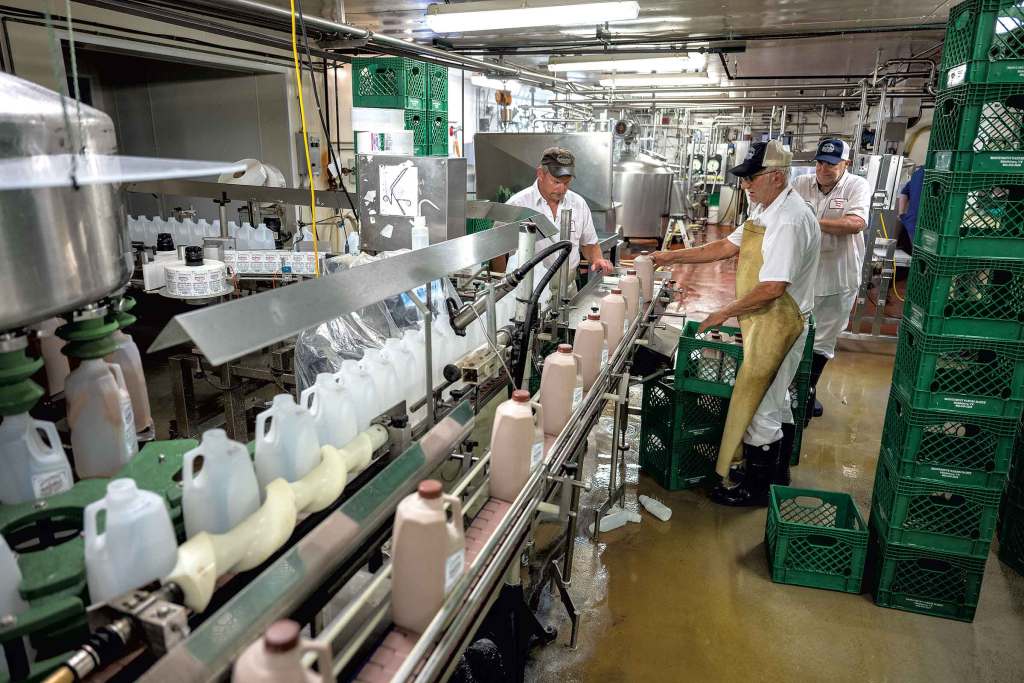
Monument Farms doesn’t technically play in the value-added category, but its cocoa-rich, velvety chocolate milk is prized by fans such as Steve Warner’s grandkids as if it were an award-winning artisanal cheese.
Four days a week, the chocolate run starts around noon, after milk has been mixed with cocoa, two kinds of sugar and vanilla flavoring, plus the cornstarch and a seaweed-derived thickener called carrageenan that ensure its silky texture.
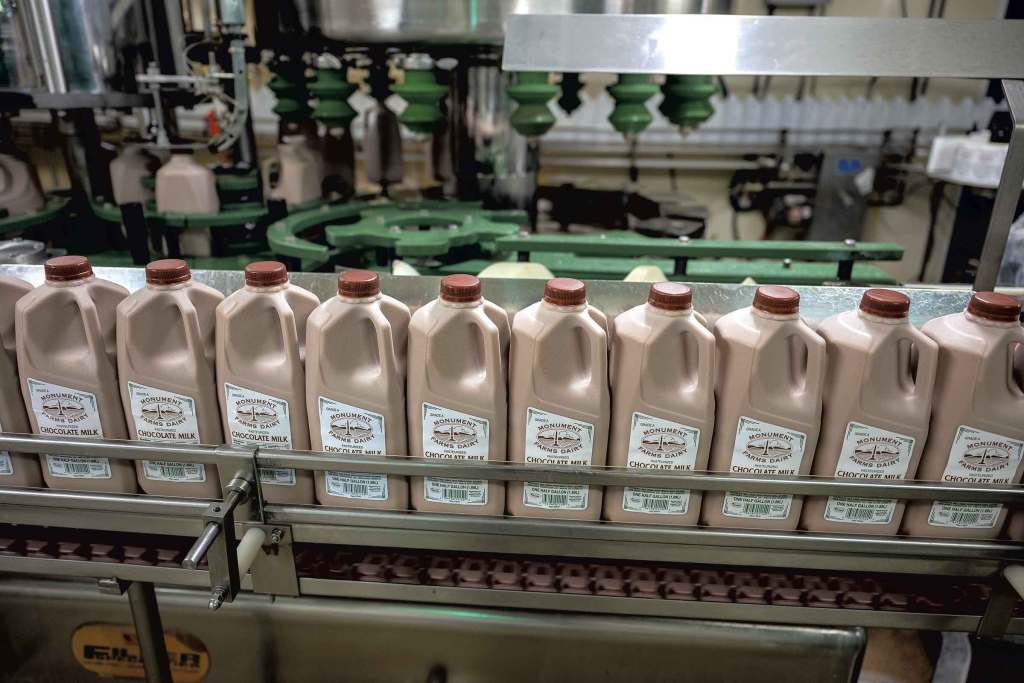
Flavored milk flows from a stainless-steel tank through pipes along the ceiling into the bottling line, which fills half gallons first and then, after a quick switchover, pints. As if the empty bottles are ascending to heaven, they rise to meet the nozzles, which shoot them full of chocolate milk before a capper seals them with a twist.
Monument has made chocolate milk for as long as Jon can remember, at least since the early 1960s. Today, it bottles 6,000 gallons weekly, about 13 percent of total production — and could easily sell more.
“Our chocolate milk does seem to be our calling card,” said Jon’s nephew Tyler.
Just as the long-ago decision to make chocolate milk likely involved discussion and operational change, the family is now considering how its product mix might shape the dairy’s next 50 years.
Producing more chocolate milk would require more tank space. But that addition would need to be part of a long-overdue plant upgrade for which, Jon said with a sigh, “I’ve got to summon the energy somewhere.” Processing still falls squarely on the 67-year-old’s shoulders, the only major aspect of the operation lacking a next-generation heir.
Our chocolate milk does seem to be our calling card.
Tyler James
Any renovation would include new equipment with more automation — a major investment, but a potentially beneficial one for the company’s aging workforce and future staffing needs. “No way it should take eight people to do what we do in a day,” Jon said.
But before the owners start pricing out a possible project, they need to map out the future, a task that requires time the busy, hands-on guys rarely have to spare.
The cost of another major infrastructure investment may justify breaking from a century of tradition to broaden Monument’s line beyond milk and cream. At the same time, the owners can’t afford to sacrifice the quality and value for which they’ve become known.
Monument milk retail prices currently start at about $3.99 a gallon — generally more expensive than most store brands, but not by much. Monument milk is likely to be the cheapest 100 percent Vermont milk on the shelf, since the state’s other farmer-bottlers with any significant distribution are organic.
At City Market’s two Burlington stores, the Middlebury Natural Foods Co-op and Montpelier’s Hunger Mountain Co-op, Monument milk is the store brand. For 20 years, Monument has packaged gallons under the Vermont Co-op brand for those three accounts. Half gallons of Monument whole milk are the top seller in City Market’s perishables category; Vermont Co-op whole milk gallons rank third. (Cabot Seriously Sharp Cheddar is No. 2.)
Cheray MacFarland, City Market’s director of purchasing and marketing, said Monument allows the Burlington co-op to offer an affordable local milk. She called the company “one of our most reliable vendors: consistent, communicative and supportive.”
As far as other products that might fit Monument’s brand, customers frequently ask if they would consider developing a creemee mix, Jon said. But restaurants, bakeries and local chocolatiers, such as Lake Champlain Chocolates, already guzzle all the cream the farm can produce — especially during the summer, when cows make less milk fat in the heat, he explained.
Much as it makes his head explode to think about the processing plant’s future, Jon recognizes that the family is lucky to have a reason to think ahead.
“If we had no one else coming along, it would be hard to justify growing the business at all,” he said.
The Bottom Line
That Monument has chugged along slowly and steadily, achieving 3 to 4 percent annual growth over the past 30 years or so, is an anomaly. Thomas Dairy, a similarly historic dairy in Rutland, sold its herd more than 20 years ago, though it kept bottling milk from other farms until it closed in 2020. Stowe’s Mansfield Dairy brand endures thanks to an arrangement with Monument, which bottles 6.5 percent of its own milk under the Mansfield label.
The odds are not in favor of nonorganic farms that hitch their wagon to fluid milk. It is dairy’s lowest-margin product due to strict regulations, a short shelf life and intense price pressure in the store cooler. Even for a producer such as Monument that sells direct and theoretically controls its own pricing, there’s no escaping the fact that many retailers draw customers by selling milk at razor-thin margins.
On top of that thorny economic equation, Monument has assumed a significant extra workload. Dairy farming is already a 24-7 job, and Monument’s field-to-store model gobbles up extra energy and resources. The all-in-house approach has both competitive advantages and liabilities.
“It’s what I love about the business, but it’s also kind of the problem,” fourth-generation owner Tyler acknowledged. “We could farm some of it out, but that’s not what we do, not our identity.”
That identity is one of Monument’s biggest assets. “Usually, you don’t know where your milk comes from. It’s a comingled bunch of milk,” said Wolf, the dairy economist. For a locally rooted brand such as Monument, he continued, “The strength is the story that goes along with the milk that the consumers can put a name and a face to.”
Sam Smith, farm business director at the Intervale Center in Burlington, is working with fourth-generation Monument owners Tyler, Ben and Dan on a business transition and planning process through the Vermont Farm & Forest Viability Program.
Monument has succeeded over the decades, Smith said, thanks to a deep bench of family members with diverse skills and a strong commitment to the legacy business. He sees “a lot of capacity in this next generation,” he said, but there’s still much work to be done to figure out how to upgrade and scale the operation and develop management expertise to replace senior family members.
Bob has stepped back more than any of the other third-generation owners, but when he and his wife take rare vacations, they still often drive only 17 minutes to a New Haven campground.
“If something happens,” Bob said, “we’re just a phone call away.”
Dan, Ben and Tyler hope to allow their elders to enjoy some retirement years — unlike Monument’s previous stewards, who essentially died on the job. Whether there are three or six family members involved day-to-day at Monument Farms, the family knows that its bottom line depends on retaining loyal customers like Karen Bell, the Shell station cashier, who are willing to spend a little more money on milk direct from a 96-year-old family farm in a tiny Addison County town. ➆
The original print version of this article was headlined “Dairy Kings | As Vermont milk producers struggle, fourth-generation Monument Farms in Weybridge succeeds by keeping it all in the family”
This article appears in July 15 • 2026.