Orange County’s chief of corrections warns that a proposed amendment to Florida’s constitution that would reduce property taxes could have a dangerous impact on jail staffing and training, and could increase public safety risks if approved by Florida voters this November.
Orange County operates the fourth-largest jail in Florida. The proposed property tax amendment, Amendment 3, would expand Florida’s current property tax exemption for primary homes from the first $50,000 of its value to $150,000 in 2027 and to $250,000 in 2028, if approved by more than 60 percent of Florida voters this fall.
It would also require state lawmakers to establish a process for eliminating non-school property taxes on homesteads — aka primary residences — altogether.
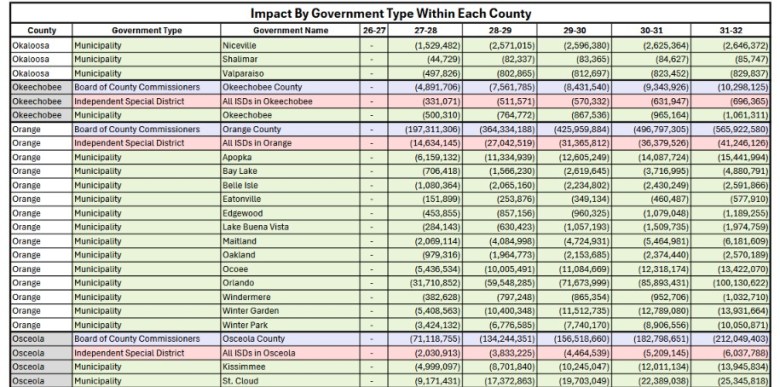
Policy experts have warned the measure could cost local governments billions of dollars in revenue each year — funding that’s used to pay for essential public services such as police and fire rescue, sanitation, infrastructure and maintaining public parks — while potentially driving up costs for renters, who may be forced to shoulder more of the cost burden.
City commissioners in Sanford have already discussed potential cuts to the city’s public parks, should the measure be approved. The city of Orlando this week implemented a hiring freeze to head off the potential loss in property tax revenue.
Even Florida’s firefighters union, which generally leans politically conservative and sides with Republican state leadership, is publicly opposing the measure. “We believe tax relief and strong public safety can coexist,” a statement from Florida Professional Firefighters reads. “Unfortunately, this amendment does not provide a clear path to achieving both.”
An analysis by state economists found the Amendment 3 proposal, titled “Save Our Homes from Excessive Property Taxes,” could cost local governments nearly $5 billion in revenue in the first year alone and an estimated $10.75 billion by 2031.
“This type of budget reduction for corrections would primarily translate into personnel reductions, hiring freezes, and service level reductions,” said Orange County Corrections Department chief Louis Quinones, speaking to county commissioners during a budget presentation Wednesday.
Orange County leaders are currently working on finalizing a budget for the next fiscal year that begins October 1, which includes funding for jail operations.
“A staffing reduction or hiring freeze would increase the risk to public safety,” Quinones continued. “This workforce reduction would necessitate a housing reduction, which would create overcrowding in inmate housing units that will result in safety concerns for staff and inmates, and jeopardize accreditation statuses.”
Quinones said training opportunities for jail staff, including crisis intervention training for encountering people with mental illness, could also be on the chopping block. “I’ve shared this with you all on numerous occasions. Our population — over 45 percent — are diagnosed with some form of mental illness,” he explained. “It’s extremely important that we continue to have those type of courses.”
Orange County’s Corrections Department has submitted a $228 million budget request for the next fiscal year, up from $217.5 million this current year. The 5 percent increase would predominantly go toward staff salaries, retirement benefits and capital improvement projects, such as the planned expansion of an inmate medical clinic.
“This will be to develop a centralized medical clinic with shared treatment space that serves inmates housed across multiple facilities,” Quinones said of the project. “This model will increase patient capacity, streamline patient flow, enhance operational efficiencies, and strengthen safety and security for the healthcare staff, the corrections staff and the inmates.”
The proposed Amendment 3, approved by the Florida Legislature for placement on the 2026 general election ballot this November, has been touted by supporters as an effort to save taxpayers money.
But even Florida Gov. Ron DeSantis, who initially pitched the idea of eliminating property taxes altogether, has since distanced himself from the measure, if only because it is less far-reaching than his own half-baked proposal.
Related Stories
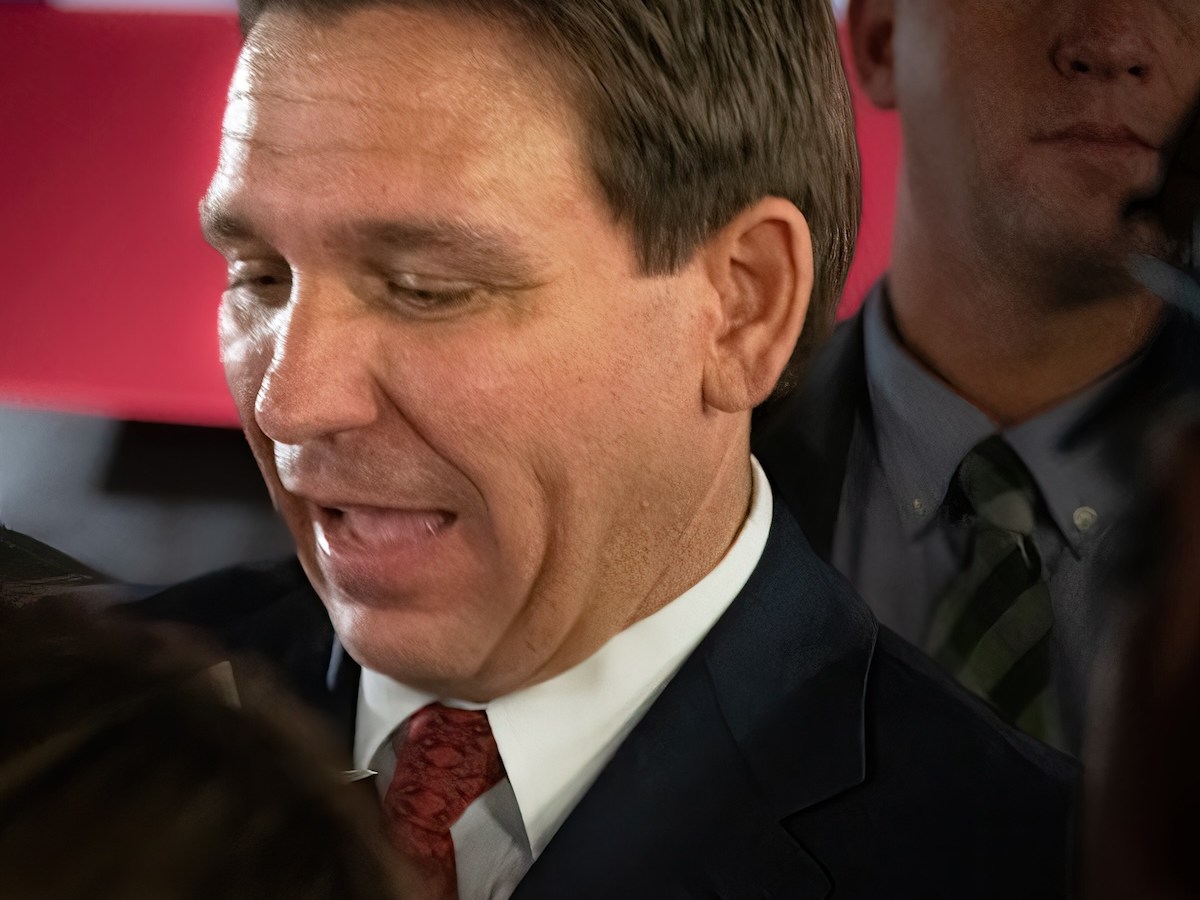
“What the Legislature did wasn’t my proposal,” DeSantis said at a news conference last month. And unlike taxpayer-funded opposition campaigns the outgoing governor launched to defeat two 2024 ballot measures that sought to expand abortion rights and legalize marijuana, DeSantis said he won’t use taxpayer money to promote this year’s Amendment 3.
“I think it’ll likely pass,” DeSantis told reporters, adding that he himself plans to vote in favor of it. “I think most people are going to be supportive of it. But I don’t know that.”
Florida isn’t the only state that is mulling the idea of property tax elimination, despite the potentially detrimental effects it could have on the basic public services that communities rely on. Republican lawmakers in Idaho, Indiana, Texas and Georgia have similarly touted support for the idea, through various iterations that — in some cases — could affect funding for public schools, too.
Florida’s Amendment 3, as finalized, exempts property taxes that go toward the public school system. DeSantis’ earlier version, later amended by state lawmakers, did not.
The push for property tax reduction in Florida comes amid state reviews of local government budgets for unnecessary bloat, as well as a widespread affordability crisis in the Sunshine State and many other parts of the country. Floridians, however, are uniquely situated in a nefarious regressive tax system that leaves lower-income families more likely to be priced out of the state than the billionaires who are buying up McMansions in South Florida.
The term “regressive,” in this case, refers to a tax system that ultimately leaves low-income earners paying a larger share of their income in taxes than higher-income earners, including billionaires who are investing hundreds of thousands or even millions of dollars into Florida political campaigns.
According to the Florida Policy Timeline, a project of the nonpartisan Florida Policy Institute and its partners, Florida has the most regressive tax system in the South “due to a history of decisions that have shifted and solidified an outsized tax responsibility onto households with low to moderate income, who are disproportionately Floridians of color.”
The lowest fifth of Florida families by family income, for instance, pay 13.2 percent in taxes, according to the Institute on Taxation and Economic Policy, while the top 1 percent — with an income of over $735,700 — pay just 2.7 percent.
A poll from Florida Atlantic University, released in November, found that nearly 50 percent of Floridians surveyed had considered moving out of Florida over the past year due to the cost of living. Eighty percent of Floridians surveyed admitted they were concerned about housing affordability, and just 51 percent said they were “somewhat confident” they could buy a home.
At least three political committees have been formed in recent weeks to advocate against the passage of Amendment 3, according to the Florida Phoenix. No political committee has been formed yet to specifically advocate in favor of it, four months out from the November general election.

Related Stories

Cyclospora has sickened people in nearly 40 states
The Orange County Sheriff’s Office faces scrutiny over how much of its proposed $470 million budget would be used to hunt down undocumented immigrants.
Will it be the shot in the arm downtown needs?
Related
Source link