
Orange County’s mayoral race this year has been considerably under the radar, considering it has significant implications for the future of a county that nearly 1.4 million people call home. And that’s not to mention major tourist attractions such as Disney World and Universal Studios that drive the county’s multibillion-dollar tourist economy.
Four candidates are in the running this year for Orange County mayor, including three Democrats and one Republican, although the position is officially nonpartisan. The mayor serves a four-year term and is limited to two consecutive terms in office. The job currently pays an annual salary of $261,209.
Whoever wins the consequential election will succeed outgoing Mayor Jerry Demings, a former police chief and sheriff who is term-limited from running for re-election himself. Demings had previously been campaigning to become Florida’s next governor, but suspended his gubernatorial campaign in June after receiving a prostate cancer diagnosis.
The mayor serves on a board of county commissioners that, after this next election cycle, will include eight commissioners, plus the mayor. Currently, there are only six county commissioners, but because the county’s population has grown, the county commission moved to add additional seats. The change received the blessing of Orange County voters at the ballot box in 2024.
Orange County today faces pressing issues of unaffordability, a lackluster public transportation system, and homelessness. We asked all four candidates for mayor about these issues in phone interviews.
Here’s what they had to say.
Chris Messina
“Compassionate conservative” Chris Messina describes himself as a “businessman, not a politician.” As the CEO of a medical marketing technology company, Messina told Orlando Weekly he’s interested in pivoting to the public sector because he believes there’s an opportunity to “apply business fundamentals” to address some of the county’s pressing issues. Namely: affordability, attracting high-paying jobs and bolstering the county’s public transit options.
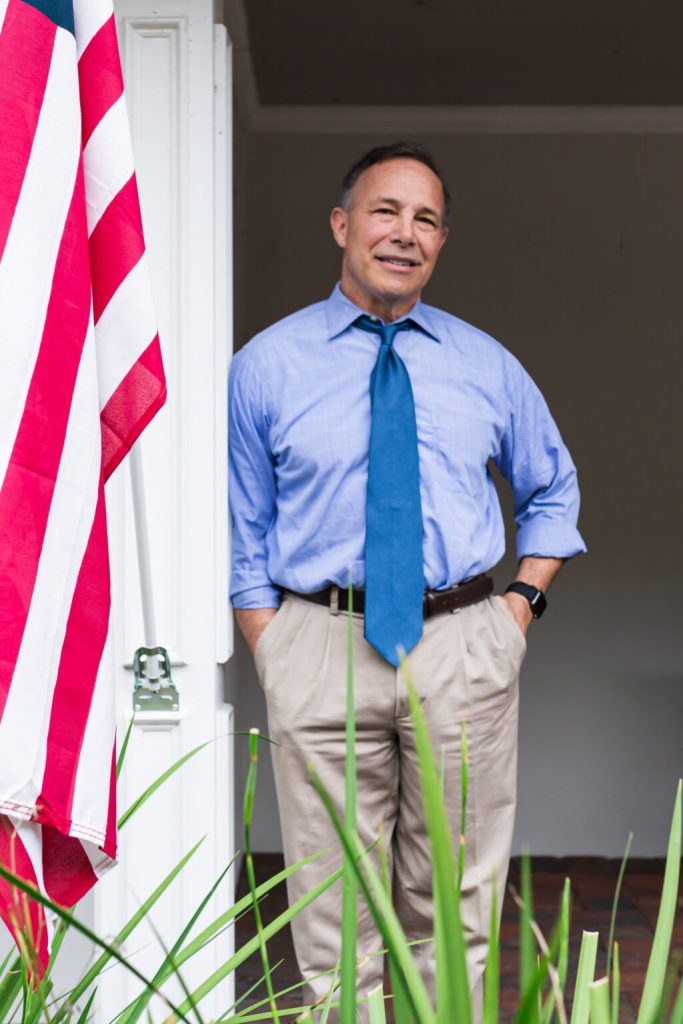
“I know how to reach out to businesses to engage them, and I know the issues that are involved,” he said in an interview. “I feel like we need a new vision for Orange County and not another recycled politician.”
Messina doesn’t have any previous experience in elected office, but he ran for Orange County mayor in 2022, at that time securing 22 percent of the vote to Demings’ 60 percent.
The Republican businessman’s vision for Orange County includes establishing a partially subsidized trade-school program, providing a pathway into the trades for any Orange County resident who wants it; redeveloping blighted strip malls into mixed-use and multi-income housing; and attracting space technology companies and high-paying jobs to the county.
“I want to see us take a really strong swing and try to bring the first military academy in the South, the Space Force Academy, to Orange County. We should become the national leaders in space tech,” he argued. “We’re perfectly positioned for it.”
Messina is supportive of revamping the county’s public transportation system, although he’s skeptical — if open to the idea — of expanding publicly subsidized rail. He sees the county’s Lynx bus system as inefficient, preferring the idea of bringing more microtransit to Orange County and discarding the larger Lynx buses.
“We should downsize the Lynx, get rid of most — not all, but most — of the big buses to free up a lot of capital, and invest in the smaller Lynx Access vans and equip them with technology and make it point-to-point. Probably partner with somebody like Uber or Lyft.”
He’s a fan of Seminole County’s new microtransit program Scout, an on-demand rideshare service that doesn’t have fixed routes or bus stops. He’s not sold on the idea of investing more in the region’s SunRail system, which currently runs limited hours during the weekdays from Kissimmee up through Orlando and Sanford up to DeLand.
On the affordability side, Messina is hoping to attract higher-paying jobs to the area that will give residents more cushion to afford the county’s higher cost of living. He acknowledged that homelessness is a “complex issue,” and said he supports the development of more transitional housing — to help get people off the streets — but wants to ensure county programs also move people from a place of dependency on county resources to self-sufficiency.
During a recent debate, hosted by WESH 2 News, Messina attributed the county’s rising housing costs, in part, to undocumented immigrants, saying: “We have between one-and-a-half to two million people living here in Florida illegally, and data from the Center for Immigration Studies says for every million people in the country, there’s a 1 percent increase in housing costs.”
Messina appears to be referring to a working paper recently misinterpreted by President Donald Trump that was cited, not conducted, by the Center for Immigration Studies.
The study’s authors estimate that in the average metro area, unauthorized immigration raised house prices by 6.6 percent from early 2021 to early 2024. But as the Washington Post reports, the actual home price growth during that period was 22.4 percent, meaning that immigration wasn’t the only factor at play.
Messina told the Weekly that he, himself, is the grandchild of immigrants. He’s married to an immigrant. And, for those concerned about U.S. Immigration and Customs Enforcement activity in Orange County, “If you are here legally and you’re afraid, I will fight. I will fight tooth and nail for you.”
Stephanie Murphy
Stephanie Murphy, a Vietnamese-American immigrant and former U.S. congresswoman who previously worked in national security at the Pentagon, is now eyeballing the open seat for Orange County mayor, after leaving the House of Representatives in 2022.
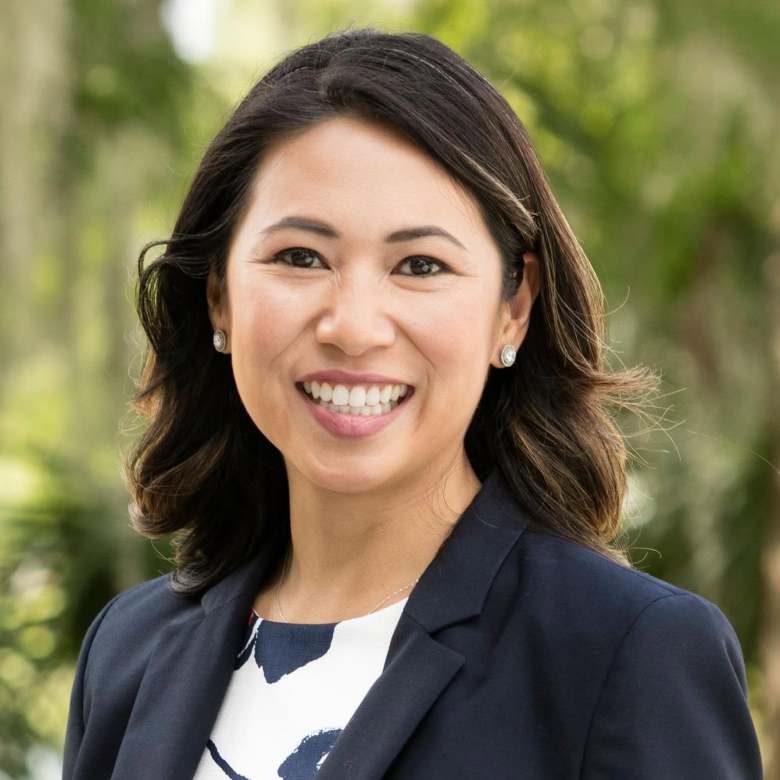
She told the Weekly in a phone call that, since leaving elected office, she’s served on corporate and nonprofit boards, spoken at “industry gatherings” on macroeconomics and geopolitics, and is a paid contributor for the BBC.
The Winter Park mom was known in Congress as a moderate Democrat, having previously served as co-chair of the centrist Blue Dogs Coalition, focused on “commonsense, bipartisan solutions that will get our country’s fiscal house in order and ensure a strong national defense.”
Murphy told the Weekly she believes Orange County is at “an inflection point” with its rate of growth. “But growth without leadership and a vision for where we want to go as a community isn’t opportunity, it just is additional pressure on working families.”
When asked by a Weekly reporter what differentiates her from her opponents, Murphy deflected, stating, “I don’t feel like I’m running against anyone else. I’m running with a vision for this county.” Her vision, she said, includes “meaningfully addressing housing and congestion and jobs” and making Orange County “not just a world-class destination” — referencing the county’s booming tourism sector — but also a “world-class community” for those who live here.
Murphy has faced scrutiny over a $100,000 campaign contribution to her political action committee from Walt Disney World. Disney is part of an industry movement that opposes efforts to diversify the allowed uses under state law for the hundreds of millions of dollars the county receives each year through its tourist development tax — a 6 percent tax levied on hotel and short-term lodging stays.
She’s also received six-figure dollar contributions from billionaire Michael Bloomberg — who she personally backed in his campaign for U.S. president in 2020 — former insurance CEO J. Hyatt Brown, and the centrist Center Aisle PAC. Murphy, however, has denied the existence of any pay-to-play operation associated with the contributions.
“Those donors aren’t expecting favors,” she argued during WESH 2 News’ recent mayoral debate. “They believe that I can deliver results for this community, and they believe in the vision that I have for this community, just as all of the other supporters of my campaign do.”
Murphy didn’t say yes or no when asked whether she would lobby Tallahassee to change TDT rules in state statutes, which currently restrict that money from being used to pay for other pressing issues — such as affordable housing and homelessness. At least 40 percent of TDT revenue must be used to “promote and advertise tourism” before it can potentially be considered as a funding mechanism for “public facilities,” including transportation, drainage and sewers.
“I think that our elected state officials have the responsibility to represent the desires of this community and attempt to make that change,” Murphy said, when asked if she’d personally support greater flexibility with the funds. “I believe that within the bounds of the law, I can apply those resources in a way that benefits the greatest number of people.”
She’d support, for instance, trying to use some of the TDT revenue to fund an expansion of SunRail to the Orlando International Airport, as well as the proposed Sunshine Corridor project that would also connect the airport to the convention center and theme parks.
As for housing and affordability, Murphy similarly wants to attract more high-paying employers — and jobs — to the region. She supports streamlining the permitting process for development to help speed up the construction of additional housing to meet demand. And she wants to come up with a way to incentivize developers to build more workforce housing — housing that’s actually affordable to those who live and work here — in areas that have easy access to existing transportation and infrastructure.
“I believe strongly that if you work in this county, you should be able to afford to live in this county,” she said.
She does think the county needs to reevaluate its approach to tackling homelessness. “Human services as a budget line item has grown nearly by 200 percent in the last eight years, and yet the point-in-time counts of the number of homeless hasn’t really improved.”
All candidates, including Murphy, said they support the creation of more transitional housing, while ensuring wraparound services — career development or job training, mental health support — are part of that. “There’s no one-size-fits-all solution. And so we have to approach this issue with both empathy and with, you know, effective approaches,” Murphy said.
Tiffany Moore Russell
Tiffany Moore Russell is a licensed attorney who grew up in Tangelo Park, a mother of two, and currently serves as Orange County’s clerk of court — the first Black woman elected to hold the position, in 2014. She previously served on the Board of County Commissioners and was the youngest-ever county commissioner, elected to the position in 2006.
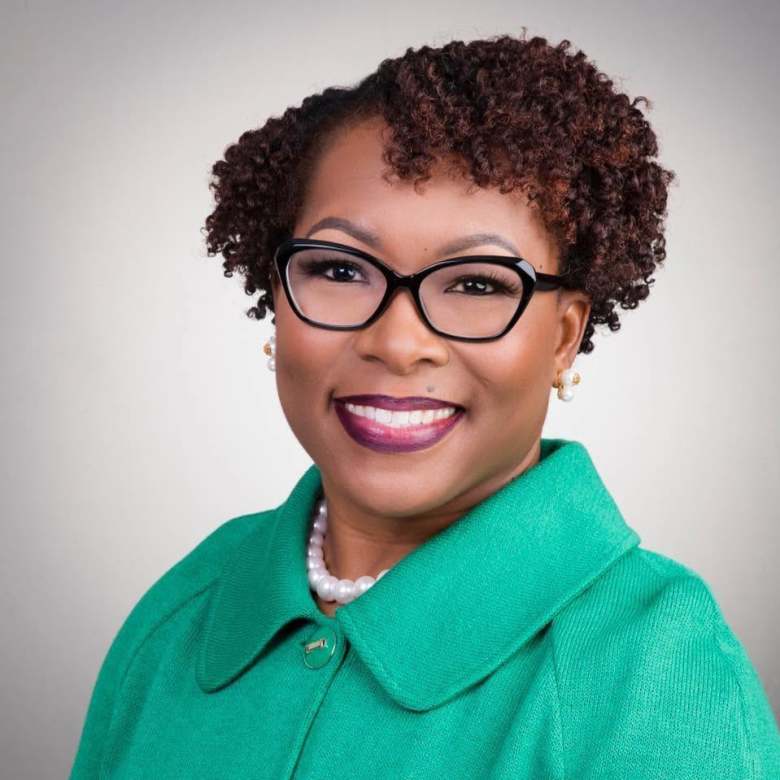
She described herself to the Weekly as a “pragmatic leader” who is driven by data and strategic and deliberate in making decisions. She believes her experience both as clerk and on the Orange County board gives her a leg up on the skills she could bring to the position of mayor.
“I actually have always wanted to run for mayor,” she admitted. “I learned when I was on the county commission that if you truly want to drive a vision for your county, you need to be in the seat of the mayor.” But as the mother of two small children, “it just wasn’t the right time.”
Now her kids are older and more independent, and with an open seat, she felt it was the right time to take hold of the opportunity to fulfill her ambition to fulfill unaddressed or neglected needs.
“I’ve seen great investment and improvement in certain parts of our county, but I’ve also seen a lot of our older legacy neighborhoods have stayed the same and have not seen growth or advancement,” she said. “And so I come from a perspective of wanting to see change for the entire county and make sure that all of our communities can thrive.”
While all candidates mentioned wanting to attract higher-paying jobs and raise wages in the region, Moore Russell said her own experience in raising wages for her office staff, as clerk, differentiates herself from her opponents. “It requires you to have a strategic plan and set goals, and then how to move forward with increasing the starting pay, but also addressing compression.”
As clerk, she’s taken her office staff from a minimum wage of $12 an hour to $17.25 an hour — still just a few dollars above the state minimum wage — without straining the budget. “That knowledge and that experience on how to address even providing your own employees a living wage, I bring that experience to this race that no one else has been able to articulate in the numerous debates that we’ve had.”
Like several of her opponents, Moore Russell is supportive of expanding SunRail to night and weekend service, and connecting the rail line to the Orlando International Airport. She believes the county needs to be very intentional about seeking federal and state dollars to do so, but also supports proposing a separate transportation tax — an effort that failed under Mayor Demings. “It may require us to change how we communicate that to voters and actually have a plan [so] that they can see themselves in the proposal.”
She’s open to trying to draw money from the county’s TDT funds to fund transportation proposals — as services that indirectly support tourism to the region — but is more focused on doing so under the restrictions on TDT use under state law rather than lobbying Tallahassee to change the law.
“My first approach would be to resolve it locally before anything goes to Tallahassee, and I think this because unfortunately I don’t have a lot of faith that we will not lose our local control.”
As a self-described “champion of home rule,” she’s concerned that opponents of diversifying TDT uses would seek further preemption at the state level that would tie the hands of local governments. State lawmakers, for instance, have already been persuaded to preempt local heat safety standards for workers, paid sick leave mandates and rent control (and that was after Orange County residents voted in favor of temporarily capping rent hikes in 2022).
On the issue of housing, Moore Russell believes it’ll be important to do some “internal cleanup” to streamline permitting for housing development. She’s supportive of exploring inclusive zoning policies, redeveloping blighted or vacant land for infill housing, and collaborating with the private sector to increase the housing supply, particularly for lower-income and middle-income families who find themselves with fewer options in their price range.
Tackling homelessness, she believes, will require more collaboration with organizations like the Homeless Services Network and with neighboring governments, like Seminole and Osceola counties.
She supports investing in more temporary housing shelters as well as permanent housing solutions, noting that some of the existing shelters in the county — already insufficient to meet demand — also don’t meet the needs of everyone who needs them. Some are gender-specific, or only accept families with children. “We can look for addressing all the different segments of our homeless population.”
Moore Russell, in the final moments of our interview, pitched herself to Weekly readers as a leader who would be able to “match vision with reality.”
“What they will get in a leader is someone who is very creative and intentional and strategic in how to deliver services. But someone who’s a fighter, someone who is going to defend their interests and protect them as Orange County residents.”
Mayra Uribe
Mayra Uribe is a mother of two, an Orange County native, and a sitting county commissioner representing District 3 who is well acquainted with the county’s issues. She’s served on the Board of County Commissioners since 2018 — a position she ran for in the hopes of better addressing issues in her neighborhood that she felt the government wasn’t responding to sufficiently.
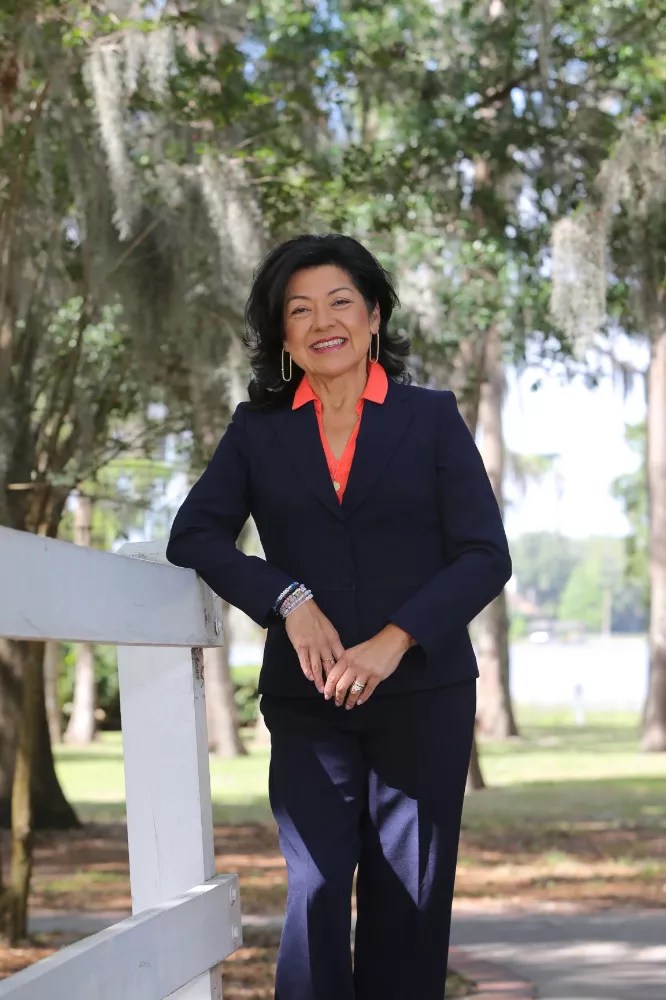
What she realized after being elected to the board was that, while she gets a vote and is able to get some things done, her power as a county commissioner to really set the priorities of the county is limited.
“I realized that if I really want to make that influence, knowing that the county staff reports to the mayor, the mayor sets the agenda of the county and what moves forward … I was going to have to step up and take on that role to really see that come out,” said Uribe, who’s received the backing of three labor unions representing Orange County’s sheriff’s deputies, firefighters and correctional officers.
She doesn’t see herself as a career politician or as someone who is using the mayor’s office as a stepping stone to a higher office. “I will honestly tell you, I’m not looking at anything else,” she stated.
“I just really want to make Orange County a better county. I want to make it to where people like my daughter and this new generation have opportunity, have a real transportation system that doesn’t require you to own a car, that gets you a living wage that you can afford to live and establish yourself, and that really is also responsible to the environment,” she said.
Unlike Murphy, Uribe is vocally supportive of lobbying the Florida Legislature to reform state law on tourist development tax to allow the county to use some of the hundreds of millions of dollars in TDT revenue generated each year not only on tourism marketing, but also on transportation, affordable housing and infrastructure.
She pointed out how the National Home Builders Association opted to move its massive convention from Orlando to Las Vegas through 2039 — drawing away economic impact from the region — with organizers attributing the decision in part to the county’s lackluster transportation system.
“I’m proposing we put some funding from tourism into transportation. It’s a win-win,” said Uribe. “Tourism industry wins, the local people win. What is wrong with that?”
She’s also interested in speeding up the permitting process for residential developers, after hearing from developers themselves about excessive red tape and long waiting periods for getting construction approved.
Still, she also challenges the idea that Orange County is only dealing with a supply issue in the affordability conversation. “People always talk about we’ve got to build more, we’ve got to build more. We actually have inventory. We just have unattainable inventory.”
“And then, why isn’t tourism contributing to this? It’s the employees that work in hospitality who are the most underpaid in this community,” she pointed out. “We can actually leverage $45 million in tourism dollars, bond it, and actually build 2,000 units. And people say you can’t use that money,” she said, referring to the TDT. “OK, why aren’t we fighting for it?”
She said she wants to see Orange County officials travel up to Tallahassee for a day to lobby state lawmakers on issues important to the community, as a united front. “Broward does it. Miami-Dade does it. Hillsborough does it,” she pointed out. “We have never gone to Tallahassee to champion for ourselves.” At least not in the eight years she’s been in office.
Uribe supports expanding SunRail to nights and weekends, to help make it more useful for people who want to get around the region on weekends or commute to work. She also supports connecting a rail line to the airport.
Like Messina, she believes the county needs to reevaluate its Lynx bus system and consider investing in smaller connector buses. She’s supportive of the Sunshine Transit Advancement Resolution (STAR) plan introduced by local activists with the Sunrise Movement, a Gen-Z climate justice organization, to develop rapid transit for eight high-volume transportation corridors such as Orange Blossom Trail, Colonial Drive and International Drive.
Uribe is also looking forward to the completion of a comprehensive day center for homeless populations — not a shelter, she asserted — that she calls “Goldenrod Village.” The idea is for it to be a 150-bed facility that will offer wraparound services and help people transition into permanent housing. It’s not expected to be completed until 2028.
“Right now, we don’t have anything like that.” Uribe was part of or is at least sympathetic to Stop SoDo Shelter, the opposition group to a proposed homeless shelter at the old work release center on Kaley Street. The proposal was shot down by the county following the opposition, spurring the emergence of a new group, Support Orlando Shelters, that still believes the plan is viable.
Uribe recently told the Orlando Sentinel she still opposes the idea, citing concerns of “public safety, neighborhood impact, and ensuring that any facility is appropriately structured and responsibly managed.”
She’s a proponent of government accountability and scrutinizing the county’s $8.9 billion budget — in a less adversarial fashion than the state DOGE team — to ensure that the county is being as efficient with its resources as possible.
“I know where we spend, I know where we can cut, I know where we can be more efficient, I know where we can be more responsive, and I’m ready to bring those skills that I’ve been learning and preparing for to the table,” she said. “My No. 1 priority is that people start feeling like they are part of this, and that someone’s there to fight for them.”

Related Stories
Michael Crabb is also currently running for the seat DeSantis put him in, which some say gives him an unfair election advantage.
Nixon, a Democrat from Jacksonville, is running to unseat GOP Sen. Ashley Moody.
Moms for Liberty member Alicia Farrant faces off against fellow school board member Angie Gallo for the chair position.