
Three times a week during basketball season, University of Vermont point guard Cat Gilwee and her teammates hit the weight room. After an intense hour of dead lifts, bench presses and squats, the student athletes chug half-pints of organic chocolate milk from Miller Farm in Vernon.
“Our team loves it. Some people on our team take, like, three to go,” the 23-year-old Shelburne native said. “Especially as a Vermonter, I think it’s awesome to have a local farm’s milk.”
The creamy, cocoa-dark elixir is more than a reward for a workout well done; it’s a critical part of the athletic training regimen. Since fall 2023, UVM has bought between 1,000 and 1,200 bottles of milk each week during the sports season from the fifth-generation southern Vermont dairy.
“Their milk is unreal,” said Marc Hickok, the university’s assistant director of athletics and director of athletic performance, who was instrumental in sourcing the local refueling drink. “[It] tastes great, is all natural, and is the perfect mix of carbs and protein to help them recover after training.”
The steady commitment from UVM Athletics has also helped fuel a relatively new bottled-milk business for the 110-year-old family farm, co-owner Peter Miller said. Along with UVM Dining Services, which uses Miller Farm half-and-half at most campus coffee stations and for catering, “It’s an anchor account,” Miller said. “It stabilizes production, gets us into some economies of scale on a few things and has also improved our plant efficiency. We were painfully inefficient before we had to figure out how to make 1,000 of these guys.”
Ninety percent of the milk from Miller Farm’s 240-cow herd goes into Stonyfield Organic yogurt, but the Millers started bottling under their own name in 2000, aiming for a little more control of the price of some of their milk.
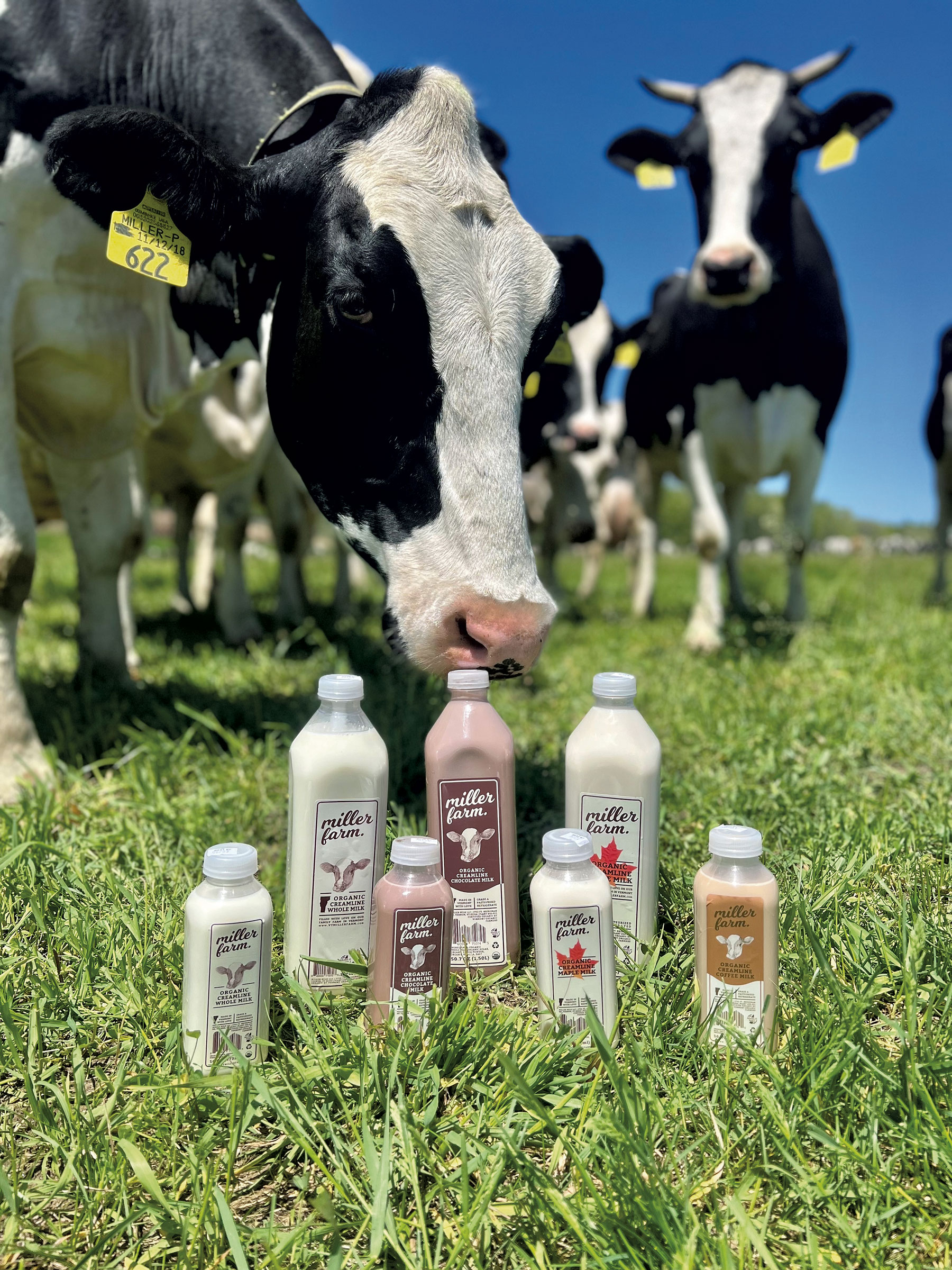
They have carved out a niche by selling creamline plain, chocolate, maple and coffee whole milk, plus heavy cream and half-and-half. Creamline milk is not homogenized, which means that every bottle has a thick cap of cream. Miller Farm labels urge “Shake it, baby!” to blend the milk and the cream — and, in the case of chocolate, the cocoa powder that settles at the bottom because the mix contains no additives to keep it dispersed. The result is a rich, frothy beverage that drinks almost like a milkshake.
As a Vermonter, I think it’s awesome to have a local farm’s milk.
Cat Gilwee
Miller, 57, and his older brother, Arthur, run the family biz with Peter’s 29-year-old daughter, Abigail Bucossi. It took guts and more than $500,000 of pandemic business-support funding, paired with a Northeast Dairy Business Innovation Center grant, to build processing and bottling plants — each in a shipping container — to try to make a better margin on some of their milk.
Almost six years in, the bottled products are sold throughout the Northeast. The family expects to hit $1 million in branded milk sales this year.
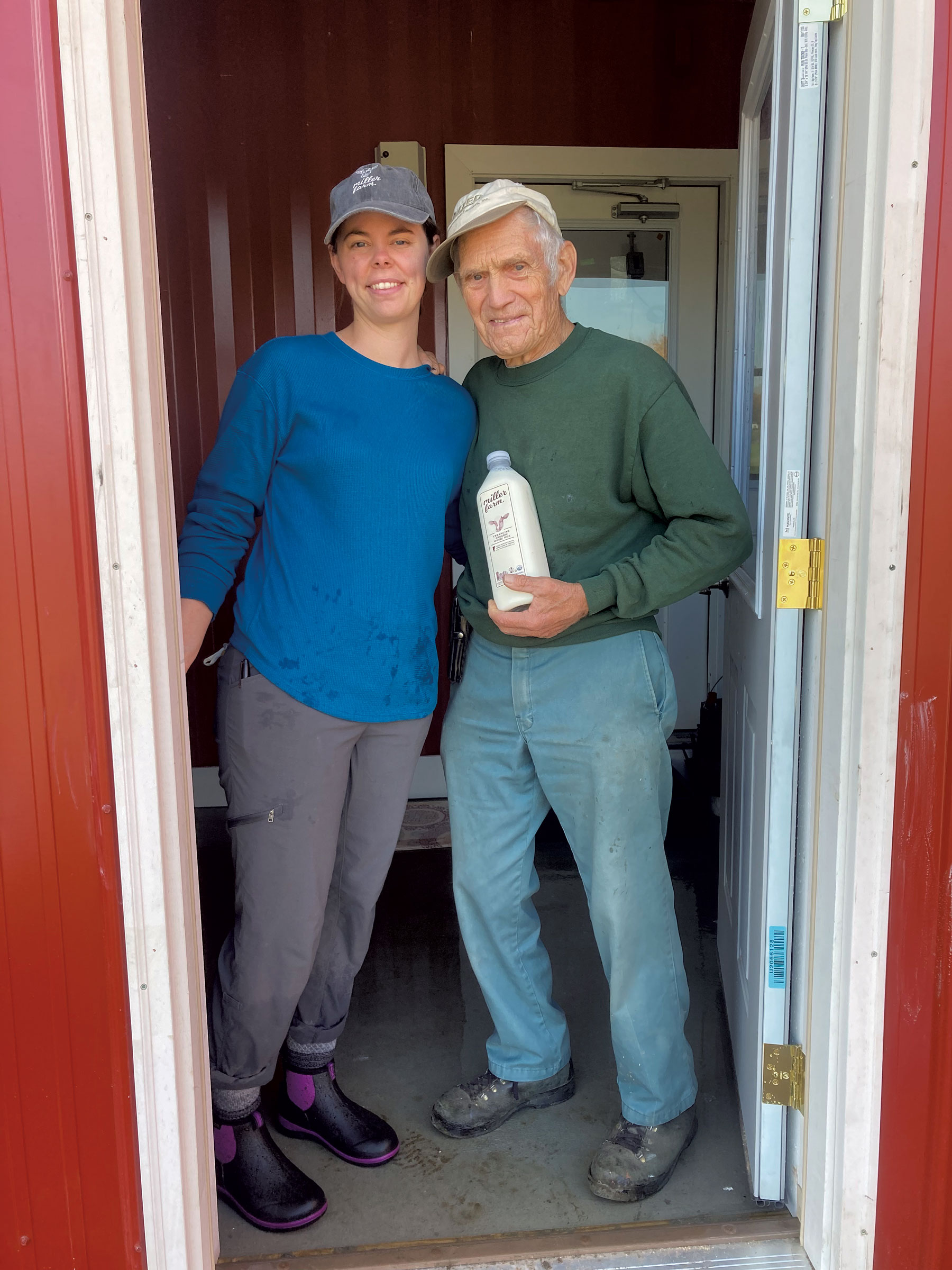
Just 10 percent of the herd’s production now accounts for a third of the farm’s total revenue. But the bottled-milk balance sheet also includes additional costs in processing, packaging and marketing.
In the case of the UVM deal, Miller said, “I basically had to pay to play.” To sell milk to the athletics department, Miller Farm chose to become an “official sponsor” of UVM sports. In exchange for a sponsorship payment of $8,250 a year, Miller Farm also receives some game event advertising and the right to give out samples at a few games per year.
Miller has run the numbers, he said, and they justified signing a second three-year contract. He hopes the UVM partnership can help raise the farm’s profile in Chittenden County, where, he said, stores have been relatively slow to pick up the milk. In addition to UVM campus stores, Momo’s Market, a corner market in Burlington’s Old North End, stocks Miller Farm’s chocolate pints ($3.99), but they’re hard to come by elsewhere in the county. The Middlebury Natural Foods Co-op carries chocolate, maple and coffee pints.
Catering to the protein-maxxing craze, Miller Farm is about to launch a new higher-protein chocolate milk, which Miller said UVM Athletics has shown interest in buying, too. By simply adding organic nonfat powdered milk, the grams of protein per pint double to 38.
But is such a megadose actually useful?
Chris Skinner, an assistant professor of nutrition at UVM who teaches sports nutrition, vouched for the value of chocolate milk as a “wonderful post-workout drink, because it has a great breakdown of simple sugars and protein for maximal muscle recovery and then growth.”
The sugar in chocolate milk is key. Although Skinner noted that sugar gets a bad rap, exercise depletes the body’s sugar stores. The best refueling options include sugars and protein, at a ratio of about 3-to-1. “With athletics,” he said, “it’s so important to have adequate amounts of sugar to fuel your body because you run on carbs first … Carbohydrates are kind of king when it comes to exercise.”
When it comes to protein, Skinner said, milk has the added benefit of being a naturally complete protein with all the essential amino acids. Nutrition pros often refer to chocolate milk as “the poor man’s protein supplement,” he said.
Regarding Miller Farm’s higher-protein chocolate milk, Skinner said consuming about 25 to 30 grams of protein within a couple hours of working out is considered “the sweet spot.” He acknowledged that there is much debate about the amount of protein people can absorb but that “the general thinking is that younger, fitter people absorb more, so UVM student athletes would be in that population.”
The women’s basketball team, meantime, will be aiming for its third consecutive America East conference title this season, fueled in part by Miller Farm chocolate milk. ➆