
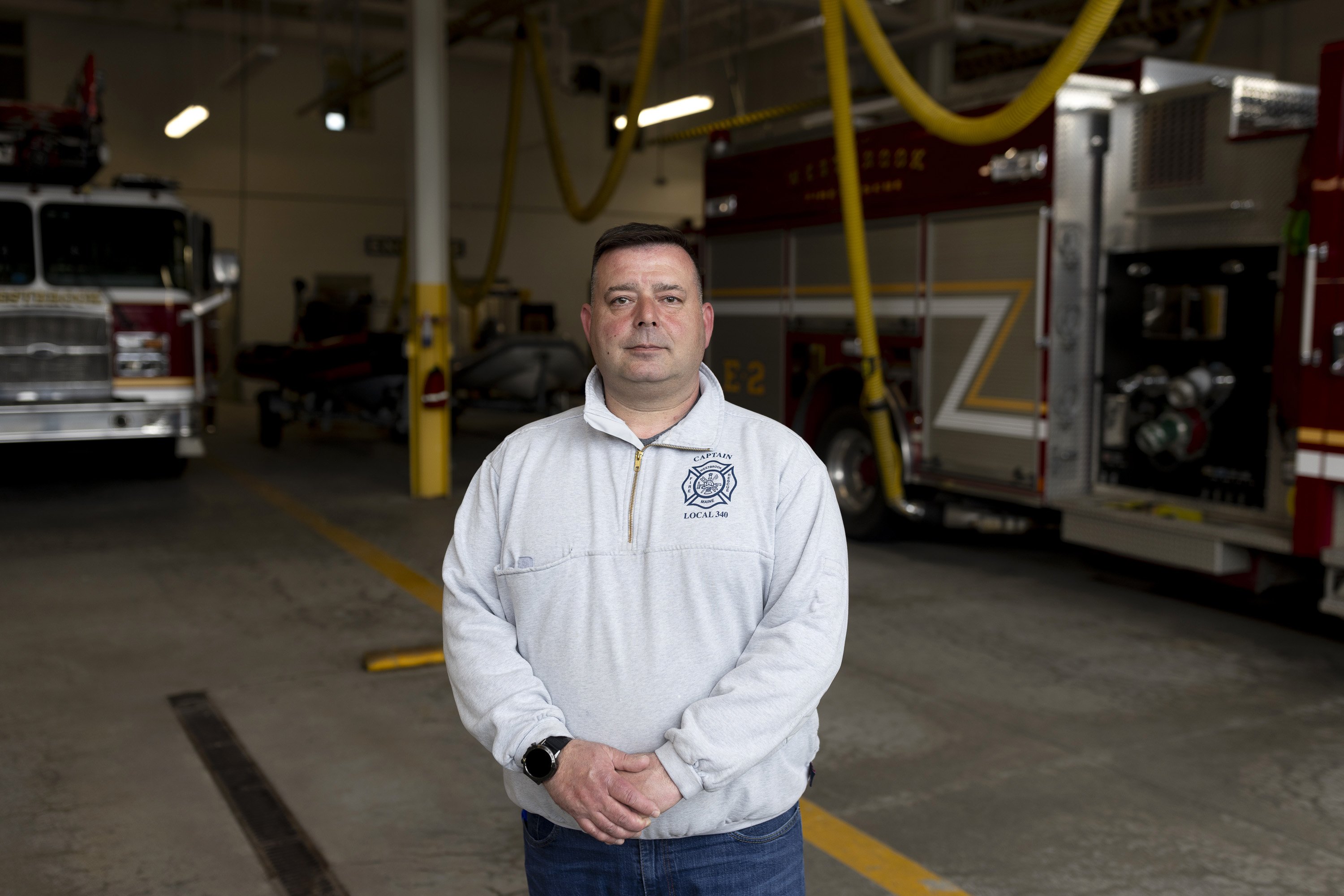
Westbrook Fire Department’s staffing levels have been an ongoing issue since fire Capt. Joe Carroll was hired in 2005, he said. Over 20 years later, firefighters are growing more concerned.
The department’s minimum daily staffing level has been at nine firefighters on duty since 2001. That year, the department responded to nearly 3,000 calls for service. Last year, there were more than 5,200 calls.
“It’s basically requiring us to do more with the same, and that’s not sustainable,” Carroll said.
In 2001, the department had 21 full-time employees, according to a press release by the Westbrook Professional Firefighter’s Association. There were five firefighters on duty and four per-diem employees. The department relied on part-time employees and paying overtime to reach the minimum staffing levels.
Today, there are 11 or 12 firefighters per shift and 46 full-time employees. Carroll said the city transitioned many part-time employees into full-time roles out of fiscal practicality.
Now, when multiple calls happen at the same time, it stretches the department too thin, he said.
After a Facebook post by the Westbrook Professional Firefighters Association in March, Westbrook Fire Chief Steve Sloan spoke to WMTW about his concerns regarding the department’s staffing levels, saying he worries every day for the lives of the firefighters and the citizens of Westbrook.
The Facebook post compared the outcomes of two recent fires: one at an apartment building where only two firefighters were initially available to fight the fire, and the second a few days later at a house where two fire trucks and two ambulances were able to respond. According to the post, the first building was gutted and the residents were displaced and lost their belongings. The fire damage at the second was limited to the exterior and a small portion of the interior of the house, thanks to the extra personnel at the scene.
Following the interview with WMTW, Sloan wrote a press release to provide additional context and correct misinformation.
“As the Fire Chief, I have the responsibility to balance the service demands with a budget entrusted to me by the community,” Sloan said at a city council meeting in April, reading the release.
Sloan said while the minimum staffing level hasn’t changed, it is the baseline, not the ceiling.
However, daily staffing was at the minimum 68% of the time last year. Although there might be 11 or 12 people on a shift, some people are off duty because of medical leave or vacation, Carroll said. The department sometimes relies on overtime to get the minimum nine people on duty.
The Westbrook Professional Firefighters Association put out a press release in response to Sloan’s release, saying it stands by the original comments Sloan made during the interview.
“We felt it was very important to make a statement that, no, this is a concern, and it’s more immediate than what is being perceived,” Carroll said.
Caleb Young, a firefighter paramedic and union steward, said at the City Council meeting that while the city has significantly invested in the fire department, minimum staffing is a liability that impacts the safety of the firefighters and the community.
“We are sounding the alarm, and it’s time for the city to answer the call before liability becomes a reality,” he said.
STAFFING STANDARDS
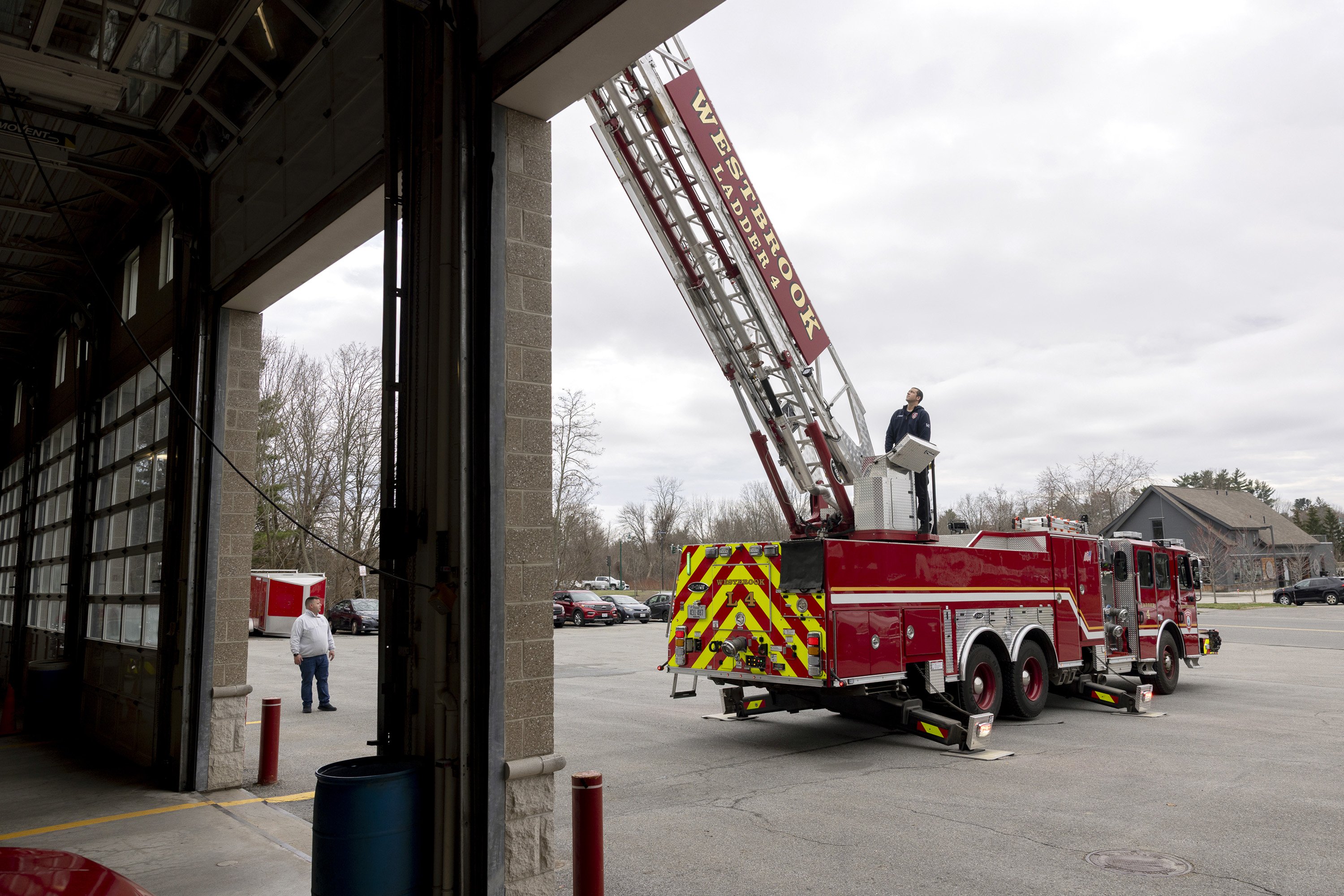
The Westbrook Fire Department has two fire trucks — a ladder truck staffed with three people and a fire engine with only two people — which Carroll said isn’t considered full staffing and is unsafe.
The difference between having two and three people in a fire truck is significant, Carroll said.
In the truck, the driver is responsible for pumping the fire truck, and the officer is in charge of the scene, making tactical decisions and life-saving efforts. Without a third person, the firefighters’ capability is severely hindered.
The National Fire Protection Association recommends having 27-28 firefighters respond within the first 10 minutes of a fire at an apartment building. For a single family home, the recommendation is 16-17, almost double the minimum staffing levels of the Westbrook fire department.
No fire department in the state of Maine, outside of Portland, can achieve those numbers by themselves, Carroll said, but they all rely on mutual aid to meet that standard.
Carroll said the goal for Westbrook Fire Department is to be able to safely start an operation within the first few minutes while mutual aid is on the way.
“We’re not asking for the world,” he said. “We’re just asking to be able to keep our membership safe, and more importantly, keep the citizens safe.”
MEDICAL CALLS
Over 80% of the department’s call volume is medical. When the city’s two ambulances are at the hospital, that leaves the department with five people to try to put out a fire, if no one else is busy.
The city has outfitted the fire trucks with advanced lifesaving equipment in case both ambulances are already busy — which is a common occurrence, Carroll said.
In a recent incident, the staff on a fire truck was called to help a motorist in a cardiac crisis. They saved the person’s life, and for 26 minutes, they waited on the sidewalk for an ambulance to drop off another patient at the hospital and come back for the motorist, because the other communities around Westbrook were also busy.
In the event of a serious medical call that requires more than one person in the back of the ambulance, a firefighter from the fire truck will be sent to go with the ambulance to the hospital, further limiting the number of people available to fight fires.
There were 200 such calls last year — 200 occasions when the department was stretched below what Carroll would call safe levels.
STATEWIDE ISSUE
The firefighter shortage is not limited to Westbrook. Across the state — and the country — fire departments are shorthanded. In Maine, few departments can fight a standard fire on their own, and they rely on other communities to help. Even larger departments use mutual aid to help with an emergency response or to cover unrelated calls.
Like Westbrook, neighboring communities are also growing, and with that growth comes a greater call volume.
“Our greatest concern is that our ability to address the social service need doesn’t match the growth of the community,” Carroll said.
In terms of staffing, Angela Holmes, Westbrook city administrator, said Westbrook is on par with neighboring communities. The firefighter shortage is a problem that needs to be addressed with a regional approach, she said.
According to data collected by the city, Scarborough received around 5,400 calls for service last year, and the town also has a minimum staffing level of nine firefighters. However, its 48 full time employees were supplemented with per-diem staffing to achieve 15 firefighters on duty per day.
South Portland received 5,700 calls for service, and its department has a minimum staffing level of 15 firefighters. Similarly, Augusta had 5,800 calls with 13 firefighters. Lewiston had about 2,700 calls with 17 firefighters.
Biddeford had 10 firefighters for 5500 calls, and Saco had 8 for 4,600.
MOVING FORWARD
Carroll said the city administration, the city council and the fire administration all recognize the need for more staffing, but they may disagree on just how critical the issue is. He acknowledges the city is very financially constrained, so no changes will happen in the immediate future.
Westbrook’s proposed budget for the next fiscal year includes an additional full-time position in the fire department, increasing the total to 47 full-time employees.
“We’ve had some preliminary discussions with members of the fire union to make sure that we can move forward together and understand what our needs are and how best to proceed,” Holmes said. “We know that we’re not going to be able to increase total staffing levels overnight.”
There are many factors that explain the firefighter shortage, but the fire union and the city administration agree that a big issue is the shrinking applicant pool to hire firefighters.
Holmes said the city has plans to develop a fire training facility to connect the fire science students at the Westbrook Regional Vocational Center with the fire department, developing a pipeline of future employees.
The facility is a proactive way of ensuring there is a consistent pool of trained candidates to draw from, Holmes said.
In the meantime, Carroll said the fire department will continue working collaboratively with the union, the city administration and the city council to find a solution.
“There’s only so many times that you can bet against the odds of safety,” Carroll said.