
New and vibrant artistic sounds and visions, an expansion of civil rights, and a celebration of the new and the next in Black culture all converged in 1920s and ’30s New York City as the Harlem Renaissance. This incredible creative movement will be revisited on a local stage this week, with a new production of Orlando-born stage musical Lenox Ave.
Written and composed by Brandon Martin, an Orlando resident but a New York native, Lenox Ave tells the story of Langston Hughes, famed writer, social activist and early innovator of jazz poetry. Inspired by Hughes’ first collection of poetry, The Weary Blues, Martin took some of these poems and put them to new music inspired by the African diaspora.
“We go from jazz to some hip-hop, to some kind of rock, blues, calypso. It’s a little bit of everything,” Martin tells Orlando Weekly. “What came out of the Harlem Renaissance, which really was an explosion of Black art and culture.”
Jazz was not considered the high art form it is now back in the early 1900s. It was then the province of smoky nightclubs and late-night listening rooms, supposedly not fit for polite (white) society. Those early misgivings about jazz were dead wrong. And in fact, the jazz musicians of the time would lay the essential foundations for popular music through to the present day.
“Popular music has its origins in jazz standards that were created for stage shows on Broadway, and all of that has its roots or is inspired in some way by what was created in the Harlem Renaissance,” Caila Carter, director of this production of Lenox Ave, explains. “[Jazz] birthed Latin jazz, calypso and even early hip-hop, which has a lot of jazz influences and uses jazz samples.”
The Harlem Renaissance, a Black arts explosion in early 20th-century New York, was spurred in part by the Great Migration, where African Americans moved to the North and Midwest in large numbers for work and opportunity far away from the oppression of Jim Crow laws in the South.
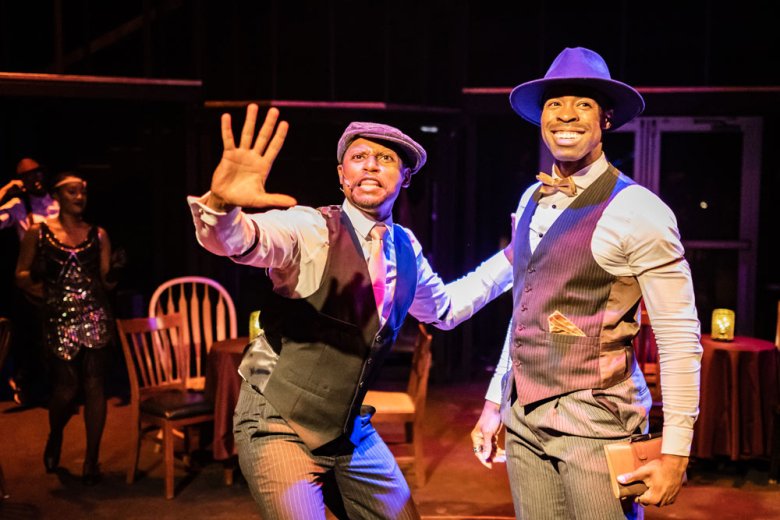
New York City’s Harlem neighborhood would become home to nearly 175,000 African Americans from all different parts of the country with determination to forge a new way. The Harlem Renaissance pioneered bold new directions for poetry and prose, dance and jazz, with these art forms coming together to chronicle and celebrate what it means to be Black in America.
The musical produced by Orlando’s Renaissance Theatre Co. recreates the sights, sounds and streets of the Harlem Renaissance with Hughes’ poetry at its heart, melded to jazz, calypso, rock and blues, giving his words harmonious new life.
Langston Hughes was a guiding light of the Harlem Renaissance, sharing the bold truths of the literary, intellectual and artistic lives of his peers and neighbors, along with the struggles and joys of the Black working class.
Martin — having performed on historically Black stages such as the Apollo Theater and with deep personal connections to New York — jumped at the idea of writing about the Harlem Renaissance and Hughes when it was proposed by Donald Rupe, creative director at the Ren.
“He reached out to me back in 2022 with the idea of taking this collection — which had just gone into the public domain — and doing something with it,” Martin says of reinterpreting Hughes’ poetry. “It’s always been there in the background. I think it just naturally flowed out of me while I was working on it.”
Lenox Ave was first performed at the Ren in 2022, garnering critical and audience plaudits alike. Lenox Ave also earned the “Best Show” award at Orlando Fringe in 2025. Now, there’s an all-new production happening this weekend, just in time for Juneteenth.
“We were very lucky to get to produce this for Juneteenth, I think,” Martin says. “Celebrating Black American culture, the richness and the depth of Black culture, of Blackness, of being Black in America, the joy of it and the depth that comes from the history.”
Through innovative staging, the play creates a feeling of intimacy between theatergoers and the actors, with a cabaret cocktail-style set, immersive interplay beyond the stage (par for the course for Ren productions) and costuming that references styles of the 1920s, with sequined flapper dresses, suspenders and shoe buckles.
In creating a lively, intimate feeling — perfect for Judson’s — Lenox Ave connects with audiences on multiple levels, whether it be the music, the choreography by Adonus Mabry, or the still-resonant words of Hughes.
“The music that [Martin]’s created for this is absolutely brilliant. It’s beautifully written, and the way that he has matched styles of poetry, I think, is an art all its own. And it’s just such an honor and a joy to be able to help tell that story,” Carter says. “I think that’s what audiences have been getting. That’s what they’re really, at the core of it, connecting to. They’re connecting to joy, to authenticity, to creativity.”
This new staging of Lenox Ave features changes to the music and sets, giving audiences the opportunity to see the award-winning musical like never before. There might even be a new song or two debuting at this weekend’s Judson’s Live performances.
“I think the thing that I would want people to take away is not just this explosion of Black culture — because that is important — but an explosion of American culture,” Carter says. “So many things and aspects of American culture can have their lineage traced directly back [to the Harlem Renaissance]. I feel, especially with this being staged on Juneteenth, that is even more important to shed some light on.”
7 p.m. & 9:30 p.m. Friday, 6 p.m. & 9 p.m. Saturday, June 19-20, Judson’s Live, Dr. Phillips Center for the Performing Arts, 445 S. Magnolia Ave., drphillipscenter.org, $56-$73.

Related Stories
The black garlic katsu burger, the chicken tikka masala quesadilla — it’s Nashville by way of Mumbai
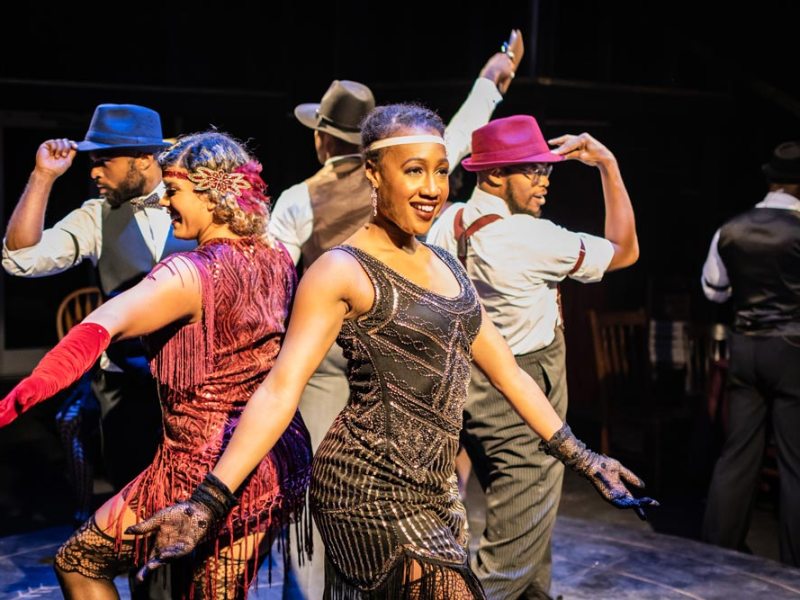
Written and composed by Brandon Martin, an Orlando resident but a New York native, Lenox Ave tells the story of Langston Hughes

Up to one million visitors are anticipated in the greater Miami area alone during soccer’s top global tournament
Subscribe to Orlando Weekly newsletters.
Follow us: Apple News | Google News | NewsBreak | Reddit | Instagram | Facebook | Bluesky | Or sign up for our RSS Feed
This article appears in June 17-23, 2026.
Related
Source link