
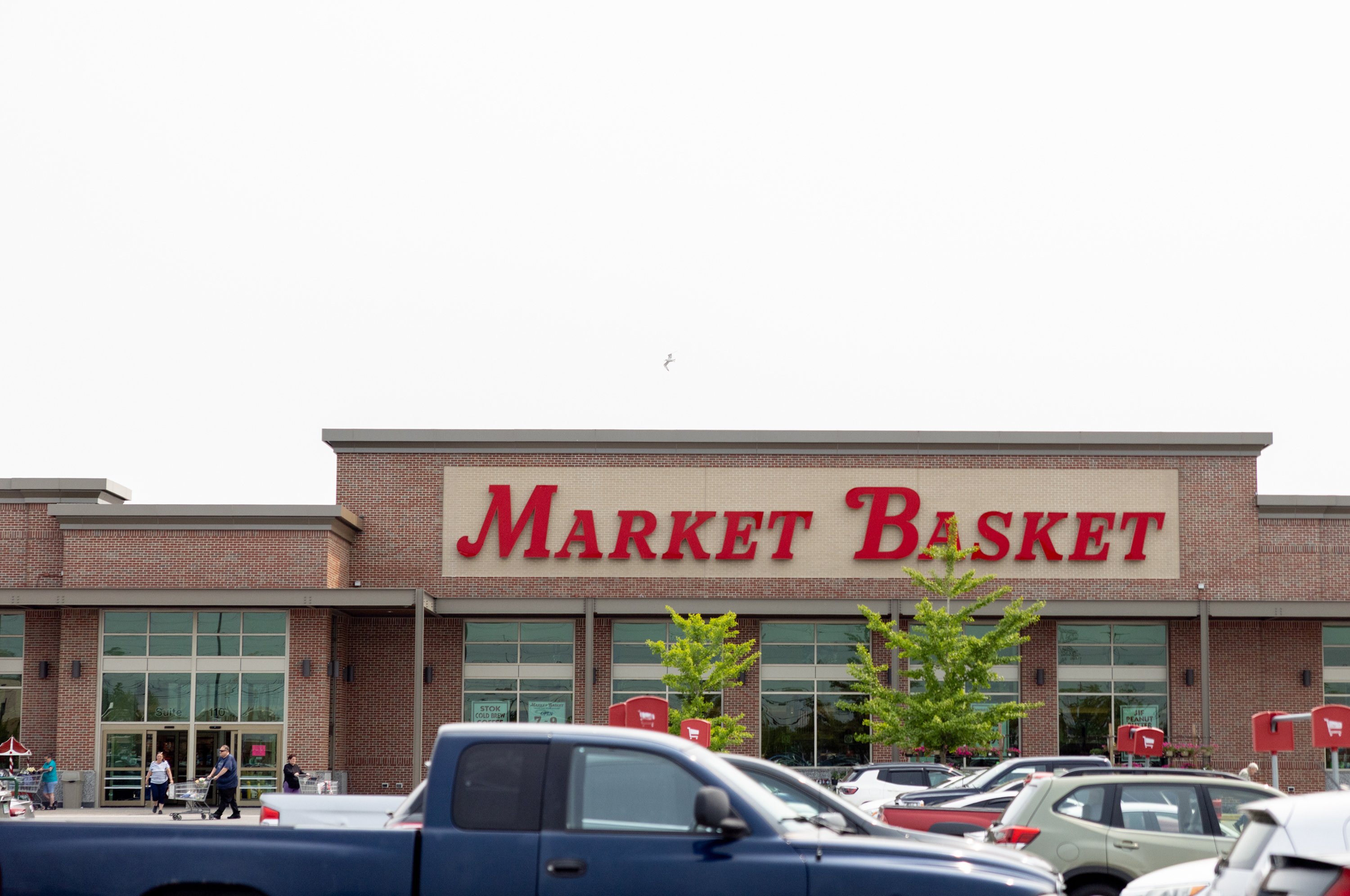
When Christine Milligan-Brown lived in New Hampshire, she’d been a loyal Market Basket shopper for decades.
She recalled a multiple-store strike some years back that temporarily closed the Salem, New Hampshire location of the New England supermarket chain, forcing its regulars to shop at Shaw’s across the street.
“You would find people standing in the aisles going, ‘I do hope this strike gets sorted out, because I can’t wait to go back to Market Basket,’” Milligan-Brown said. “And that had a lot to do with the price. I’ve always found Market Basket prices to be cheaper than Hannaford or Shaw’s.”
She also loves the fresh produce at Market Basket, and the way the staffed checkout lines — the no-frills chain doesn’t use self-checkout systems — move quickly. When she moved to Portland three years ago, Milligan-Brown immediately made the Westbrook Market Basket her go-to grocery store.
“I go past a couple of supermarkets to get there,” she chuckled.
Traditional supermarkets like Hannaford and Shaw’s remain convenient one-stop shopping destinations for many Mainers. But niche supermarkets like Market Basket, Aldi and Trader Joe’s have built growing and often passionate fanbases, due in part to their competitive prices and unique selections of quality, private label products.
Formerly just generic, low-cost alternatives to basic goods, private labels are now often one of the main attractions at niche supermarkets, in part because they source from reputable name-brand manufacturers. Costco’s Kirkland brand coffee is roasted by Starbucks, while Bumble Bee supplies its canned tuna. Kirkland wines and liquors are often lauded by expert taste-testers.
The stores each have their shtick: Aldi is known for its private-label savings; Trader Joe’s bills itself as a “neighborhood grocery” with its array of snacks and store–branded foods. The membership-based warehouse store Costco draws families for its bulk shopping discounts, while Whole Foods attracts shoppers who prioritize organic food, sustainability and fair trade.
Customer devotion sometimes borders on obsession.
The day of Portland’s Aldi grand opening in March, hundreds of superfans stood, sat or lay in line outside for hours to be among the first inside. The Aldi Aisle of Shame Community on Facebook — named after the store’s “Finds” center aisle, a grab-baggy assortment of deals — has 4 million followers. Trader Joe’s and Costco similarly have Instagram fan accounts with millions of followers.
The niche supermarket sector is indeed thriving. Store visits to Trader Joe’s and Aldi increased 10.1% and 6.9%, respectively, from 2024-2025, according to the U.S. Chamber of Commerce, while Aldi reports that one in three American households has shopped at one of its nearly 2,700 stores in the past year. Costco this month announced that third quarter sales in its 2026 fiscal year were up 11.6% year-over-year.
Meanwhile, trade journal Supermarket News reported in March that traditional stores have seen their share of foot traffic drop from 75.1% to 73.2% since 2019, representing billions of dollars in lost sales.
HAWAIIAN SHIRTS AND BASICS FOR A BARGAIN
A Portland Press Herald survey in May asked readers for their favorite niche supermarkets in Maine. Almost 43% of respondents said Trader Joe’s, 34.3% answered Market Basket, and Whole Foods (11.4%), Costco (8.6%) and Aldi (2.9%) rounded out the list. Loyal customers of each said good pricing was a priority.
“I think Trader Joe’s has a lot of things that you can get more bang for your buck, and they’re also good quality,” said Lynne Burney of Augusta. While she makes hour-long trips to the Portland Trader Joe’s, the store has more than one location close to her home in Florida, where she spends half the year. Burney finds significant savings in their store-brand frozen meals, fresh meats and seafood, fresh produce, cheese and snacks.
“You can get a bag of Smartfood popcorn, it’s going to cost you $5.99 at regular supermarkets, and at Trader Joe’s it’s a buck 99.”
John Covell of Augusta shops at Trader Joe’s monthly, when he and his wife visit Portland. They love the private-label items exclusive to the store: the zhoug they put on samosas and hummus; the dark chocolate bark with almond, pretzel and sea salt; the peach mango juice his wife uses as a cocktail mixer.
The Covells also appreciate the quirky vibe at Trader Joe’s, where remarkably friendly staffers wear Hawaiian shirts amid nautical decor. “It’s a fun place to shop,” he said. “The employees there always seem upbeat and happy to work there.”
Aldi, Maine’s newest entrant to the niche supermarket field, garnered the fewest votes in the survey, but enthusiasm was far from lacking.
“It makes me very happy when I buy products from there,” said Clay Wegrzynowicz of Waterville. He moved to Maine in May, and hasn’t yet hit the Portland store, but shopped at Aldi almost exclusively when he lived in Madison, Wisconsin.
“We had a lot of grocery store options in Madison, and Aldi was just always the cheapest. The price really was unbeatable. If you go to Aldi expecting to find huge bulk packaging or fancy prepared food or snacks, you’re not necessarily going to find it. But you will find the basic staples at the lowest price.
“I’m almost ready to email Aldi corporate and say, ‘Please bring one to Waterville,’” Wegrzynowicz added.
BARGAINS BY THE BULK
One common knock against the likes of Trader Joe’s and Aldi is that they have relatively small stores with limited product selection compared to traditional supermarkets. But this strategy helps the companies keep prices lower by reducing overhead and labor costs and turning over inventory faster. Wegrzynowicz sees the smaller selection as a plus.
“It eliminates the paradox of choice one has at the grocery store,” he said.
Aldi also saves money by stocking their shelves with items displayed simply in the containers they were shipped in. “They just open the cardboard boxes and put them out,” said Wegrzynowicz. “No wasted time putting products in a row.”
This utilitarian approach doesn’t appeal to everyone. “I don’t like picking through packaging,” Burney said. “That said, there’s a lot of good deals, and you can do very well at Aldi.”
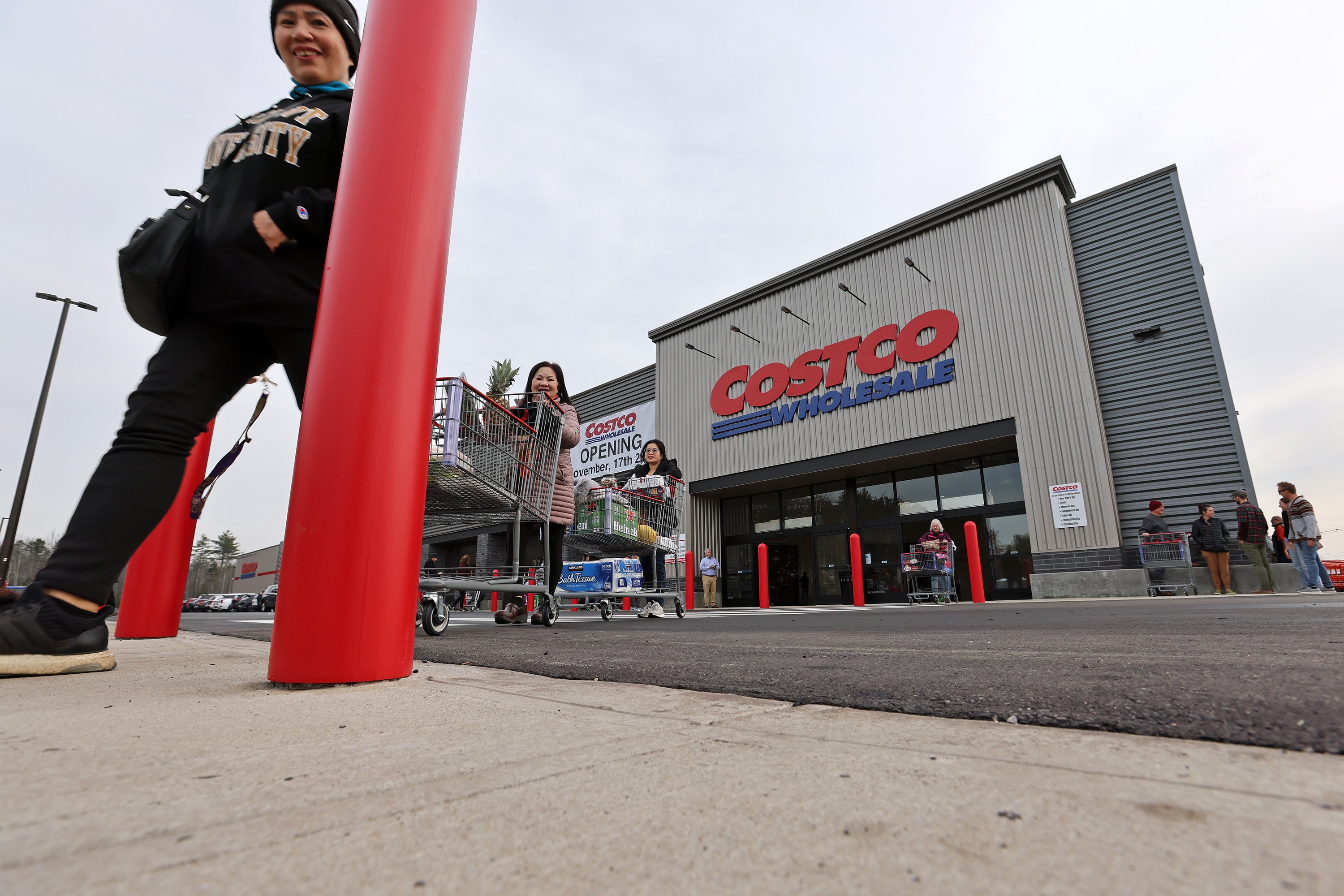
Costco’s deals often appeal to larger households who need to shop in bulk. Maryalice Whalen of Freeport shops at Hannaford for most things, but likes Costco’s discounts on larger quantities of items like paper products, cleaning supplies and toiletries, and for food when she’s entertaining.
“If I need a gallon of milk, I’m not going to Costco,” said Whalen, who shops mostly just for her husband and herself, though family and friends often gather at their house.
Still, there are still plenty of products at the big box store suitable for folks shopping on a smaller scale. Meats and poultry are often packaged in individual, vacuum-sealed portions you can store in the freezer, for instance, while some items like marinara and peanut butter are sold in two-packs, rather than flats.
“Everybody has the idea that’s it’s strictly huge quantities of things, and that’s not absolutely true,” said Covell, who also shops at Costco. “There’s plenty of things you can buy in individual sizes. You don’t have to be stocking up for a whole Scout troop when you go to Costco.”
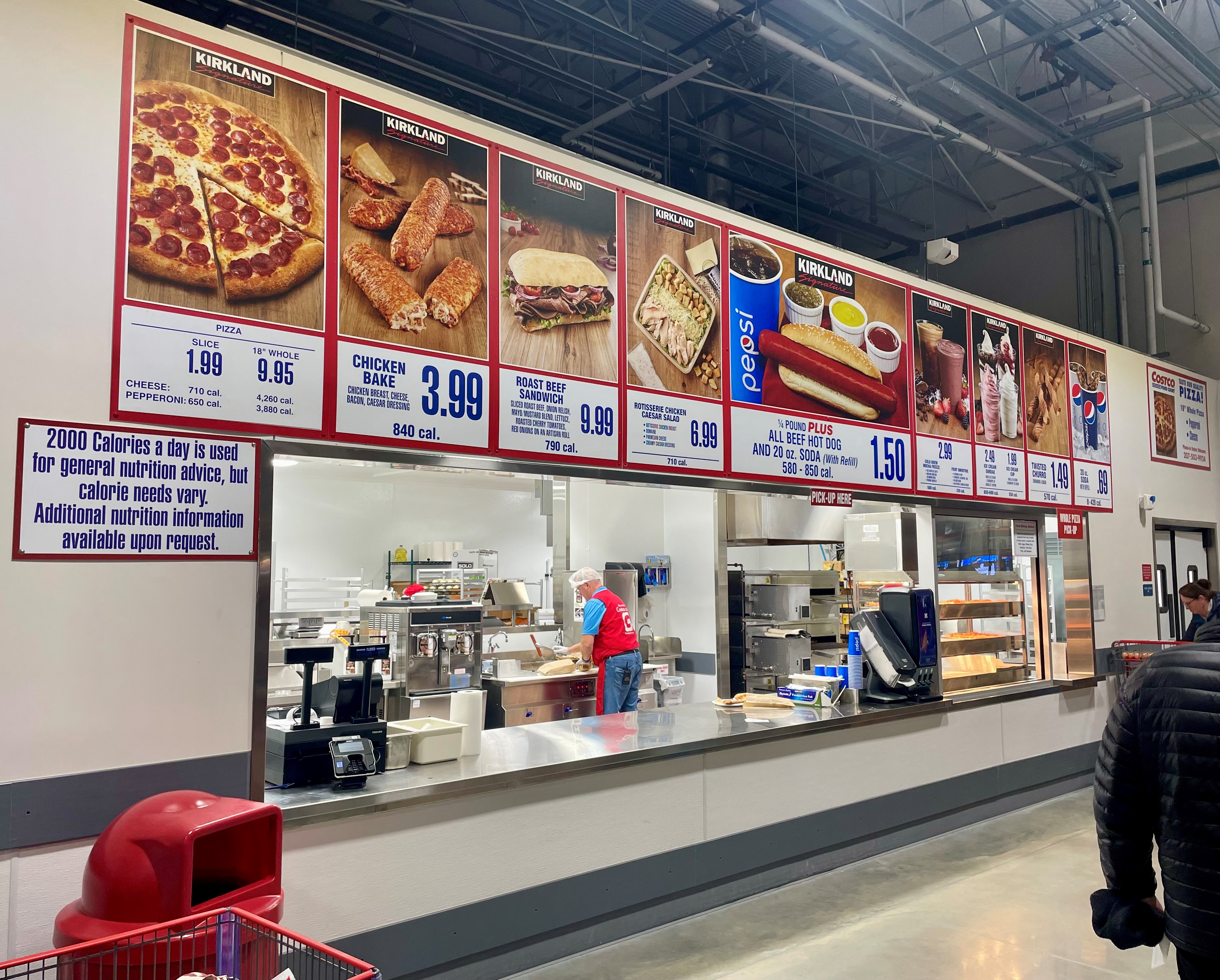
Costco’s steep discounts are possible largely because the store derives most of its profit from $65-$135 annual membership fees. The chain’s operational model has been the focus of multiple business school case studies that see the $1.50 hot dog-and-soft drink deal in the store’s food court as an example of customer care, and its $5 rotisserie chicken as a strategic loss leader, which attracts customers into the store, where they buy other items at higher profit margins.
Costco further distinguishes itself from other niche supermarkets by offering a selection of electronics, clothing and furniture. The store also has its own gas station for members. Whalen used to visit the Scarborough store monthly. But because of soaring gas prices, she now goes every other week to fill up, estimating she saves as much as 40 cents a gallon.
PRIVATE LABELS WITH PRESTIGE
At the other end of the price spectrum, Whole Foods (dubbed “Whole Paycheck” by detractors) was found to be the most expensive of 35 major supermarkets in a February Consumer Reports comparison. Some turned away from the store for more political reasons.
“I don’t want to support Amazon and (owner Jeff) Bezos,” said Cindy Yuill of Gray, referring to Whole Foods’ parent company as of 2017. “As much as I try to shop for organic, and that’s really the best selection for it, I don’t shop there.”
Still, Whole Foods’ wide range of organic, non-GMO, sustainable foods and quality artisanal products remains a draw for many, and shoppers capitalize on discounts with the store’s 365 private label goods.
More than 90% of Aldi’s inventory is private label. Trader Joe’s has its own private label “Hall of Fame,” including their Mandarin orange chicken and dark chocolate peanut butter cups, both of which have cult-like followings of their own. They also have the lure of Two Buck Chuck, bottles of Charles Shaw wine that sell for between $2.99 and $3.99, depending on store location.
Milligan-Brown joked that her husband is a “Trader Joe’s person” who goes there for “processed food and cheap wine.” Personally, she’ll take Market Basket over Trader Joe’s any day, thank you very much.
“Market Basket is one of those places where you can just go and get your entire week’s shopping done without having to go anywhere else, and the prices are always good,” she said. “There’s nothing not to like.”