
When it launched in 2010, Instagram was primarily a way to document and share memories—a social photobook.
The Instagram of today, owned by Meta since 2012, is a much more powerful platform—a search engine, social app, and shopping hub all in one, with the ephemeral algorithmic concept of “discovery” as the core draw for its reported 3 billion users. For artists and small business owners trying to reach people, having an Instagram account is basically a non-negotiable.
That’s why Naomi Dix—the owner of Club ERA, and one of North Carolina’s most prominent drag queens—was devastated when, in the span of less than thirty minutes on June 16, smack in the middle of Pride Month, she was whisked through Instagram’s mercurial content moderation system and banned from the app.
Meta did not respond to the INDY’s request for comment about the account suspensions.
“Pretty much 90% of our marketing and promotion is done through Instagram,” said Dix, emphasizing that Instagram is one of the only ways for minority-owned businesses and LGBTQ creators to reach audiences.
Dix opened Club ERA, a queer, gay, and trans nightclub in June 2024 on South Dillard Street in Durham. Over the years, Dix has built a following of 5,600 on her personal account and 8,000 on the club account; together, the two have served as go-to hubs for locals to learn about drag shows, queer events, and community resources. Dix frequently cross-promotes posts from the LGBTQ Center of Durham that share resources about sexual assault, mental health, and safety.
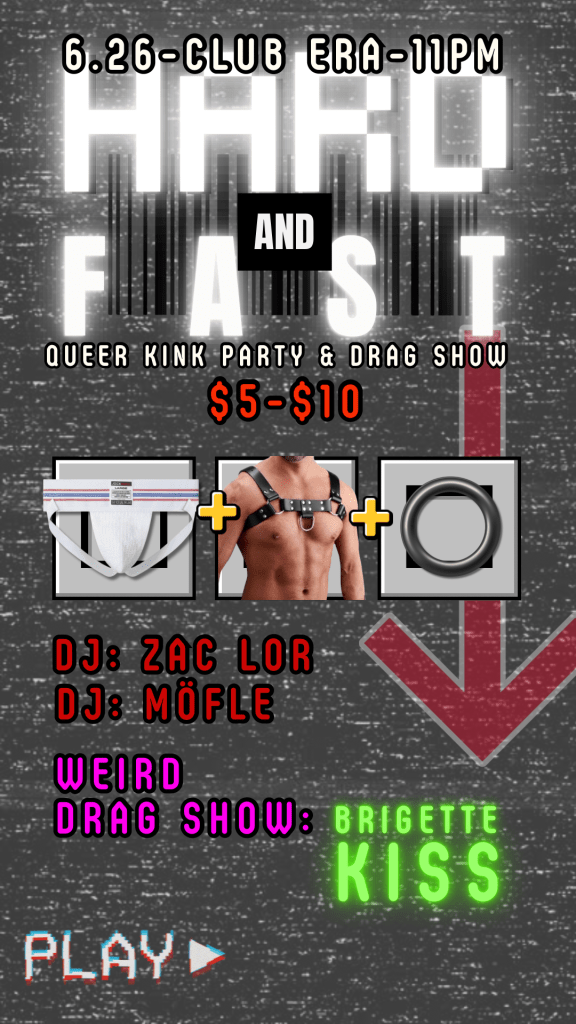
Dix said that she initially got a message from Instagram saying that it was removing three Club ERA posts for “violating community standards.” The message prompted her to hit a button accepting the decision, which she did.
“Not even five minutes later I was automatically logged out of my account,” Dix says. “I got an email about 10 minutes later saying, ‘If you would like to appeal this decision, please hit appeal.’ I didn’t know what decision I was appealing, because I didn’t get any sort of notification that something was wrong.”
A few minutes after she appealed, Dix said she was notified that the appeal had been rejected and that the Club ERA account had been shut down. Her personal account, which was linked to the business Instagram, was also shuttered.
“I really wish I could get your account restored, but trust me, for now I have no stone unturned,” the Meta AI support chat wrote, in screenshots reviewed by the INDY. “However, I hope that you understand there is no possible option to reverse this decision now.”
Community members, including Drag Queen Stormie Daie and Durham County Commissioner Nida Allam, have called on Instagram users to tag Meta in posts asking the company to reinstate Dix’s accounts.
While Meta did not supply Dix with a reason for the ban, the posts it flagged—one of which was from a year ago—included an image of a shirtless dancer and a harness strapped to a person’s chest, with accompanying text advertising a queer kink party and drag show.
According to Meta’s guidelines, prohibited images include photorealistic images of “BDSM (bondage and discipline, domination and submission, sadism and masochism), only when sexual indicators are also present.”
To Dix, these flags represent a bias in Meta’s policies and the software it uses to detect violations.
“AI doesn’t understand intention,” said Dix. “It makes these grave mistakes because it has no sort of reference. And these mistakes are really affecting the queer community because of the cultural wording that we’re using.”
Dix isn’t alone in this: In 2023, Human Rights Watch released a report condemning Meta’s censorship of pro-Palestine content. Over the past few years, organizations that work in queer and reproductive health have also increasingly reported restrictions from the social media titan with little explanation or recourse.
Meta’s terms of service have also been widely criticized for being vague and inconsistently applied, as in the BDSM rule, when the phrase “sexual indicators” is open to broad interpretation. A similarly opaque Meta ban on images of female breasts (men’s chests are allowed) has an exception for images “depicting acts of protest,” though it’s unclear what constitutes such an act.
If archiving whole chunks of life on Instagram—or relying on the platform for visibility, in the case of content creators and businesses—seems casual, the finality of Meta’s black-box backend offers a reality check. Creating a new account is also not an option for banned users: Dix tried to sign up for one using another name, email, and phone number, and said it was immediately deactivated.
“I know for a fact that Instagram really prides itself on creating healthy businesses for a brick-and-mortar—their whole thing is about visibility,” said Dix. “For them to be this quick … to disband my entire business, is frightening.”
Dix told the INDY she is planning to pursue legal action against Meta.
“At the end of the day,” said Dix, “This is 12 years of my intellectual property.”
To comment on this story, email [email protected].