
Florida outpaces the nation when it comes to women reporting difficulty obtaining reproductive healthcare services, an analysis of women between the ages of 18 and 49 shows.
Data from the Reproductive Health Experiences and Access survey released Wednesday show that 34% of women in Florida reported needing but not getting one or more types of reproductive health care services between 2024 and 2025. That compares to 30% nationally.
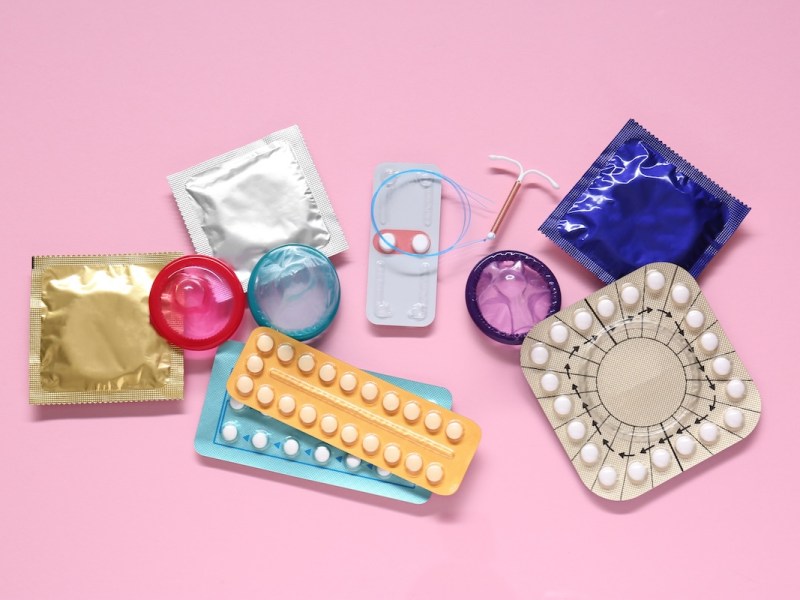
Reproductive health care includes pelvic exams and screening for cervical cancer, care for irregular or painful periods, birth control, fertility assistance, gender-affirming care, and care for menopause symptoms.
“I would say it’s not a surprising finding, given what we know about Florida’s policy environment,” Emily Johnston, Urban Institute researcher and co-author of the study, told the Phoenix in a phone interview Wednesday.
She noted that Florida hasn’t expanded Medicaid to childless adults as allowable under federal law, meaning that many lower-income people go uninsured. Moreover, the Guttmacher Institute has labeled Florida as having the “most restrictive” abortion policies.
In addition to a six-week abortion ban, other policies make it difficult for women to access abortions. A 24-hour waiting period and a ban on the use of telehealth means that a patient needs to have two face-to-face meetings with a doctor to have an abortion, even medically induced terminations.
Minors cannot obtain an abortion in Florida without parental consent, although the law does allows minors to bypass parental consent if they can persuade a circuit judge they are sufficiently mature to decide for themselves. Judges sometimes refuse permission.
The analysis is a collaborative effort between the Urban Institute, the Reproductive Equity Action Lab at the University of Wisconsin–Madison, and SisterSong Women of Color Reproductive Justice Collective. More than 50,000 people were surveyed and focus groups and interviews conducted with directly affected people.
The survey, the first in what is planned to be a continuing venture, examines reproductive desires and experiences accessing reproductive healthcare following the 2022 Dobbs v. Jackson Women’s Health Organization ruling.
The survey includes analyses from Florida and 12 other states: Arizona, California, Georgia, Iowa, Illinois, Maryland, Mississippi, North Carolina, New Jersey, Ohio, South Carolina, and Wisconsin.
A closer look
While 34% of respondents in the aggregate reported difficulties obtaining reproductive healthcare services, accessing care is more difficult for some than others.
Fifty-one percent of respondents with a disability reported difficulties obtaining healthcare services, 49% of people who identify as LGBTQIA+, 44% of those with public insurance or who are uninsured, 36% of those who have less than a bachelor’s degree, and 39% who earn low incomes.
“I think if policymakers are just focused on the 34% overall, that misses these groups that are facing even greater barriers than others,” Johnston said.
A look at the healthcare services
The analysis also examined the types of healthcare services respondents failed to receive.
About 18% of respondents needed but did not get preventive gynecological care, and 13% did not get needed care for irregular or painful periods.
Eighty-four percent of the survey respondents reported not needing care for premenstrual dysphoric disorder, fertility assistance, gender-affirmation, menopause, loss of sexual desire, or dysfunction. For those respondents who did report needing the care at least half didn’t receive it.
Specifically, the analysis shows that 9% of survey respondents in Florida reported that they delayed or had trouble getting the birth control method they wanted in the past year. Again, delays and difficulties don’t affect all people equally, the analysis shows.
For instance, 17% of the respondents aged 18-24 had difficulties accessing birth control, 17% of the respondents with disabilities faced struggles, and 18% of respondents who identify as LGBTQI+ reported delays or difficulties getting birth control.
Florida Phoenix is part of States Newsroom, a nonprofit news network supported by grants and a coalition of donors as a 501c(3) public charity. Contact Michael Moline for questions: [email protected]. Follow Florida Phoenix on Facebook and Twitter.
Subscribe to Orlando Weekly newsletters.
Follow us: Apple News | Google News | NewsBreak | Reddit | Instagram | Facebook | Bluesky | Or sign up for our RSS Feed
Related Stories
You’ve got until Saturday to see some these bands at Lou’s LMGA
“I would say it’s not a surprising finding, given what we know about Florida’s policy environment”
Related
Source link