
Driving southeast down Pine Point Road in Scarborough and rolling down the windows, the distinct scent of salt marsh is impossible not to notice. That’s the odor of the Scarborough Marsh doing its thing — acting as an ecological necessity for plants and animals in the area.
More people than usual headed that way on Saturday for a variety of activities around the marsh to celebrate the inaugural Scarborough Marsh Day. Organized by the Scarborough Land Trust along with 20 partners, the event helped satisfy locals’ curiosity about the largest salt marsh in Maine, teaching them about its environmental, cultural and historical importance.
“A lot of times, the most exciting and the most dynamic and productive places are where two different kinds of world meet,” said Laura Zitske, a wildlife ecologist at Maine Audubon who led a “Marsh Walk and Talk” down the Eastern Trail in the marsh. Salt marshes sit between open saltwater and land, maintaining biodiversity and protecting shorelines from flooding.
The event also served to remind people that the marsh is not always as healthy as it looks, and concentrated efforts are needed to sustain the land to help it continue to serve its purposes.
Many attendees were neighbors of the marsh who view it as part of their recreational lives, but wanted to find out what’s really going on among the mysterious muddy soil, cordgrass and saltwater that comprise its 3,100 acres. They came with questions about specific wildlife they’ve spotted and the marsh’s tide cycles.
“We’re constantly learning more about the different types of animals that we have in our backyards,” said Tim Diomede, who brought his family to the event.
He lives just beside the marsh, and was able to identify a Virginia opossum he’d seen after talking with an expert at a booth set up at Blue Point School at the vent.
“The marsh is something that’s been around for thousands of years, and we need to keep it that way,” Diomede said.
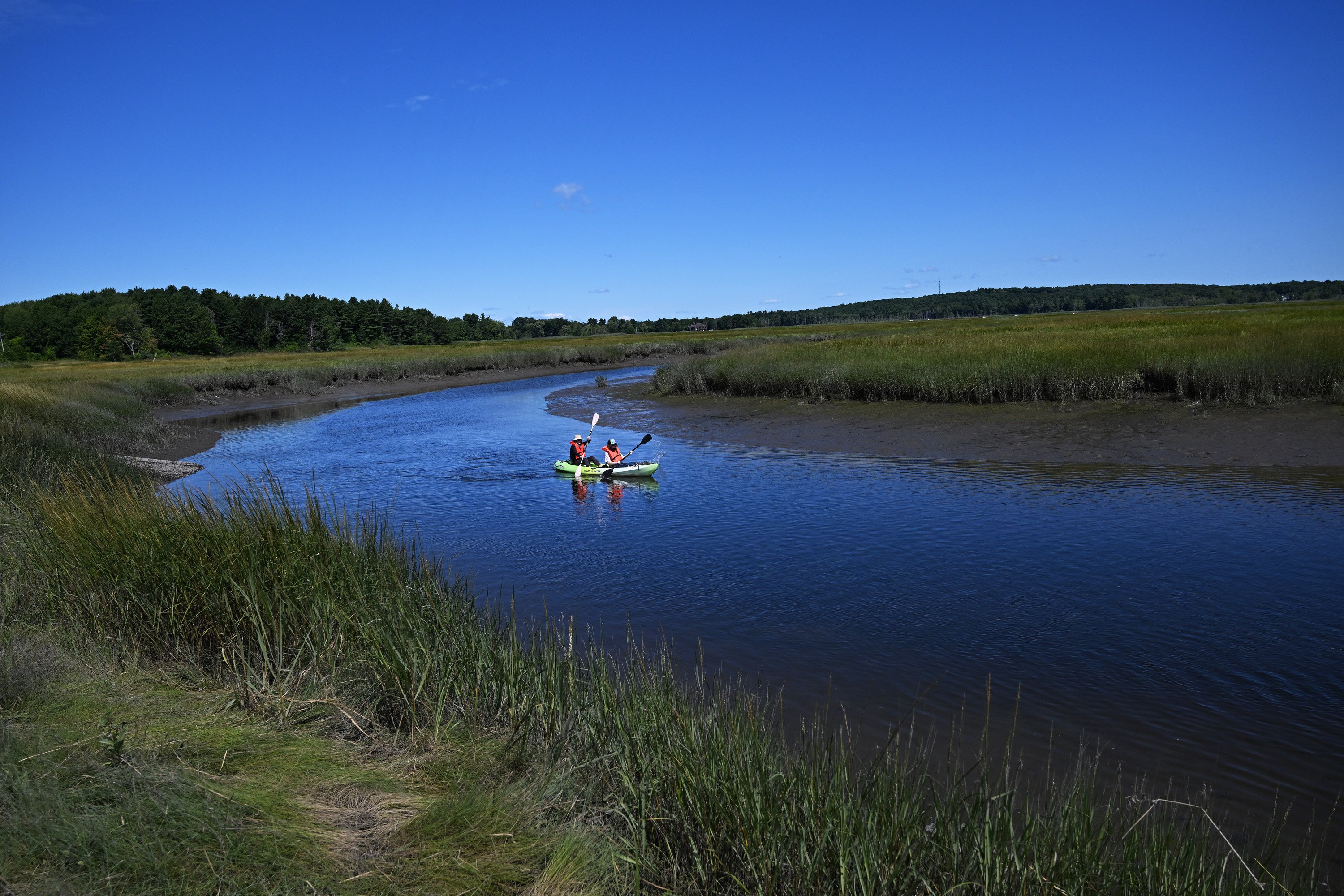
Lasting from 7:30 a.m. until 5:00 p.m., visitors watched a demonstration of clam digging, learned about protecting the rare New England cottontail, canoe paddled through the marsh with a guide and heard from local oyster farmers about aquaculture and how it works with the marsh.
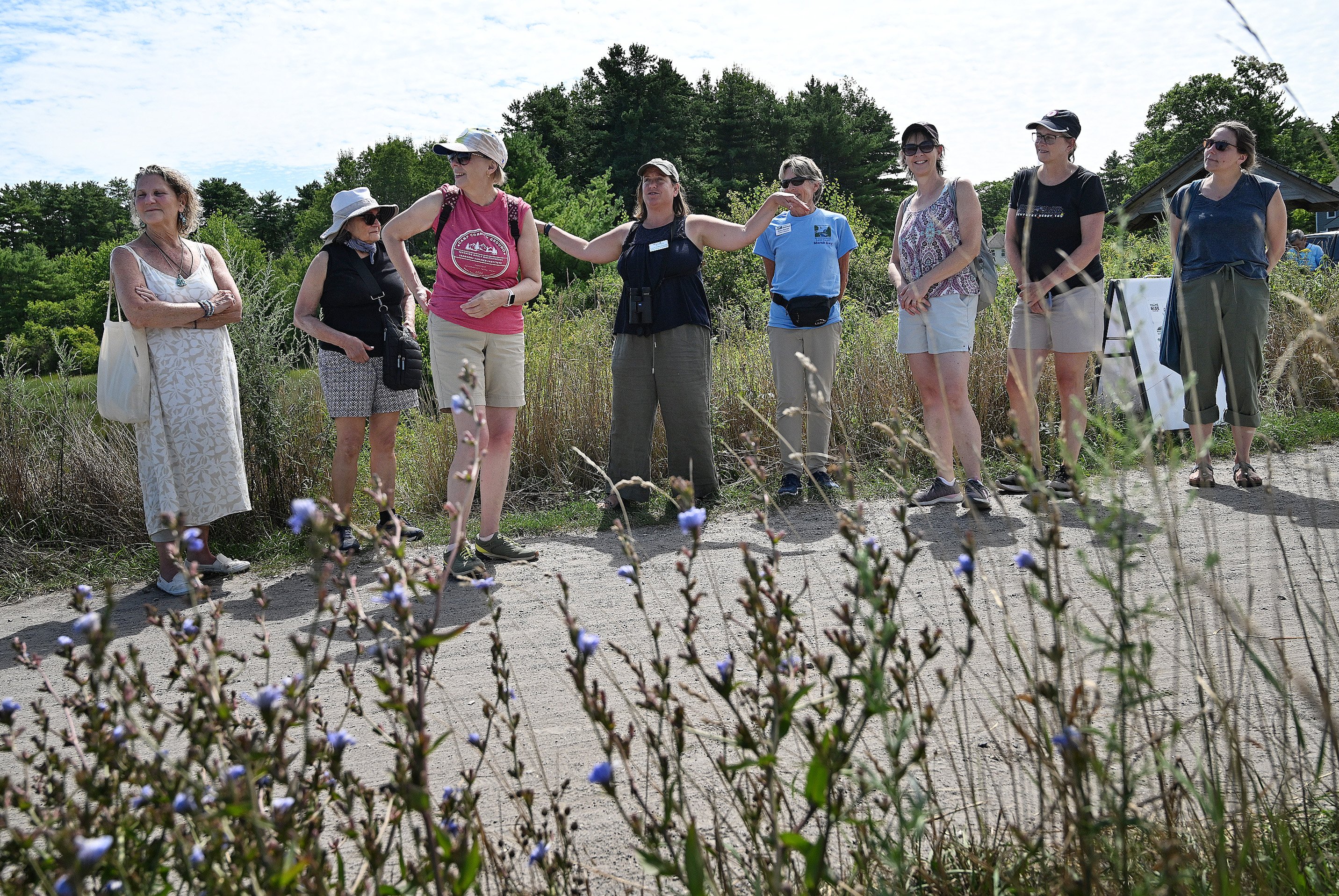
Zitske, the wildlife ecologist who led one of the marsh walks, passed her binoculars around to the seven women who came on the walk to examine a least sandpiper, the smallest shorebird in the world.
“I wish we could have a conversation,” Zitske said of the tiny bird. “Where are you going and where have you been with those tiny little legs?”
Zitske said there is a committee working on a restoration plan to keep the marsh functioning for as long as possible with a $1.4 million grant from the National Oceanic and Atmospheric Administration that the land trust received in April 2024. With rising sea levels, intensifying storms and development, the marsh has faced damage and does not have much room to migrate inland and stay healthy.
“(The restoration work) might be a little jarring at first,” Zitske said. “You might see this heavy machinery in the marsh. But ultimately, in order to save the marsh, you have to do some work that might seem a little disruptive at first.”
The marsh’s value is not all in its ecological functions. Children and their parents gathered under a tree at the Blue Point School earlier that morning to hear Mihku Paul animatedly tell a traditional Wabanaki story about the figure Gluskabe and his magic pouch to teach lessons about sharing and protecting natural resources.
The native Wabanaki people once used wetlands like the Scarborough Marsh to gather sweetgrass, fowl and medicine, Paul said.
“I’m trying to reconnect with non-Indigenous communities to reclaim our presence in public spaces, and also to educate about our culture and our life ways,” Paul said after the storytime. “Coming back to a space like this is a way of sort of re-establishing Indigenous presence in the marsh.”
“I think (the storytime) was great, because we’re bringing in a new generation,” said Caitlin Murphy, who brought her 3-year-old, 6-year-old and 12-year-old children. “We care, but how do we get them to?”
Andrew Mackie, executive director of the Scarborough Land Trust, said that the day was a success. He hopes to repeat the event in future years.
“It seems like this will be an annual event to really build awareness about the Scarborough Marsh,” Mackie said.