
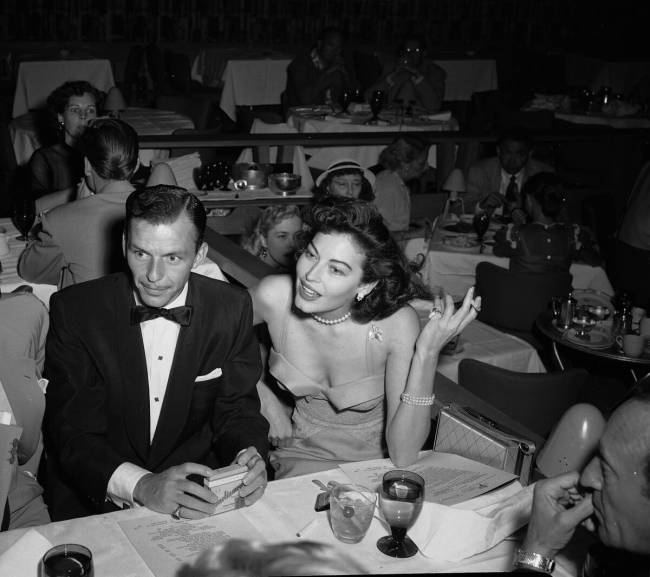
Frank Sinatra was making news for all the wrong reasons ahead of his Las Vegas performing debut.
The weeks leading up to that first show — Sept. 4, 1951, inside the Painted Desert Room at the Desert Inn — were filled with tabloid-worthy stories about his relationship with the twice-divorced screen siren Ava Gardner. The problem? Sinatra was still married to Nancy, the mother of his three children.
When the couple vacationed in Mexico the month before, gossipy wire service reports were built around tales of screaming matches Sinatra had with reporters as well as threats by his bodyguard to shoot a photographer. Divulging the name of their hotel and their adjacent room numbers only added to the lurid nature of the stories.
It didn’t help matters that those first Las Vegas concerts stemmed from Sinatra’s desire to rid himself of Nancy so he could marry the movie star.
FRANK’S OLD HAUNTS
Sinatra left his mark all over Vegas’ scene
Thanks to Nevada’s liberal divorce laws at the time, plaintiffs needed to reside in the state for just six weeks. Sinatra passed those days with two weeks of shows at the Riverside in Reno starting Aug. 9, followed by time at Lake Tahoe. He had a speedboat hauled from there to Las Vegas amid plans to fish with Clark Gable at Lake Mead.
“Women Swoon, Strong Men Flee — The ‘Voice’ Is Comin’,” read the Aug. 24 Review-Journal headline announcing Sinatra’s pending arrival. But coverage of those first shows was scarce. A photo on the front page of the Sept. 5 edition showed Sinatra and Gardner holding hands after his first performance.
A review published Sept. 7 in Variety noted that the singer shared the bill with magician-ventriloquist Jay Marshall and “acro-contortionist” Ruby Ring. Sinatra “KO’s the whole room but good” with his version of “Soliloquy” from Rodgers & Hammerstein’s “Carousel,” the piece noted.
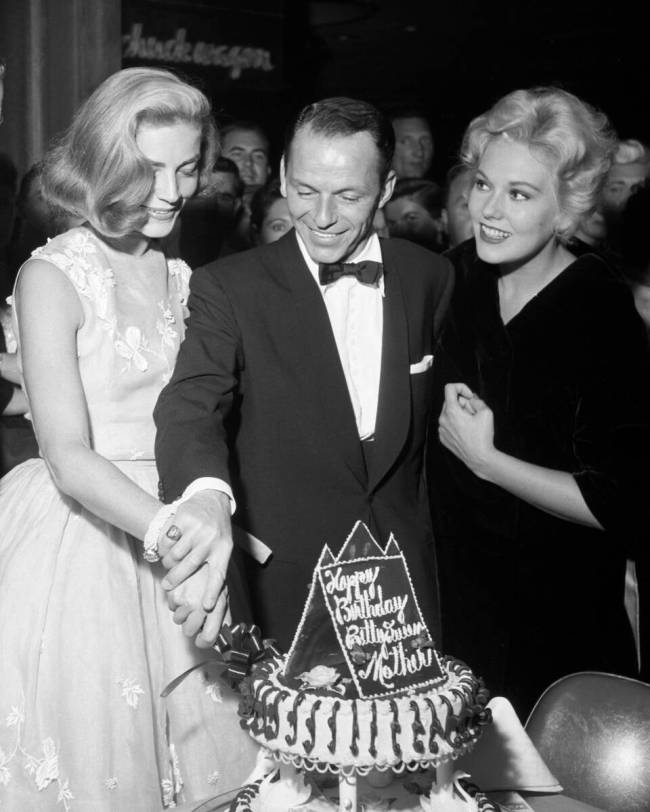
Sonny King, a Las Vegas lounge legend and Sinatra confidante, painted a bleak picture of those nights in the 450-seat showroom as part of “Sinatra: The Life,” the 2005 biography by Anthony Summers and Robbyn Swan.
“At the time,” King recalled, “you could walk in, you could sit in the back of the room for 25 cents and drink Coca-Cola and watch Frank Sinatra — and he was singing to half a house.”
Those shows set the stage for Sinatra’s long, complicated history with Las Vegas during which instances of his kindness and generosity clashed with flashes of his violent temper. Multiple news reports over the years questioned whether the benefits of having him here were worth the trouble he caused.
The following five stories represent the highs and lows the tuxedo-clad superstar experienced in the city he helped rid of its dusty Western image — the city he remains synonymous with 75 years later.
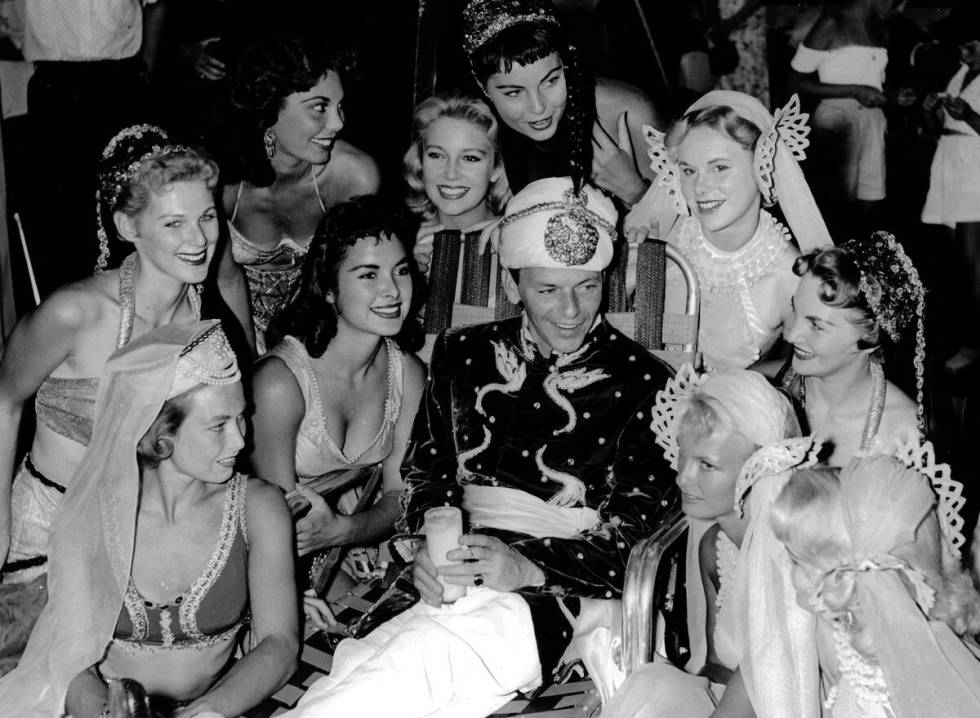
(Las Vegas News Bureau)
‘The Summit at the Sands’
What a difference two years make.
When Sinatra returned to the Strip, debuting at the 10-month-old Sands in October 1953, he was riding high again thanks to his turn as Pvt. Angelo Maggio in “From Here to Eternity.” The role would earn him an Academy Award for best supporting actor the following March.
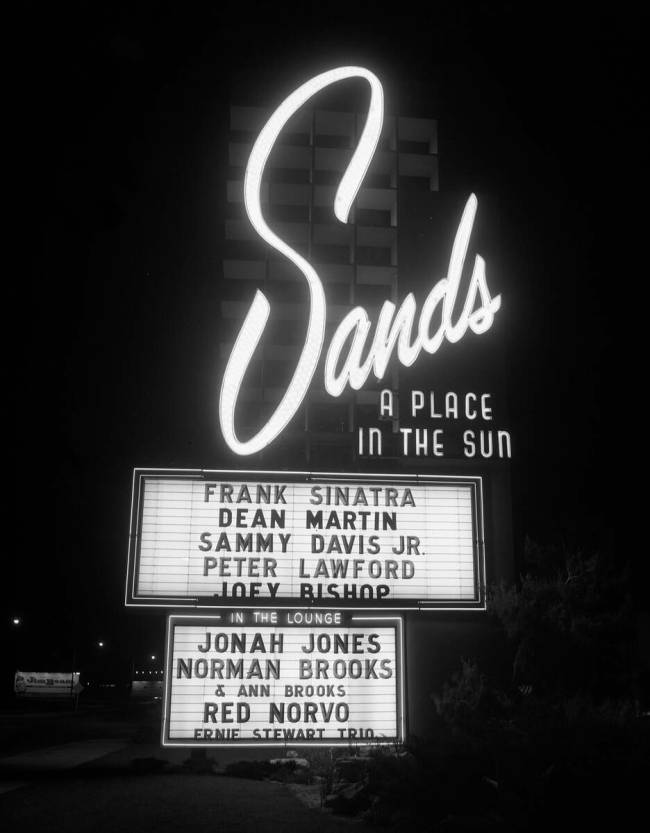
His 14-year association with the hotel and its Copa Room would be the pinnacle of his Las Vegas career, capped by the frenzy surrounding “The Summit at the Sands.”
Featuring Sinatra, Dean Martin, Sammy Davis Jr., Peter Lawford and Joey Bishop, the twice-nightly shows at 8:15 and midnight, ran Jan. 20-Feb. 16, 1960, while the friends filmed “Ocean’s 11” during the daylight hours.
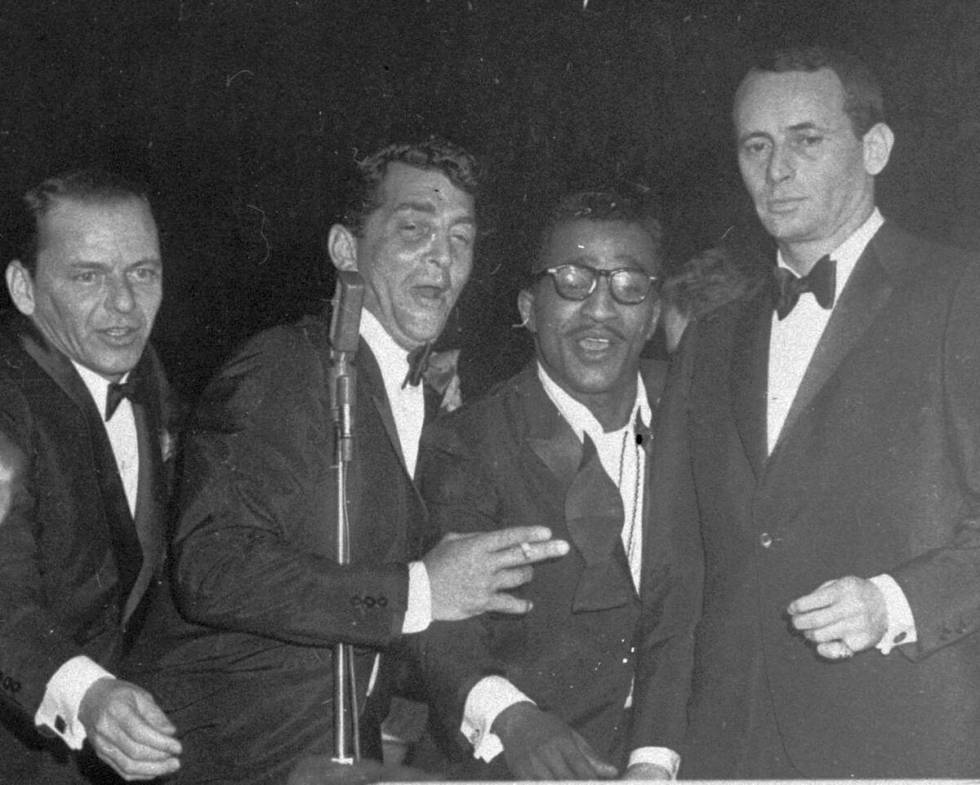
“He’s a gasser. Yeh man, a real gasser. Batten down the hatches and get ready for a real blow … Sinatra is back at the Sands,” Review-Journal columnist Les Devor raved about that opening show.
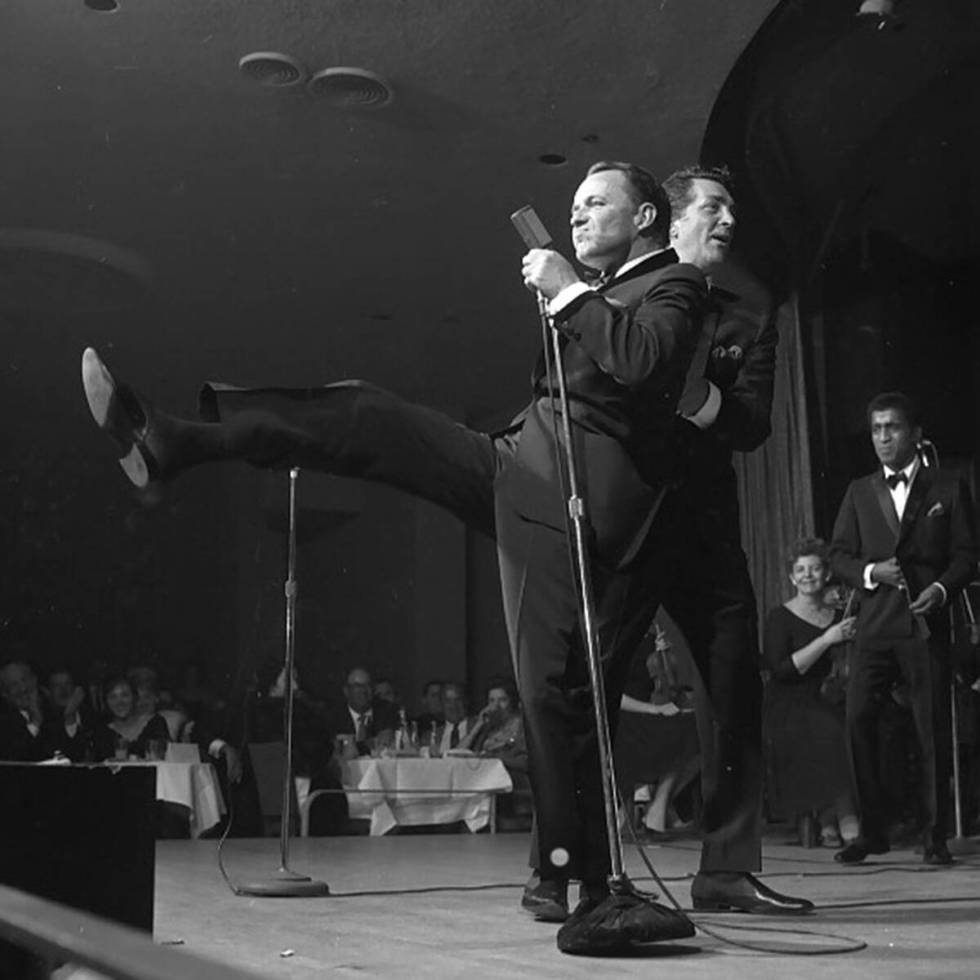
The raucous productions — a blend of singing, dancing and freewheeling comedy — gave audiences the impression they were granted admission into some sort of secret clubhouse.
Sinatra sang for 20 minutes in that first show before ceding the stage to Bishop, the comic who wasn’t given equal billing to the others and served as a moderator. Davis sang “a hep version of the ‘Birth of the Blues,’” Devor reported, before Lawford joined him in a dance number. Martin did 10 solo minutes before singing with different combinations of his pals.
During the run, Sinatra introduced presidential hopeful John F. Kennedy from the stage. Lucille Ball, Bob Hope, Angie Dickinson, Johnny Mathis, Zsa Zsa Gabor and Don Rickles were among the stars who caught the show.
Those four weeks were the only ticketed shows the fivesome known as The Rat Pack — a term they hated, preferring The Clan until that moniker took on negative connotations — ever performed in Las Vegas.
They re-created “The Summit” for invited guests that August as part of the “Ocean’s 11” premiere. They’d drop in on each other’s shows from time to time, most notably during the following summer when they’d commute to the Copa Room from filming “Sergeants 3” in Kanab, Utah. But Sinatra excommunicated Lawford from the group in 1962, and Bishop was frozen out two years later.
(Las Vegas News Bureau)
Sinatra’s relationship with the Sands, though, endured. At one point, he owned 9 percent of the resort.
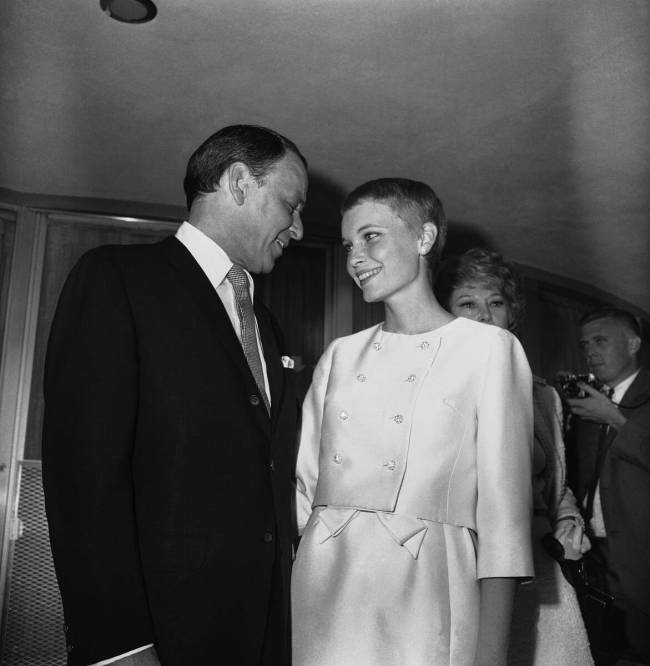
On July 19, 1966, the 50-year-old singer wed 21-year-old actress Mia Farrow in a five-minute civil ceremony in the apartment of Sands president Jack Entratter. (Sinatra and Gardner, who married Nov. 7, 1951, in Philadelphia, divorced in 1957.)
“While the wedding vows were being recited,” the RJ reported the next day, “the strains of Sinatra’s new hit record, ‘Strangers in the Night,’ were faintly audible over the hotel speaker system.”
He recorded his first live album, “Sinatra at the Sands,” that year in the Copa Room with the backing of Count Basie and his orchestra under the direction of Quincy Jones. It was the only Las Vegas recording released during his lifetime.
A bitter ending
Howard Hughes purchased the Sands in July 1967 and ushered in a new era — one that didn’t include Sinatra.
Two months later, the reclusive billionaire, who’d also enjoyed a long relationship with Gardner, had casino vice president Carl Cohen cut off the singer’s credit at a reported $200,000.
That decision conjured Sinatra’s volatile side for its most public appearance yet.
“He drove a baggage cart through a plate glass window, injured a security guard, fought with casino bosses, pulled all the telephone jacks at the switchboard, threw his furniture from his room and caused a near riot in the Garden Room,” the RJ reported on Sept. 12.
Accounts at the time varied, but most agreed that Sinatra either threw a table at Cohen or turned one over on him, which resulted in Cohen knocking the caps off the singer’s two front teeth.
District Attorney George Franklin wanted to press charges against Sinatra, but he was unable to find anyone who would sign a complaint.
“The fact that Sinatra has a great deal of talent certainly doesn’t entitle him to a free, wild run of the city,” the RJ opined in an editorial.
Sinatra was in such a hurry to sever ties with the Sands, he signed a contract to move to Caesars Palace, which had opened the previous year, at 4 a.m. Sept. 11 — before he’d even finished his rampage.
He ruled Caesars Palace
Three years later, around 5 a.m. on Sept. 6, 1970, Caesars executive Sanford Waterman pulled a .38-caliber revolver on Sinatra during another argument over casino credit.
Sources at the time said he had a $450,000 marker and was attempting to play baccarat at $16,000 a hand — on credit.
George Franklin dropped all charges against Waterman, saying the executive had fingerprints on his throat from the encounter. Sinatra’s camp denied he’d touched Waterman.
Once again, the DA sought charges against the singer to no avail. (That November, when Franklin lost his bid for re-election, Sinatra sent him a telegram saying, simply, “Goodbye.”)
“He gets away with too much. He’s through picking on the little people,” Sheriff Ralph Lamb told The Associated Press. “I don’t know why the hotels put up with him.”
In the aftermath, a Sinatra spokesman said it was unlikely the singer would play the Strip again. He didn’t for more than three years.
When news broke in November 1973 that Sinatra would return to Caesars Palace for a week of concerts the following January, Lamb publicly welcomed him back to the city, calling him “a close personal friend of mine for 20 years.”
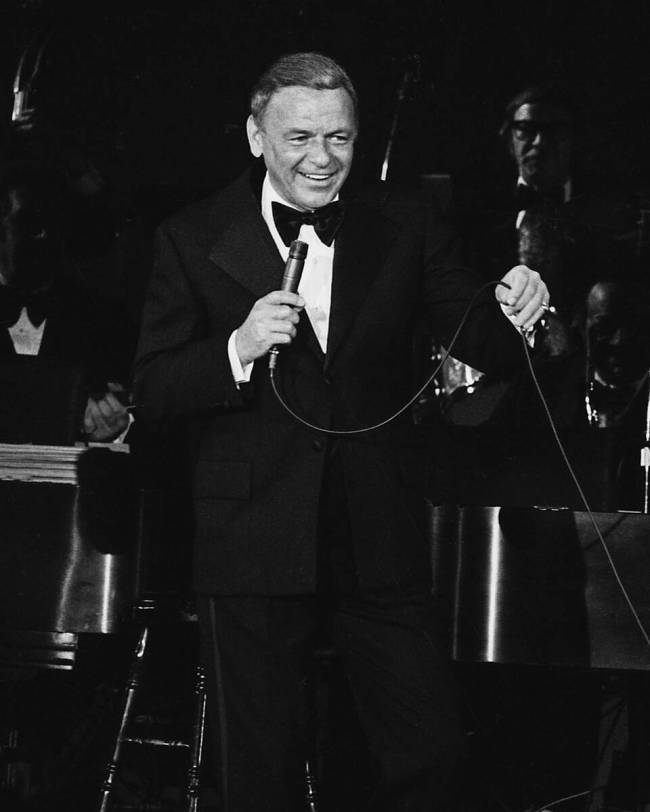
“The controversy surrounding Sinatra invariably adds to his colorful reputation,” Review-Journal entertainment columnist Forrest Duke wrote at the time, “and consistently made him the strongest attraction to ever play the Strip.”
Sinatra would remain a regular at Caesars until 1984, when he moved to the Golden Nugget for three years. From there, it was on to Bally’s, the Riviera, back to the Desert Inn and, finally, the MGM Grand, where he played his last Las Vegas show on May 29, 1994.
A perfect reunion
Dean Martin and Jerry Lewis were among the hottest acts on the planet between 1946 and ’56. They starred in a popular radio program, hosted “The Colgate Comedy Hour” on TV and made 16 movies. From 1951 to ’54, they either topped the annual box office poll of movie exhibitors or finished second to John Wayne or Gary Cooper.
But when they split, 10 years to the day after their first performance, they didn’t speak to each other for two decades.
Then Sinatra stepped in.
Fifty years ago, on Sept. 5, 1976, the singer performed covers of Neil Diamond’s “Stargazer” and Eric Carmen’s “Never Gonna Fall in Love Again” as part of Lewis’ annual Labor Day telethon for the Muscular Dystrophy Association.
On stage in the Sahara’s Congo Room, Sinatra presented $6,000 worth of checks from the owners of the Stardust and made a personal pledge for $5,000 in honor of his grandchildren. Then he addressed Lewis.
“Listen, I have a friend who loves what you do every year and who just wanted to come out,” Sinatra teased, before unleashing the surprise. “Would you send my friend out, please?”
Martin strode out from behind a curtain, cigarette in hand and grinning from ear to ear, to greet his former partner.
“It was the longest 50 steps I have seen in my life,” Lewis told the Review-Journal in 2016. “I didn’t know what to do or what to say.”
“I think it’s about time, don’t you?” Sinatra asked, to thunderous applause from the live audience.
Martin and Lewis embraced, kissed each other on the cheek and wiped the corners of their eyes. The moment is regarded among the greatest in television history.
“I couldn’t believe it. I was stunned,” Lewis recalled in that interview. “Frank had set it up, and everyone knew about it except me. When Dean finally got to me, onstage, I was able to say, ‘So, are you working?’ That broke him up, it broke the ice and got our friendship back on track.”
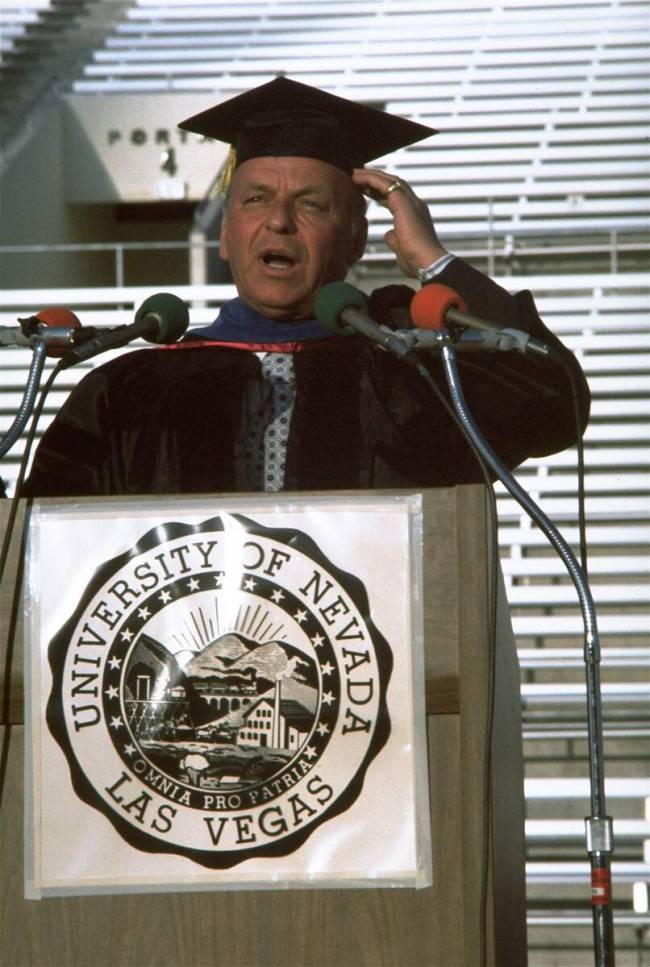
UNLV’s top booster
Sinatra was watching TV in 1975 when he caught one of the two games that year in which UNLV beat Pepperdine, according to reports from the time.
That was all it took for him to become a fan — such was the power of the Rebels and their second-year head coach, Jerry Tarkanian.
That July, Sinatra performed a 50-minute set at UNLV’s annual athletic scholarship dinner before 2,300 of the school’s biggest donors. He returned in 1976, playing to 3,000.
Days later, the university awarded him an honorary Doctor of Humane Letters degree. At the time, James “Bucky” Buchanan II, chairman of the University of Nevada Regents, said the honor was for “an individual whose personal charitable endeavors are matched by few.”
In 1977, the gala morphed into a fundraising concert in the 7,500-seat theater at the Aladdin, where it remained through 1982. Tickets for the shows, including the one in 1981 where Sinatra reunited with Dean Martin and Sammy Davis Jr., could be had for as little as $15.
Other guests over the years included Jerry Lewis, Liza Minnelli, Paul Anka, Danny Thomas, Tony Orlando, Steve Lawrence and Eydie Gorme and Pat and Debby Boone.
Sinatra would personally invite the guest artists, sometimes using his private plane to get them to and from Las Vegas. He’d also host, produce and direct those concerts. And, according to coverage from that era, he’d pay the musicians, technicians and support staff.
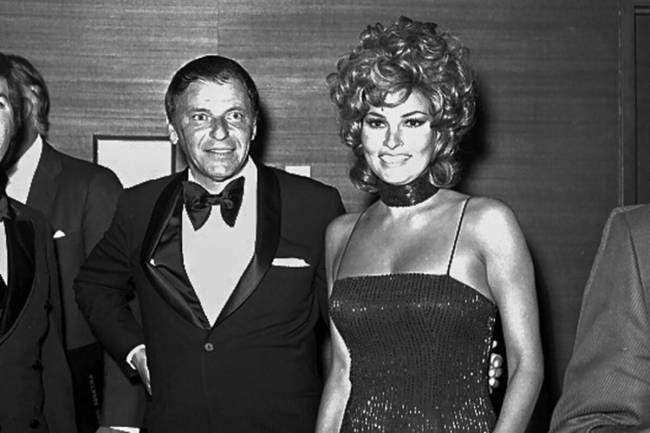
Caesars Palace Frank Sinatra Raquel Welch 4/21/1970 (Las Vegas News Bureau)
“UNLV doesn’t have a boxing team, but it does have a ‘heavyweight champion,’” Royce Feour, the Review-Journal’s famed boxing writer, penned in a 1980 column. “Frank Sinatra is UNLV’s most prestigious and influential ‘booster.’”
On Dec. 16, 1983, that boosterism extended to opening the Thomas & Mack Center with a benefit concert alongside Martin and Diana Ross, who filled in for an ailing Davis.
“He made himself available, became more involved each year, put on a bigger and better show each year and was a gracious host afterward,” attorney Chuck Thompson, who coordinated those concerts, told the Review-Journal before the 1980 show that included Wayne Newton, Tony Bennett, Bill Cosby, Joan Rivers and Flip Wilson.
UNLV’s fundraising campaigns had averaged $250,000 to $300,000 a year, Thompson said. Once Sinatra became involved, that figure jumped past $1 million.
“I don’t know how we really deserve this,” Thompson concluded. “It is a thing you could not buy, beg or force. It has to be something that comes from this man’s heart.”
Contact Christopher Lawrence at [email protected] or 702-380-4567.