
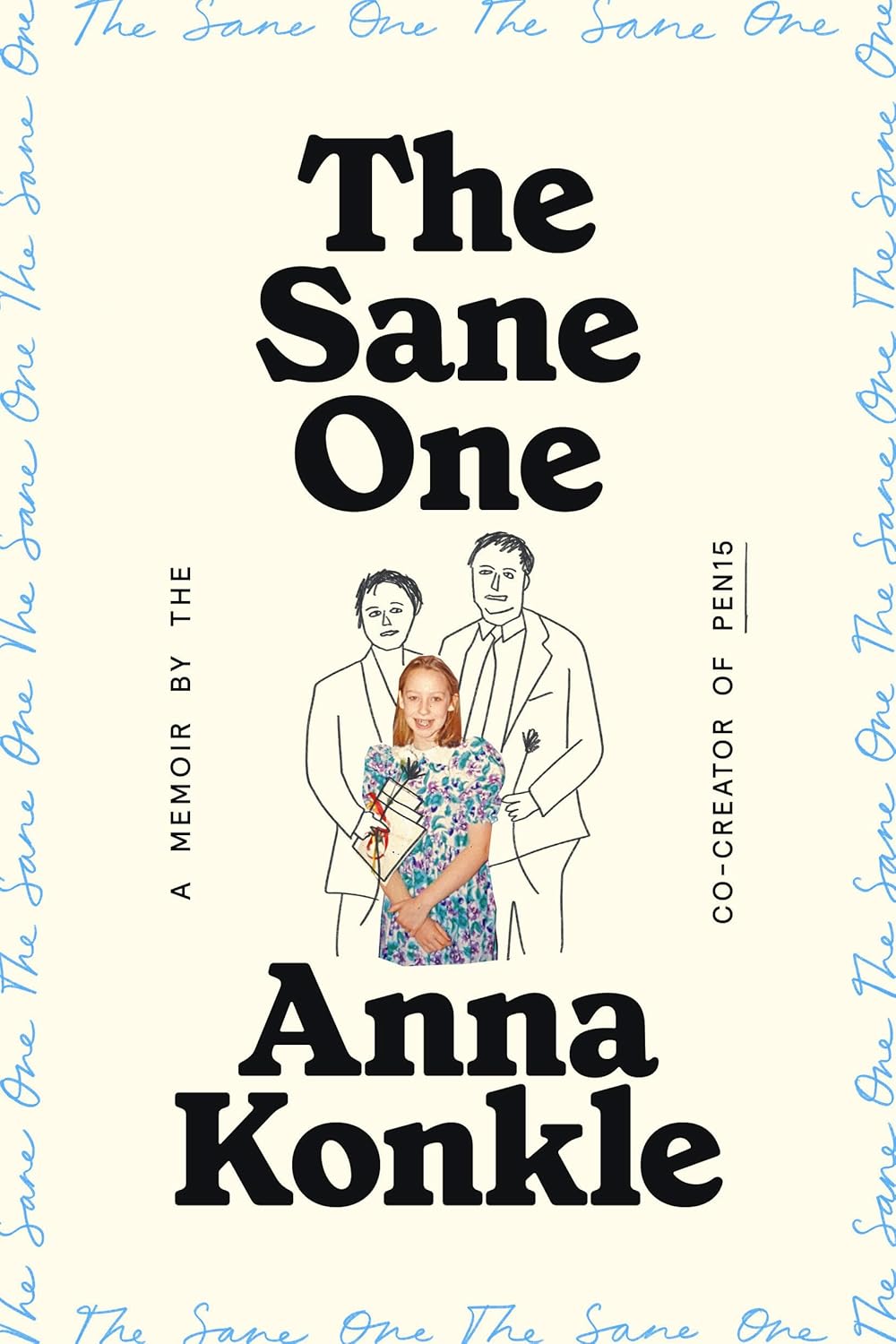
Growing up in a small town in Vermont, Anna Konkle was surrounded by larger-than-life personalities. Her dad moved through the world with a staggering swagger, and her mom proclaimed the magic of women and led new moon ceremonies. Their fights were large too, culminating in a difficult divorce. Konkle’s relationship with her father became increasingly strained over the years, leading her to initiate a period of estrangement. In the interim, acting became a beacon for her, and she created and starred in the hit series ‘Pen15,’ in which she and co-creator Maya Erskine played awkward 13-year-olds alongside a cast of middle-school actors.
During filming, her father became terminally ill with cancer. In her candid and conversational debut memoir, “The Sane One,” Konkle opens up about the love and challenges that characterized her relationship with her father and led her to seek nuance and gradations of gray in her work and personal life. She spoke with the Portland Press Herald about her upbringing in New England, becoming a parent and embracing awkwardness in ‘Pen15.’
In the book, you spoke about how ‘Pen15’ allowed you to revisit parental wounds and heal. How have your friendships today continued to offer a salve to life’s obstacles?
Because my primary home was so up and down and not the refuge that I wanted, I saw friends as family, starting early with the group that we camped with in Vermont. It continues to this day — about 40 people and 10 families, with three generations of hippies and their kids, and now their kids’ kids. I have thanked my parents many times over the years because they were part of that core group. We had a lot of estrangements within our family, but there was this “framily” as we call them — friends, family — that persevered. It taught me early on to look around for other kinds of family. Ironically, my parents were the first to teach me that.
You called out your parents’ hippie side throughout the book. How do you see that identity now?
It’s always been shorthand for me. Moving south of Boston to this Irish-Catholic town, or going to NYU, you start to place yourself in the world and ask, “Who am I compared to you?” It’s shorthand for my parents being a little bit radical in the way they spoke. The irony is that it wasn’t in the everyday of how they lived, in the sense of staying in Vermont and not working for corporate America. They bent to the man, but they wanted to give me a certain upbringing, schooling and idea they had in their head of what a nuclear family should be.
The fantasy that I had was if they had followed the inner hippiedom that was more authentic to them, then maybe they would have had a more fulfilling relationship. Not to say they would remain together, but maybe they would have been happier individually.
At a launch event, you said ‘Pen15’ gave you the confidence to be awkward and an outsider. How did you get other people in the writers’ room to embrace that vision?
I connected to acting and art from a young age. Meryl Streep’s a great example, or Whoopi Goldberg — people that were comfortable acting out tragedy but also comedy and lightness. As I got older and became disenchanted with the idea of being an actor, seeing things like ‘The Comeback’ and ‘Strangers with Candy,’ I felt there was purpose. Absurdism was a lightbulb, and I think we got to marry tragedy and comedy with absurdism.
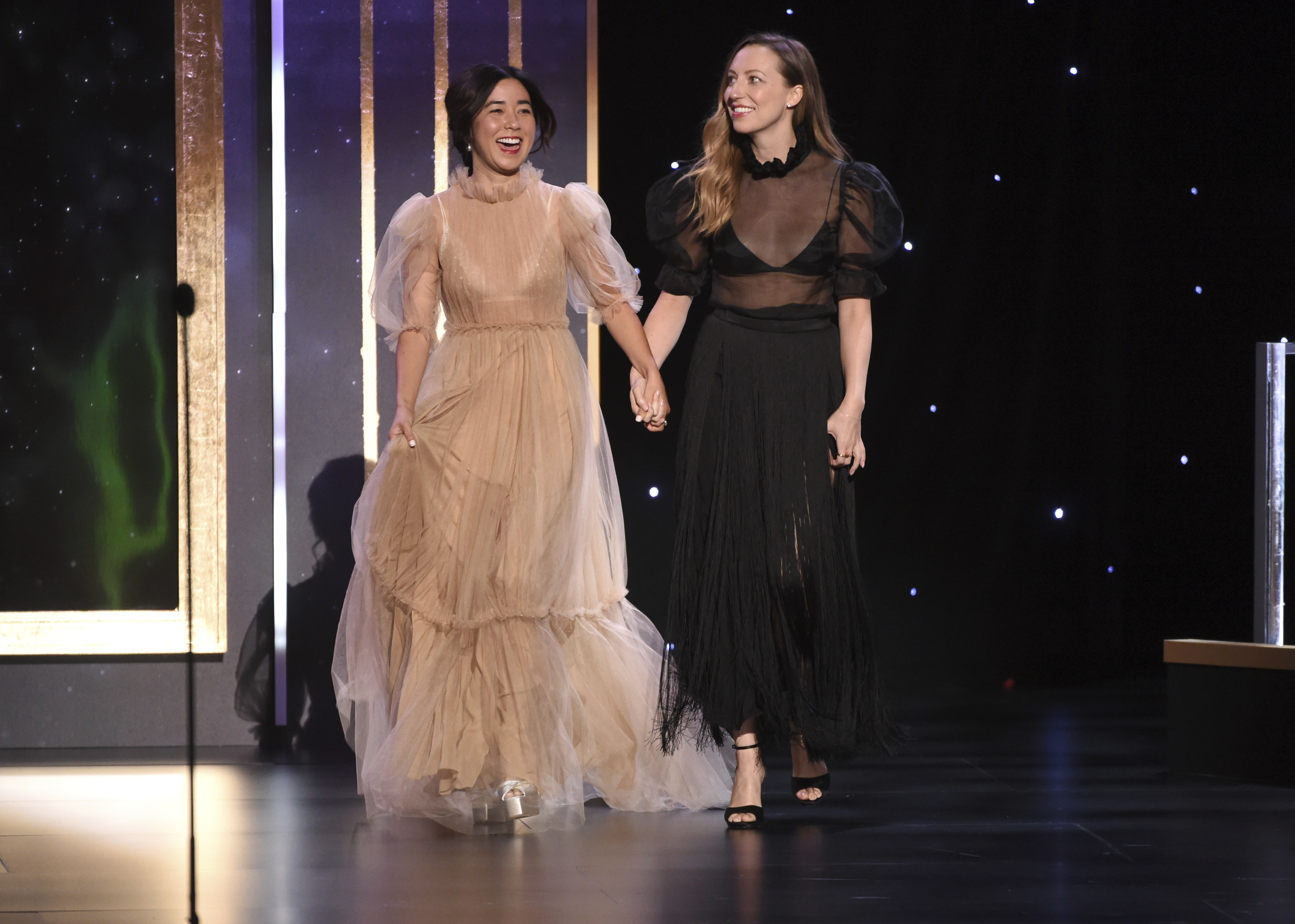
That engine in my work happened to be about writing authentically about outsiders and the outsiders within us. Once we were in the writers’ room, it was partly about convincing others, which was also trying to convince ourselves, why these outsider stories were important. It didn’t begin as a feminist endeavor, but the more that we identified storylines that weren’t being told, the more political it became. We didn’t expect people to be as candid as we were being. We were the ones that needed to be the most humiliated in the room every day to get the stories out.
In the book, there’s a scene in Amsterdam when you’re speaking with two acting classmates and find this moment of radical recognition — growing up as girls, you’ve all had similar experiences but have felt shame and are not talking about it.
That was definitely an important moment. The stuff that my mom had been saying to me as a kid that was sort of embarrassing and radical — the idea of women being magical and being oppressed because we’re magical — felt extreme growing up. Now I feel like it’s in the zeitgeist again. I worked hard to not be someone that people could laugh at, and that meant not being like my mom in some ways, sadly. Amsterdam was the beginning of valuing her and myself as an outsider. I identified with Kate and Maya and admired them for embracing themselves sexually and physically in ways that I wasn’t able to. The irony is that my mom had sowed those seeds in my mind a long time ago, and it was like someone was watering the seeds and going, “This is who you really are. Wake up.”
Since the show released, you became a parent. How has becoming a parent changed how you see your upbringing, or how does your upbringing change how you think about parenting?
One of the biggest lessons has been about overcompensating for how I grew up. It’s an interesting zoom out on our generation in general. When your daughter or son is having an absolute tantrum, with all the gentle parenting, you are expected to be totally still and calm. I think it’s natural for generations to overcompensate. It’s funny how hard it is for humans to find a moderate middle ground in response to something that didn’t work. I’m no exception. Essie was born during COVID. I don’t think it’s a coincidence how strongly I was feeling hypervigilant. My dad had passed, COVID happened and we didn’t know how COVID would affect her or me, especially when I was pregnant.
I felt overwhelmed knowing that there was so much that I could do wrong, and yet she would love me so much and think I was amazing. That broke my heart. I remember having this feeling after birth that the greatest unconditional love is child to parent. There tends to be this need for connection and love that you can’t turn off. I found the estrangement period with my dad so painful, yet I knew I needed space. It was my doing, and still I felt I couldn’t turn my love off for him even though that would have made things easier. I felt overwhelmed by that as a parent. What do I have to do to actually earn the amount of admiration that you just have with me through DNA?
The book illustrates just how challenging it can be to set boundaries with someone you love. What would you say to someone who’s struggling to do that with someone in their life?
The no-contact debate is alive and well online. It wasn’t really around when I was going through everything with my dad. Something that I feel is important for parents to know if your child is taking space, and for kids to know too, is that if it’s the child’s choice, for 99% of people, it’s a very painful decision. From parent to kid, there is something that I see as a thread that connects us. When my dad passed, I had this feeling of a thread being removed from me that I did not give permission to remove. It’s important to acknowledge that it’s not an easy decision and that empathy needs to be shown to oneself, and ideally, a parent could have empathy for their child.
It’s not anyone’s goal. I think it’s somewhat biological to want to be connected and in touch, and if you’re at a point of needing more extreme boundaries because they’re not feeling respected, you have to listen to that and nurture yourself first. That’s a hard but beautiful thing, and nothing is forever. Things change, whether you want them to or not. In the scope of estrangement, that’s a helpful thing to hear. It can feel like forever, and maybe it will be, or maybe there’ll be some change.
Michael Colbert is the editor-at-large for books.